Oct 23, 2026
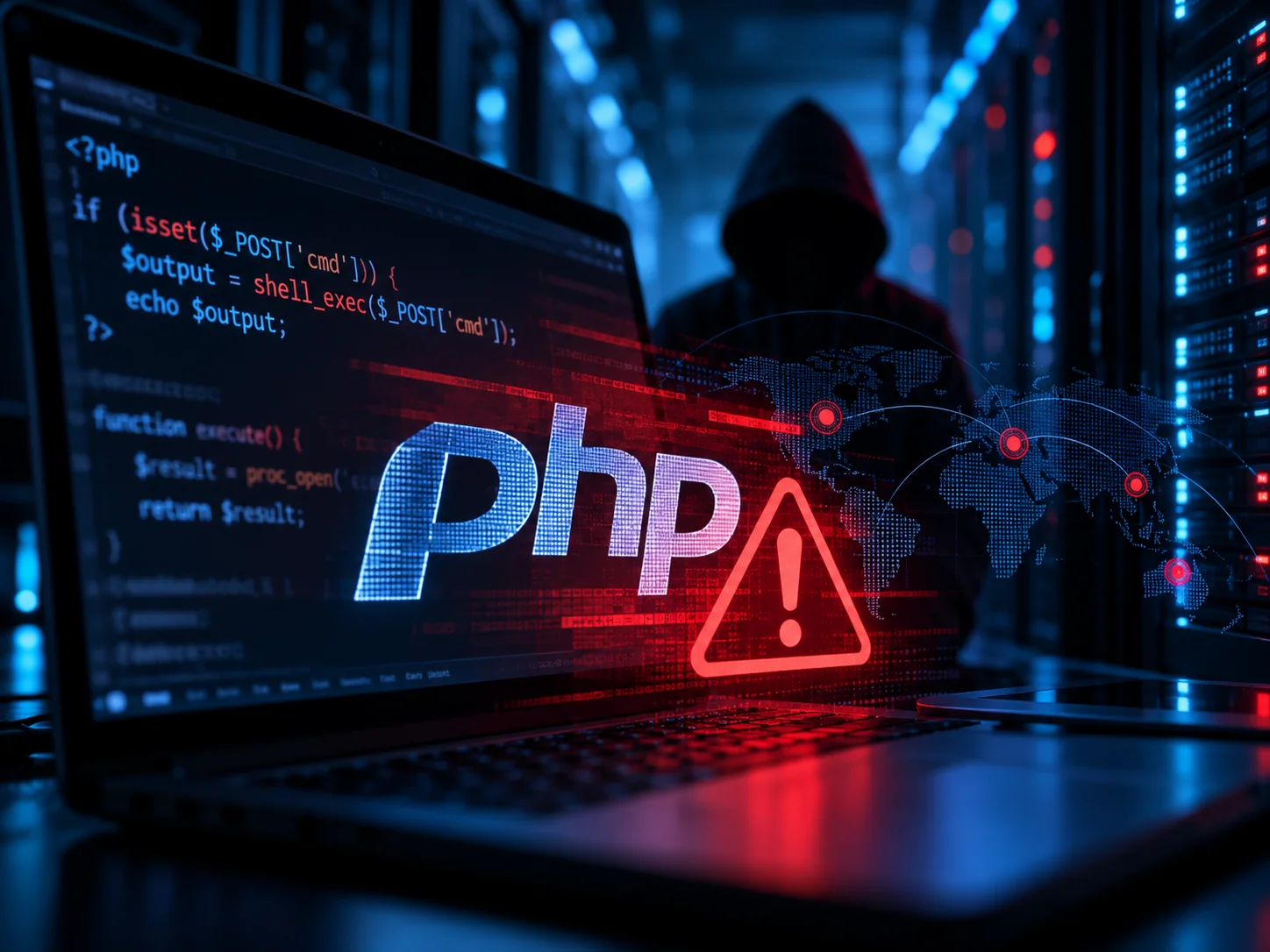
PHP2Shell: PHP Security Risks and Mitigation Strategies
Explore PHP2Shell claims, potential PHP security risks, and mitigation strategies. Learn how SECURESYS helps organizations assess and secure their systems.
From data leakage and prompt injection to over-privileged agents and model supply chain: nine enterprise risks, each with a concrete control.
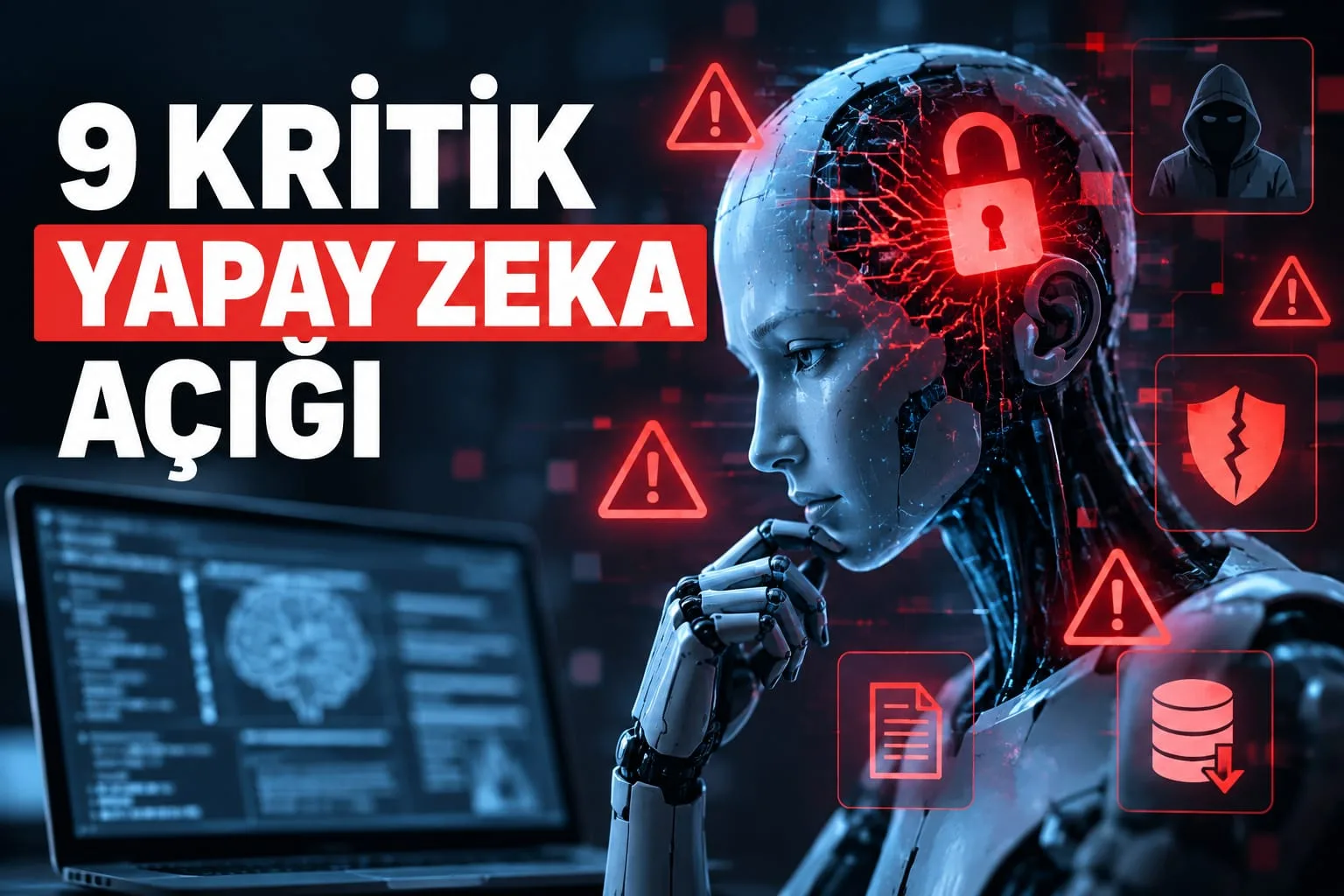
Artificial intelligence is reshaping how businesses operate. But can corporate cyber security strategies keep pace with that shift?
AI is no longer a technology that merely answers questions. It analyses corporate data, writes software, supports decision-making and interacts directly with company systems.
That shift also creates a new attack surface.
Traditional security controls focus on protecting networks, servers and applications, while AI systems introduce a different class of risk: models that can be manipulated, uncontrolled data transfer, over-privileged AI agents and malicious content that looks trustworthy.
The question is no longer only whether our systems are secure, but whether the decisions AI makes and the actions it performs are secure as well.
Customer records, contracts, financial data and source code that employees upload to AI tools can end up outside the organisation.
This must be assessed not only as a data privacy matter, but also in terms of KVKK compliance and the protection of trade secrets.
Control: Apply data classification, DLP, access policies and a corporate AI usage standard.
Attackers can embed malicious instructions in a document, a web page or a user input that the AI processes.
The goal is to push the system away from its expected behaviour, make it disclose unauthorised information or carry out unintended operations.
Control: Separate untrusted content, define hard authorisation boundaries and run regular AI/LLM penetration testing.
Inputs crafted specifically to cross a model’s safety boundaries can trigger behaviour the system should never produce.
This risk matters most in LLM applications built in-house for a specific organisation.
Control: Evaluate model behaviour under realistic attack scenarios through adversarial testing and AI red team exercises.
Consider an AI agent that can send email, delete files or write to a database.
If that system is manipulated, the consequences go far beyond an incorrect answer.
Control: Apply least privilege; require human approval for critical operations, keep transaction logs and enforce authorisation limits.
RAG systems that draw on corporate documents can be misled by untrusted or altered content.
Instructions an attacker plants in a knowledge source can influence the model’s answers or the operations it triggers in connected systems.
Control: Apply source validation, document-level access control and RAG-specific security testing.
AI-assisted development tools increase productivity, but they do not remove the risk of insecure code, faulty authorisation or misconfiguration.
Code being AI-generated does not make it secure.
Control: Integrate SAST, DAST, source code analysis and DevSecOps checks into the development lifecycle.
Third-party models, open source components, plugins and external API services all create new dependencies.
A single component whose security has not been verified can compromise an entire corporate AI application.
Control: Build a model and component inventory, assess supplier security and review dependencies on a regular cycle.
AI can accelerate reconnaissance, social engineering, phishing and malicious content generation for attackers.
Corporate impersonation and personalised attacks in particular make it harder for employees to tell a threat apart from legitimate traffic.
Control: Combine security awareness, threat intelligence, EDR/XDR and 24/7 SOC monitoring.
If an organisation does not know which AI tools are in use, which data they reach and which operations they perform, managing the resulting risk becomes very difficult.
Control: Establish an AI inventory, risk assessment, usage policies and audit mechanisms. ISO/IEC 42001 and the NIST AI RMF provide a reference for these processes.
AI security cannot be achieved with a single product, or with testing performed at the model layer alone.
Data security, identity management, application security, infrastructure security, threat monitoring and corporate governance have to be addressed together.
Because AI systems increasingly integrate with internal applications, AI-specific attack scenarios now have to be assessed alongside traditional penetration testing.
SecureSys combines cyber security expertise with an AI security approach so that organisations can carry out their AI transformation safely.
Through AI security testing, red team operations, source code analysis, data security and 24/7 SOC services, it aims to assess corporate risk as a whole.
Your AI answers questions. But do your security controls know which data it reaches and which operations it performs?
Security in the years ahead is not only about protecting systems; it is about making sure AI runs in a safe, controlled and auditable way.
Get weekly threat intel, case studies, and technical content delivered to your inbox.
No spam. Unsubscribe anytime.
Explore PHP2Shell claims, potential PHP security risks, and mitigation strategies. Learn how SECURESYS helps organizations assess and secure their systems.
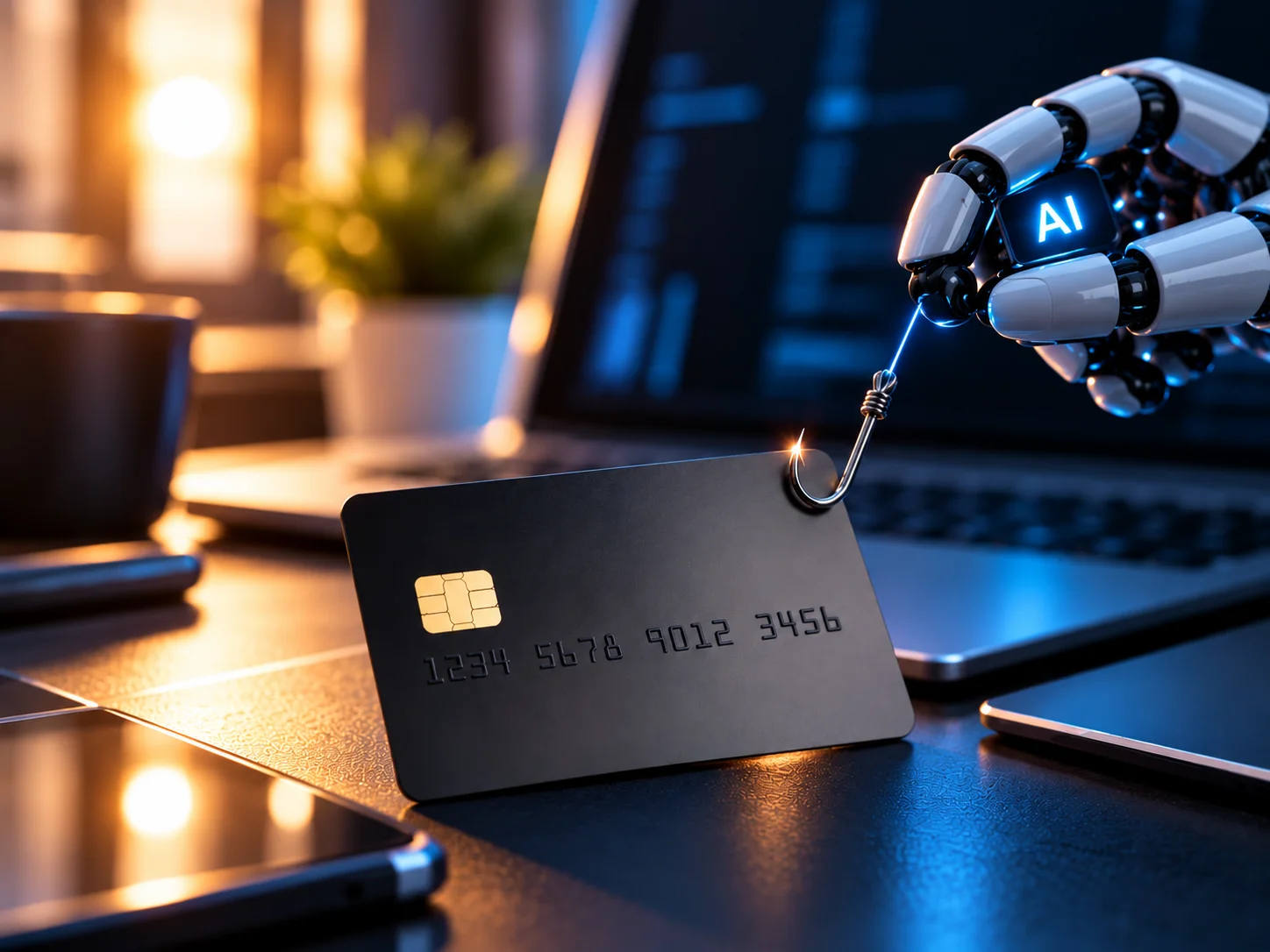
OpenAI'ın deneysel yapay zekâ modelinin yetkisiz kripto cüzdanı işlemi, otonom yapay zekâ sistemlerinde güvenlik, yetki kontrolü ve denetim risklerini gündeme taşıdı.
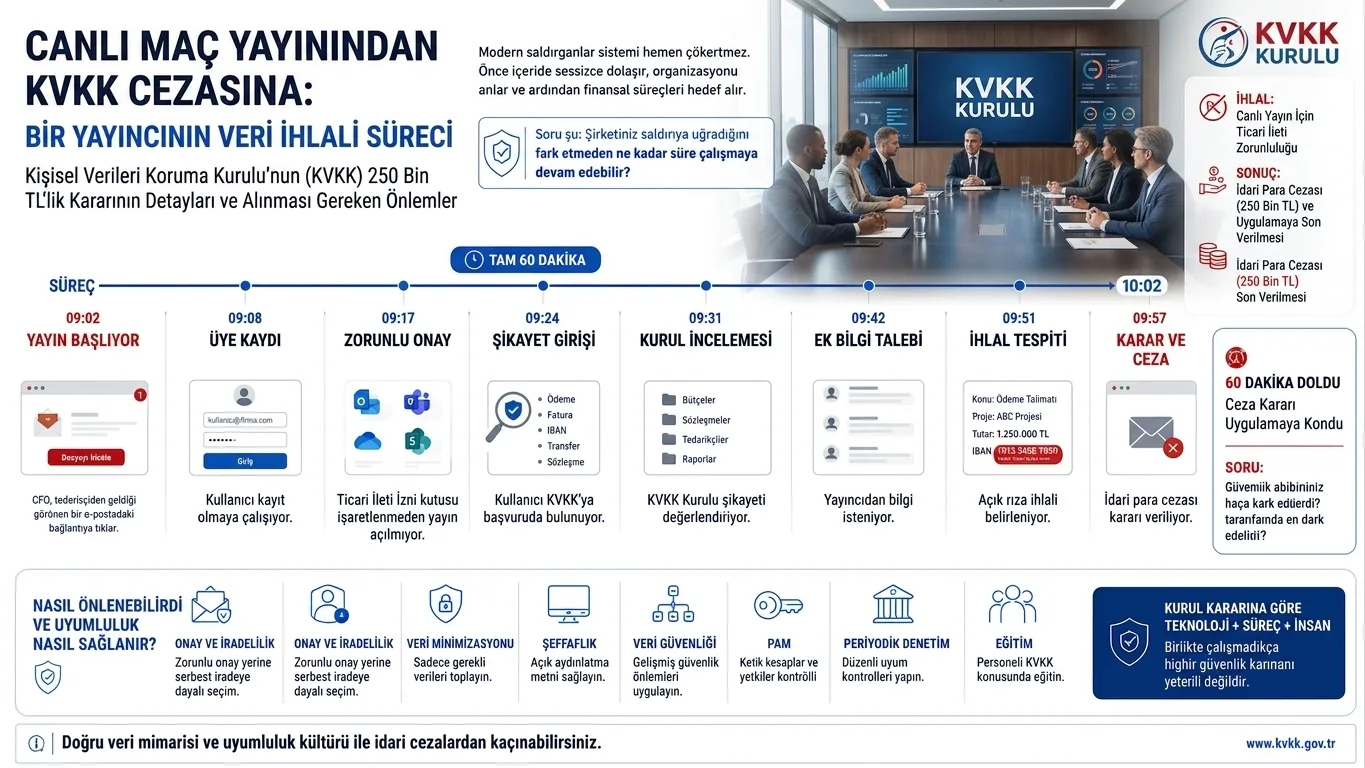
KVKK fined a platform 250,000 TL for tying live match streaming to marketing consent. What organisations should check on their consent screens.