How Often Should a Web Application Penetration Test Be Performed? Testing Schedule by Sector
How often should a web application penetration test be repeated? Recommended testing schedule by sector and re-test triggers.
Security Is Not a One-Time Activity

Many organisations perform a web application penetration test only to satisfy a tender requirement or to pass an audit; once the test is complete, the same application is assumed to be secure. Yet in modern software development, applications change constantly — new features are added, APIs are updated, third-party libraries change. Each of these changes can introduce new security risks that did not exist before. Web application security is therefore not a one-time activity but a process to be run with a continuous-improvement approach.
Is One Pentest a Year Enough?
There is no single correct answer to this question. Test frequency must be determined by the application's criticality, number of users, data sensitivity, frequency of change and legal obligations. While an annual assessment may be enough for some low-risk applications, finance, healthcare, public-sector and high-traffic e-commerce platforms require much more frequent security assessment.
Recommended Frequency by Application Type
| Application Type | Recommended Assessment Frequency |
|---|---|
| Corporate website | At least once a year |
| E-commerce platform | At least every 6 months and after major release updates |
| Internet banking and finance applications | Regular periodic tests and after significant changes |
| Health information systems | At regular intervals with risk-based planning |
| Public-sector applications | At periods compliant with corporate policy and regulation |
| SaaS and cloud-based platforms | Periodic tests supported by continuous security assessment |
This table offers a general recommendation. The final test plan should be determined taking into account the organisation's risk analysis and legal obligations.
When Should a Penetration Test Be Repeated?
- When a new module goes live — components such as a user registration system, payment module or management panel can create new attack surfaces.
- After major software updates — previously closed vulnerabilities can reappear.
- When the API structure changes — new endpoints and integrations must be re-evaluated.
- When the authentication mechanism is updated — changes in SSO, OAuth, MFA or JWT structures can affect critical controls.
- On infrastructure changes — cloud migration, WAF, CDN or reverse-proxy configuration changes.
- After a security incident — a comprehensive penetration test should be planned after a breach or suspicious access.
DevSecOps and Continuous Security
In modern software development, security is an inseparable part of the development life cycle. In the DevSecOps approach, static application security testing (SAST), dynamic application security testing (DAST), software composition analysis (SCA) and periodic manual penetration tests are applied together. This approach allows vulnerabilities to be detected before they reach the production environment.
What Do Regulations and Standards Recommend?
- ISO/IEC 27001 — supports risk-based technical security assessments.
- PCI DSS — requires regular security testing on systems that process card data.
- KVKK — expects appropriate technical measures to be taken to ensure the security of personal data.
- DORA — encourages regular testing processes to strengthen digital operational resilience in the finance sector.
SecureSys Recommendation
Every organisation has a different risk profile. Rather than a one-size-fits-all test plan, we recommend creating a customised security calendar that takes into account the organisation's field of activity, application architecture and frequency of change — regular penetration tests, API security assessments, pre-release checks and remediation verification (re-test) should be treated as a whole.
To create a security testing calendar tailored to your organisation, reach out via our Web Application Penetration Testing Service page.
Related Articles
Web Application Security

What Is Web Application Penetration Testing?
What is web application penetration testing, why is it needed and how is it performed? OWASP Top 10, business logic flaws, manual testing methodology and the SecureSys approach.
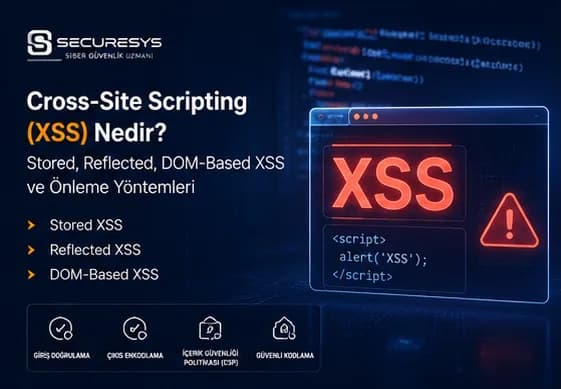
What Is Cross-Site Scripting (XSS)? Stored, Reflected, DOM-Based XSS and Prevention Methods
What is XSS (Cross-Site Scripting), what are its types and how do you protect your web application? A comprehensive guide from SecureSys experts.
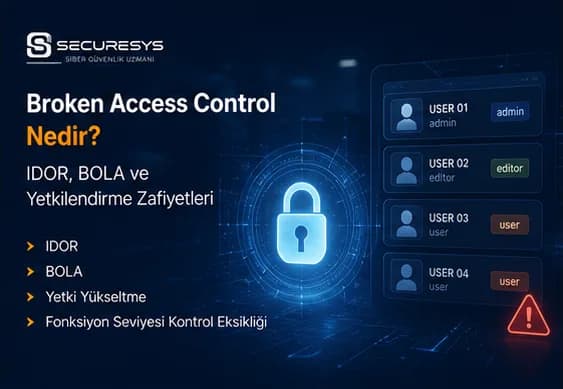
What Is Broken Access Control? IDOR, BOLA and Authorization Vulnerabilities
What are Broken Access Control, IDOR and BOLA? Horizontal/vertical privilege escalation scenarios and prevention methods. A SecureSys expert guide.

Authentication and Session Management Security: MFA, Brute Force, Session Hijacking
Authentication and session management security: MFA, brute force, credential stuffing and session hijacking risks. A SecureSys expert guide.

Business Logic Security Vulnerabilities: Price Manipulation and Coupon Abuse
What are business logic security vulnerabilities? Price manipulation, coupon abuse and race condition risks. A SecureSys guide.

Web Application Penetration Testing Methodology: OWASP WSTG, PTES, NIST SP 800-115
SecureSys web application penetration testing methodology: planning, information gathering, manual testing, risk assessment and reporting stages.
Looking for professional support on this topic?
Our expert team will reach out for a free consultation as soon as possible.