Frequently Asked Questions About Web Application Penetration Testing
Frequently asked questions about web application penetration testing: duration, Black/Gray/White Box, pricing, re-test and more.
Frequently Asked Questions About Web Application Penetration Testing
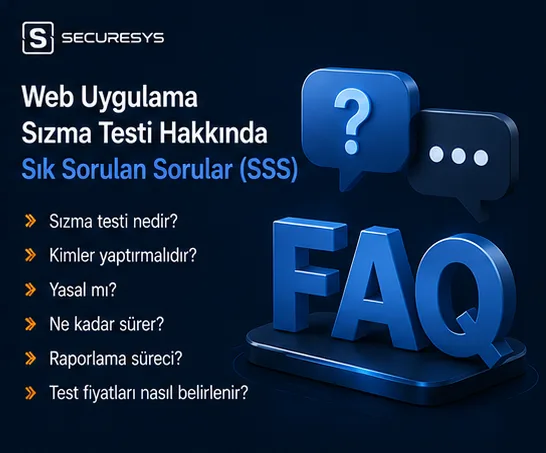
What is a web application penetration test?
A web application penetration test is a technical security assessment that aims to identify the security vulnerabilities in internet-accessible web applications through controlled and ethical methods carried out by authorised experts. The scope covers not only known vulnerabilities but also areas such as authentication, authorization, session management, API security and business logic.
Are a web application security scan and a penetration test the same thing?
No. Automated security scans help detect known technical vulnerabilities quickly. However, business logic vulnerabilities, authorization problems and complex attack scenarios usually require manual analysis. A professional penetration test includes expert assessment alongside automated tools.
Does a penetration test damage the application?
In authorised and controlled penetration tests the aim is not to harm the system. Some test scenarios may temporarily affect system resources; for this reason the test scope, timing and techniques to be applied are planned in advance, and critical operations are carried out in coordination with the organisation.
Can a penetration test be performed in a live (production) environment?
Yes. In many organisations the most realistic results are obtained in the production environment. However, on live systems the scope must be carefully defined and close coordination with the organisation maintained.
How long does a test take?
The duration varies according to the size of the application, the number of user roles, the API scope and the testing approach (Black Box, Gray Box, White Box). Small-scope projects can be completed within a few days, while large and complex applications take longer.
What is the difference between Black Box, Gray Box and White Box?
Black Box: The tester is given no prior information; the perspective of a real external attacker is applied. Gray Box: Certain user accounts or limited technical information are provided — one of the most frequently preferred methods in corporate projects. White Box: A more comprehensive analysis is carried out using the source code and architectural information.
Why must APIs be tested separately?
In modern web applications, most business processes run through APIs. Even if the user interface is secure, critical risks such as BOLA, authorization gaps and excessive data exposure can exist at API endpoints. See our API Security page for details.
Do we have to share our source code?
No. Comprehensive security assessments can be carried out without sharing the source code. When a White Box approach is preferred, source-code review can allow certain logical risks to be assessed in greater detail.
Is a certificate issued at the end of the test?
At the end of a penetration test, organisations are provided with technical reports, executive summaries and verification outputs. In some projects a service-completion letter showing that the test has been carried out can be prepared; however, this does not amount to a certificate guaranteeing that the application is "completely secure".
Are all discovered vulnerabilities actually exploitable?
No. Not every vulnerability has the same impact; in professional penetration tests, findings are evaluated and prioritised against criteria such as exploitability, business impact, data sensitivity and technical risk.
If no vulnerability is found, does it mean the application is completely secure?
No. No security assessment can definitively guarantee that a system contains no risk. A penetration test reveals the risks that can be detected within the defined scope and at the time of the test; new vulnerabilities can arise over time.
When should a penetration test be repeated?
After major release updates, when a new module is developed, on API changes, when the authentication system is renewed, after a security incident, or as part of a periodic security plan. See our penetration testing frequency page for details.
What is the biggest difference between a penetration test and a vulnerability scan?
Vulnerability scans rely mostly on automated tools and look for known technical vulnerabilities. Penetration tests also include expert work such as manual analysis, business logic assessment, authorization controls and a real attacker's perspective.
What is a Re-Test?
A re-test is the process of re-verifying previously identified findings after the organisation's remediation work. The aim is not only to confirm that the vulnerability has been closed but also to assess that the applied fix has not created new security risks.
Why do web application penetration test prices vary?
Pricing depends on factors such as the scope of the application to be tested, the number of modules, user roles, the number of APIs, integrations and the expected level of reporting. A preliminary scope analysis is recommended for a sound quote.
Have other questions? Reach out via our Web Application Penetration Testing Service page.
Related Articles
Web Application Security

What Is Web Application Penetration Testing?
What is web application penetration testing, why is it needed and how is it performed? OWASP Top 10, business logic flaws, manual testing methodology and the SecureSys approach.
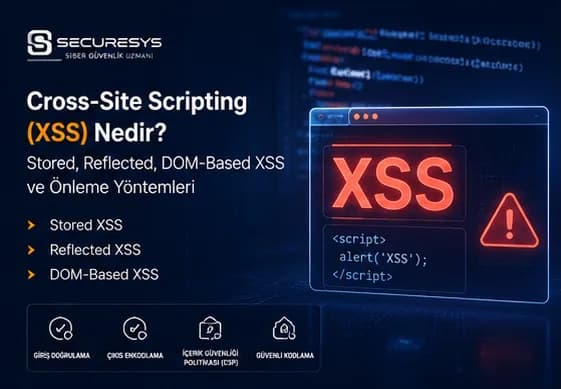
What Is Cross-Site Scripting (XSS)? Stored, Reflected, DOM-Based XSS and Prevention Methods
What is XSS (Cross-Site Scripting), what are its types and how do you protect your web application? A comprehensive guide from SecureSys experts.
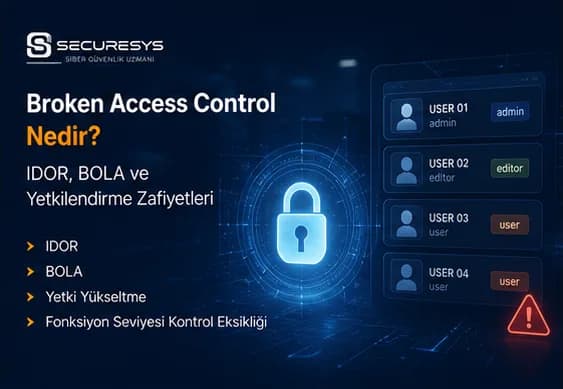
What Is Broken Access Control? IDOR, BOLA and Authorization Vulnerabilities
What are Broken Access Control, IDOR and BOLA? Horizontal/vertical privilege escalation scenarios and prevention methods. A SecureSys expert guide.
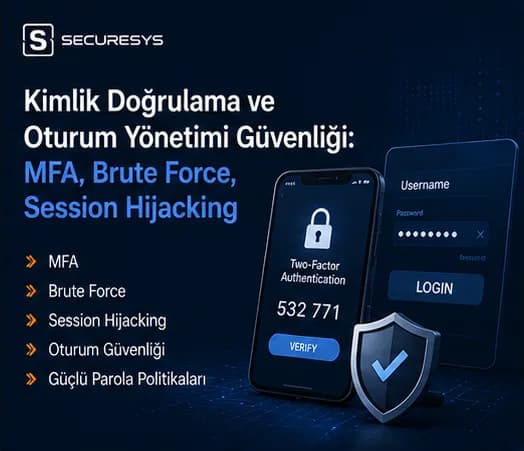
Authentication and Session Management Security: MFA, Brute Force, Session Hijacking
Authentication and session management security: MFA, brute force, credential stuffing and session hijacking risks. A SecureSys expert guide.
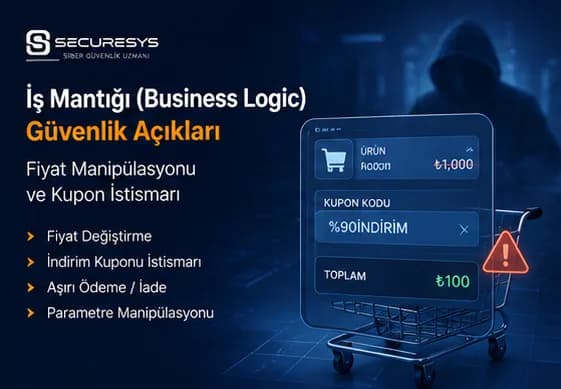
Business Logic Security Vulnerabilities: Price Manipulation and Coupon Abuse
What are business logic security vulnerabilities? Price manipulation, coupon abuse and race condition risks. A SecureSys guide.
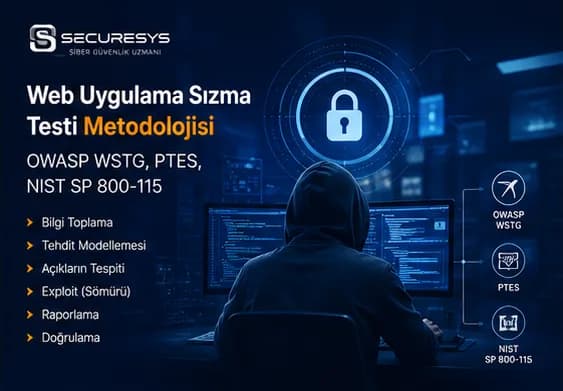
Web Application Penetration Testing Methodology: OWASP WSTG, PTES, NIST SP 800-115
SecureSys web application penetration testing methodology: planning, information gathering, manual testing, risk assessment and reporting stages.
Looking for professional support on this topic?
Our expert team will reach out for a free consultation as soon as possible.