Cyber Hygiene Compliance
TRTEST-certified 4-6 month consulting process implementing routine security practices that reduce data breaches by up to 80%.
What Is Cyber Hygiene Compliance?
In the digital world, protecting your organization is no longer an option—it’s a necessity. Cyber hygiene compliance, in particular, fortifies businesses’ technical infrastructure with routine security processes. At Securesys, we don’t just guide you through this process; we also strengthen your organizational resilience. Additionally, by ensuring full compliance with TRTEST standards, we minimize your legal risks.
Operational Continuity
Cyber hygiene compliance is the comprehensive set of routine security processes and organizational measures that organizations implement to protect their digital assets against cyber threats. Just as personal hygiene safeguards health, cyber hygiene ensures the organization’s digital health and operational continuity. This process, certified by TRTEST in Turkey, is conducted in full compliance with the KVKK and international standards.
Sector-Specific Compliance
As Securesys Information Technologies, we have carried out cyber hygiene compliance projects at over 50 organizations with our TSE 13638-certified expert team. In this guide, we detail how the process works and how your organization can benefit.
Proactive Defense
Cyber hygiene compliance consists of routine processes that enhance an organization’s resilience. This process, certified by TRTEST, prevents data breaches by up to 80%. At Securesys, we manage all stages of the process during a 4–6-month consulting engagement.
What Is Cyber Hygiene?
Cybersecurity hygiene is the understanding that cybersecurity is not a one-time project but an ongoing practice. Just like handwashing, it consists of practices that organization employees and systems must consistently follow.
The concept of cyber hygiene should not be viewed merely as a checklist. Instead, you should adopt this process as part of your organizational culture. For example, while the human factor forms the first line of cyber defense, technology and processes serve as the foundational pillars supporting this line. As a result, the harmonious operation of these components reduces data breaches by 80%.
Research indicates that approximately 80% of cyberattacks stem from weak cybersecurity habits observed in victim organizations. To address this, a cybersecurity hygiene strategy emphasizing the importance of regular and effective security measures must be implemented.
The Core Components of Cyber Hygiene
Cybersecurity compliance is of critical importance for your organization. This is because data breaches result not only in financial loss but also in reputational damage. Therefore, you should obtain this certification to ensure compliance with the Personal Data Protection Law (KVKK) and to benefit from cybersecurity insurance. Additionally, the TRTEST certification is a major advantage for outpacing your competitors in public tenders.
Why Is Cybersecurity Compliance Important?
The Topic of Cybersecurity Hygiene in 4 Points
Cyber attackers’ favorite method is exploiting unpatched software vulnerabilities (CVE). Within the framework of our corporate cybersecurity standards, we establish an automated patch management process for your entire inventory, from operating systems to third-party applications. By ensuring critical security updates are tested and deployed to the production environment within 24–48 hours, we protect your systems against zero-day attacks. Software Updates: No matter how robust your technological defenses are, the human factor remains the most critical link. To make your employees an integral part of your cybersecurity defense, we conduct interactive awareness training and periodic phishing simulations. By fostering behavioral changes in recognizing social engineering attacks, safe internet usage, and data breach reporting, we build a sustainable "Cybersecurity Culture." By minimizing human-related risks, we elevate your defense capabilities to the highest level. Employee Training Data is the organization’s memory. Going beyond traditional backup methods, we implement the modern 3-2-1-1-0 backup strategy. We ensure that at least one copy of your data is stored in an "immutable" (unchangeable) and network-isolated (air-gapped) manner. This makes it impossible for your data to be encrypted even in ransomware attacks, and we guarantee business continuity during a disaster through regular restore tests. Data Backup We implement a Zero Trust architecture based on the "never trust, always verify" principle. We do not rely solely on complex password policies; instead, we mandate the use of Multi-Factor Authentication (MFA) for all critical access points. In accordance with the Principle of Least Privilege (PoLP), we ensure users have only the minimum necessary permissions to perform their jobs, and we maintain strict oversight of admin accounts using PAM solutions. Access Control
Cybersecurity Hygiene TRTEST Certification Process
Application =>
Document Review =>
On-Site Audit =>
Corrective Actions =>
Certification
Cybersecurity Compliance Consulting - Securesys
Current State Analysis Policy Development Technical Controls
In the first step of your cybersecurity journey, our expert team thoroughly examines your organization’s current digital inventory and security infrastructure. A comprehensive scan is conducted across critical areas such as asset management, network security, access controls, and data protection. Based on this analysis, your organization’s cybersecurity maturity level is scored against international standards, and a proactive roadmap (Gap Analysis) is created to address gaps and prepare for the TRTEST certification process.
For cybersecurity hygiene to be sustainable, it must become an integral part of your organizational culture. At Securesys, we develop over 20 core policy and procedure documents tailored to your organization. This documentation set covers all operational processes, ranging from password management to incident response plans, and from data destruction policies to remote work guidelines. Prepared in full compliance with the KVKK and ISO 27001, these policies serve not only for audits but also as your organization’s digital constitution.
We configure the technical infrastructure required to implement these policies in the field. At this stage, we implement technical hardening measures across critical layers, including the integration of Multi-Factor Authentication (MFA) systems, endpoint security (EDR), network segmentation, log management (SIEM), and data loss prevention (DLP). Our goal is to establish a proactive defense line that minimizes human error and can automatically stop cyberattacks.
Cyber Hygiene Compliance Frequently Asked Questions
What is cyber hygiene compliance?
It is the set of routine security processes and organizational measures that organizations implement to protect their digital assets.
Is the TRTEST Cyber Hygiene Certificate mandatory?
While not a legal requirement, it serves as a critical proof of compliance in public tenders, BDDK, and KVKK compliance processes.
How long does the certification process take?
Depending on the organization’s size and current maturity level, it typically takes an average of 4–6 months.
What is the difference between cyber hygiene and ISO 27001?
ISO 27001 is a comprehensive management system; cyber hygiene, on the other hand, is a practice approved by TRTEST that focuses more on operational and technical routines.
Does compliance with cyber hygiene prevent KVKK fines?
Since it documents that you have implemented technical measures under Article 12 of the KVKK (“obligations regarding data security”), it significantly reduces both the risk of penalties and their severity.
Can SMEs obtain a cyber hygiene certificate?
Yes, organizations of all sizes can obtain this certificate. In fact, for SMEs, it is the most cost-effective defense against cyberattacks.
What is the validity period of the certificate?
According to cyber hygiene standards, it must be applied to all employees at least once a month using different scenarios.
How often should phishing simulations be conducted?
According to cyber hygiene standards, it must be conducted at least once a month for all employees using different scenarios.
What does cybersecurity consulting cover?
It includes current status analysis, policy development, configuration of technical controls, employee training, and audit support.
What is the 3-2-1-1-0 backup rule?
Insurance companies offer lower premiums to organizations that minimize risk; cyber hygiene compliance is the strongest evidence that risk is low.
Why is this document required for cyber insurance?
Lorem ipsum dolor sit amet, consectetur adipiscing elit. Ut elit tellus, luctus nec ullamcorper mattis, pulvinar dapibus leo.
- Penetration Testing (Pentest) Service — TSE 13638 Certified
- SIEM Maturity Model and Consulting
- Backup as a Service (BaaS) — Cloud Backup
Benefits of Cybersecurity Hygiene
- Reduces cyberattacks: A strong cyber hygiene routine significantly reduces the risk of falling victim to a cyberattack or being hacked.
- Ensures compliance: Facilitates compliance with legal obligations and standards, helping to avoid potential penalties associated with non-compliance.
- Reduces the attack surface: By minimizing vulnerabilities and weaknesses in systems, it minimizes the areas attackers can access.
- Reduces costs: It reduces the need for costly security measures, leading to long-term savings.
- Builds customer trust: Organizations with adequate cybersecurity practices are perceived as more trustworthy by customers.
- More cost-effective: By preventing the theft of critical data, it saves time and contributes to resolving security issues with greater efficiency.
Certification Process
The certification process encompasses the testing and evaluation activities conducted by TRTEST Test and Evaluation Inc. When organizations meet the criteria established under the Cyber Hygiene Certification Program, they successfully complete the relevant certification process.
What Is Cyber Hygiene?
Cyber hygiene is a procedure established to protect organizations’ systems, networks, devices, data, and security. It includes the steps necessary to strengthen the online and offline security of devices and maintain system health. By ensuring the security of hardware and software through cyber hygiene, the goal is to protect against malicious threats, keep data secure, and shield systems from cyberattacks. The measures taken aim to ensure that data remains secure.
Research indicates that approximately 80% of cyberattacks stem from poor cybersecurity habits observed in victim organizations. To address this issue, a cybersecurity hygiene strategy emphasizing the importance of regular and effective security measures must be implemented.
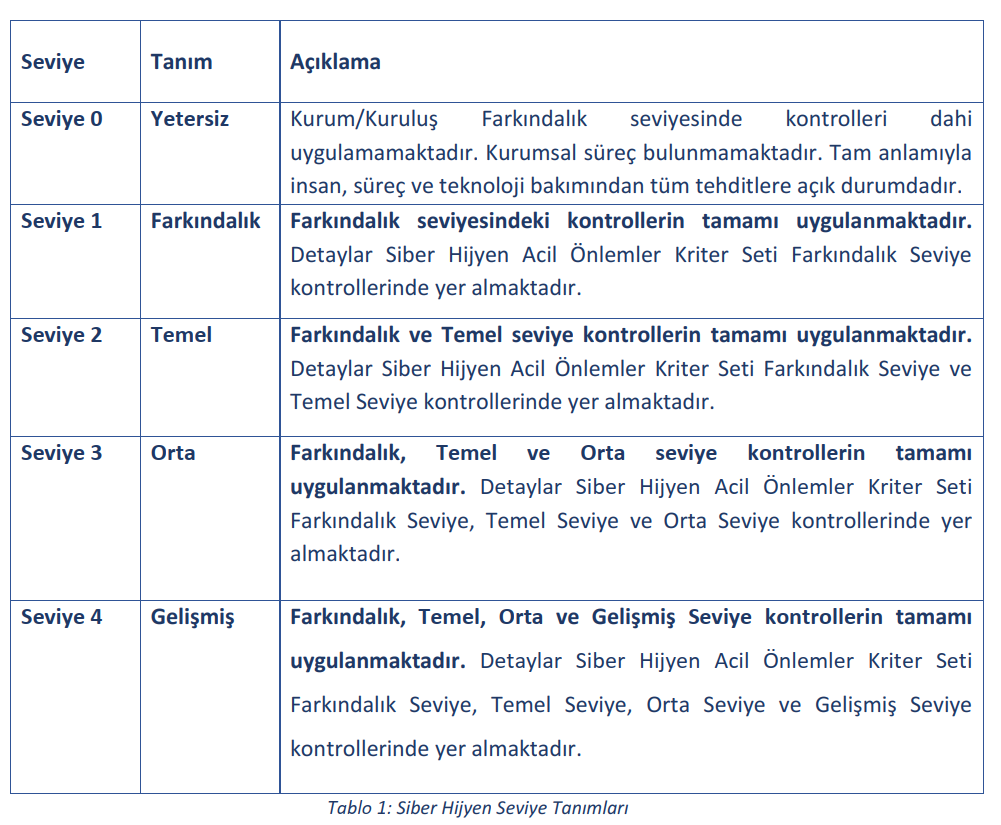
Cybersecurity Hygiene Certification Program
The Cyber Hygiene Certification Program consists of methods applicable at every level—from small and medium-sized businesses serving the defense sector to large military institutions and organizations— guided by the Cyber Hygiene Emergency Measures Criteria Set.
Benefits of Cyber Hygiene
The primary benefits of implementing cyber hygiene procedures are as follows:
- Reduces cyberattacks: A robust cyber hygiene routine significantly reduces the risk of falling victim to a cyberattack or being hacked.
- Ensures compliance: It facilitates compliance with legal obligations and standards, helping to avoid potential penalties associated with non-compliance.
- Reduces the attack surface: By minimizing vulnerabilities and weaknesses in systems, it minimizes the areas attackers can access.
- Reduces costs: It reduces the need for costly security measures, leading to long-term savings.
- Builds customer trust: Organizations with adequate cybersecurity practices are perceived as more trustworthy by customers.
- Is more cost-effective: By preventing the theft of critical data, it saves time and contributes to resolving security issues with greater efficiency.
How Do We Ensure Cyber Hygiene?
- Backup: We regularly back up organizations’ critical data to an offline, isolated environment outside the organization. We test the backed-up data at regular intervals to verify its operational status. This ensures sensitive data remains secure in the event of a potential threat or system failure.
- Two-factor authentication and encryption: The tools, devices, and systems we use employ strong passwords; each contains at least one uppercase letter, one lowercase letter, one number, and a special character. All passwords are updated at regular intervals and do not consist of meaningful words that identify individuals. Multi-factor authentication (MFA) is enabled wherever possible.
- Access control: We restrict access to sensitive areas containing the organization’s confidential data to authorized personnel only. Additionally, we block access to all systems from malicious IP addresses.
- Awareness training: We provide regular cybersecurity awareness training to organization employees. Since new types of attacks emerge every day, employees are kept informed about these current threats.
- Application maintenance: We regularly test the software, systems, and applications in use, resolve identified issues, and conduct performance optimization efforts.
- Regular updates: Tools, programs, and operating systems are updated at regular intervals. Thanks to the new features introduced with updates, security vulnerabilities are patched, and bugs are fixed to provide protection against new threats.
- Antivirus usage: We use endpoint security solutions on all systems to detect and block malicious software.
- Risk management: We identify potential cyber threats by conducting regular tests. We perform a comprehensive assessment of identified risks and prepare the necessary risk management plans. Analyses and results are shared with relevant stakeholders in real time.
- Vulnerability scanning: We perform vulnerability scans across all systems, including applications, tools, and tests, to identify and report potential vulnerabilities. We address identified vulnerabilities to make systems more secure.
- Secure network configuration: We close unnecessary or unused ports on network devices, encrypt the network to block the use of applications without valid certificates and prevent unauthorized access. We use DNS filtering services to block access to malicious domains.
Our Cyber Hygiene Compliance Consulting Service
SECURESYS’s experienced information security experts provide all the pre-assessment and consulting services organizations need for their Cyber Hygiene compliance processes, end-to-end. This service offers a comprehensive roadmap to help companies meet their cybersecurity expectations and includes the following steps:
- Assessment of the cybersecurity level: Your organization’s current security infrastructure is examined in detail. All gaps and risks between cybersecurity standards and your current practices are identified.
- Development of a compliance strategy and roadmap: Existing policies, procedures, and security controls are reviewed. A comprehensive compliance plan is developed by creating organization-specific improvement recommendations.
- Evaluation of security controls: Your network, system, data security, and operational security processes are analyzed in accordance with ISO 27001, KVKK, and other relevant standards. The organization’s weak areas are identified, and actionable improvement recommendations are provided.
- Awareness and training programs: Custom training materials are prepared and implemented to ensure all staff adopt a culture of cyber hygiene. This enhances employees’ awareness of cyber threats.
- Policy and document management: Policies, procedures, and guidelines that meet cybersecurity hygiene requirements are developed from scratch or existing documents are improved. This ensures the organization’s security framework is aligned with a standardized framework.
- Technical implementation and integration support: Consulting and implementation support are provided for technical activities such as deploying identified security solutions, infrastructure optimizations, and the installation and integration of security products. A structure capable of effectively responding to a potential attack is established.
- Continuous monitoring and sustainability: After compliance is achieved, regular checks, monitoring mechanisms, and reporting are conducted to ensure the process remains sustainable. The security level is maintained at a consistently high standard.
Cyber Hygiene Compliance Consulting helps companies strengthen data security, prevent operational disruptions, and minimize the risks of cyberattacks. It is of critical importance for organizations to protect customer information, ensure business continuity, and mature their security culture. By the end of the project, the organization is prepared for the Cyber Hygiene Certification audit conducted by TRTEST.
Cyber Hygiene Audit Details
The Cyber Hygiene Certification Program consists of methods applicable at every level—from small and medium-sized businesses operating in the defense sector to large military institutions and organizations—guided by the Cyber Hygiene Emergency Measures Criteria Set.
Audits will be conducted for the organization or institution based on the following items:
- The risks to which the organization or institution may be exposed must be identified.
- The existing infrastructure must be sufficiently secure.
- Staff awareness must be at an adequate level.
Based on internationally recognized practices and methods, the following two-step approach is followed regarding the above items:
- Identification and assessment of the risk environment to which the organization is currently exposed and may be exposed.
- Identifying and evaluating immediate measures to protect the organization’s information assets.
Certification Process
The certification process encompasses the testing and evaluation activities conducted by TRTEST Test and Evaluation Inc. When organizations meet the criteria established under the Cyber Hygiene Certification Program, they successfully complete the relevant certification process.
Want to learn more about this service?
Our expert team will reach out for a free consultation as soon as possible.