Database Performance and Security Maintenance: Index, Query, Patch and Capacity
Database performance and security maintenance: indexes, statistics, slow queries, locks, capacity forecasting, patch management and routine checks.
A database can be secure but if it is slow it can disrupt business processes.
Likewise, a high-performance database can carry serious security risk if it is configured wrongly.
For this reason, in corporate database management, performance and security cannot be thought of as entirely separate.
For example;
if the disk fills the database can stop,
if the transaction log grows the service can be cut off,
if the CPU runs constantly at 100% an attack cannot be told apart from normal load,
long-running queries can block other operations,
if patches are not applied known vulnerabilities can remain open,
if index maintenance is not done response time can rise,
if the backup duration lengthens the recovery targets can break.
For this reason the modern database maintenance approach must address these four areas together:
Performance
Security
Availability
Capacity
Database performance management is not merely a matter of “let the query run faster”.
The real goal is;
the database running predictably,
stably,
securely
and sustainably.
What Is Database Performance?
Database Performance is the database's ability to process queries and transactions within an acceptable time and resource consumption.
When assessing performance;
response time,
throughput,
CPU,
memory,
disk IO,
query duration,
connection count
indicators such as these can be monitored.
What Is the Relationship Between Database Performance and Security?
Poor performance may not be a vulnerability directly.
However, it can enlarge many security and business continuity risks.
For example, if database resources run constantly at the limit, even a small attack or an unexpected workload can create an outage.
Is a Slow Database a Security Risk?
Indirectly yes.
Because;
availability drops,
a DoS effect becomes easier,
the backup window lengthens,
the patch process can be deferred,
monitoring systems can produce more false positives.
Why Is Database Maintenance Critical for Performance?
A database changes constantly.
The data grows.
Indexes change.
Statistics can become stale.
Query patterns can differ.
For this reason a database that ran fast at first installation may not show the same performance years later.
What Is a Performance Baseline?
It is measuring the database's normal operating behaviour and creating a reference from it.
For example:
CPU: 30–40%
Average Query Time: 120 ms
Active Connections: 150
Disk Latency: 4 ms
values such as these can be the baseline.
Why Is a Baseline Important?
Without knowing the normal behaviour, detecting an anomaly becomes difficult.
CPU at 80% can look high.
However, on some systems this can be normal.
Can a Baseline Be Used for Security Too?
Yes.
If the normal query volume or connection behaviour is known, abnormal situations are detected more easily.
What Is Database Monitoring?
It is the continuous monitoring of database health and performance indicators.
Which Metrics Should Monitoring Include?
For example:
CPU
Memory
Disk Usage
IO Latency
Query Duration
Connection Count
Locks
Deadlocks
Replication Lag
Backup Status
Are Monitoring and Maintenance the Same?
No.
Monitoring sees the problem.
Maintenance tries to reduce or prevent the problem.
What Is an Index?
An index is the data structure enabling the database to find certain records faster.
It can be likened to a book's index.
Why Does an Index Increase Performance?
Instead of reading all of millions of rows, the database can reach the relevant records through a suitable index.
Is Adding an Index to Every Column Good?
No.
Too many indexes;
consume storage,
lower INSERT/UPDATE performance,
increase maintenance time.
What Is Index Maintenance?
It is the regular examination of index structures and the performing of the necessary maintenance work.
What Is Index Fragmentation?
It is index pages coming into a non-optimal physical or logical order over time.
Why Does Fragmentation Occur?
Frequent;
INSERT,
UPDATE,
DELETE
operations can cause it.
Is Fragmentation the Same on Every Database Platform?
No.
The index architecture and the maintenance approach can differ between PostgreSQL, MSSQL and Oracle.
What Is an Index Rebuild?
It is the recreation of the index.
What Is an Index Reorganize?
On some platforms it is the tidying of the index structure with a lighter maintenance operation.
Should Every Index Be Rebuilt Regularly?
No.
An unnecessary rebuild;
IO,
CPU,
transaction log
can create load on these.
What Is Risk-Based Index Maintenance?
It is performing maintenance taking index size, fragmentation and workload into account.
How Is Index Maintenance Addressed in PostgreSQL?
In PostgreSQL, because of the MVCC architecture, concepts such as vacuum, autovacuum, analyze and bloat matter for performance.
What Is PostgreSQL MVCC?
MVCC is:
Multi-Version Concurrency Control
an architecture enabling concurrent transactions to block each other as little as possible.
What Is a Dead Tuple in PostgreSQL?
It is old row versions physically remaining for a while after an UPDATE or DELETE.
Why Can Dead Tuples Be a Problem?
As they grow;
storage,
query performance,
maintenance
can be affected.
What Is VACUUM?
It is the PostgreSQL maintenance operation helping clean up row versions that are no longer needed and keeping the database running healthily.
What Is Autovacuum?
It is PostgreSQL's mechanism performing vacuum and analyze operations automatically.
Should Autovacuum Be Turned Off?
Generally no.
Wrong tuning can be done, but disabling it entirely can lead to serious problems.
What Is PostgreSQL Bloat?
It is a table or index growing larger than it needs to because of unused space.
Does Bloat Affect Performance?
Yes.
It can affect disk IO and cache efficiency.
What Is ANALYZE?
It updates the statistics information the database optimizer uses to build query plans.
Why Are MSSQL Statistics Important?
The Query Optimizer assesses which execution plan is more suitable through the statistics.
What Happens If the Statistics Are Stale?
The optimizer can make a wrong cardinality estimate.
As a result a poor query plan can be chosen.
Why Are Oracle Statistics Important?
The Oracle optimizer also builds execution plans through table and index statistics.
Can Statistics Maintenance Be Automatic?
Yes.
However, on very critical workloads the behaviour of the automatic operations must be monitored.
What Is Query Optimization?
It is the improvement process aimed at making SQL queries run faster and with less resource consumption.
What Is a Slow Query?
It is a query running longer than expected.
Is Every Long Query Bad?
No.
For example, a monthly financial report can naturally take a long time.
Context is required.
What Is a Slow Query Log?
It is the recording of queries running above a defined duration.
Why Is Slow Query Monitoring Useful?
It helps detect performance regression early.
What Is an Execution Plan?
It is the plan showing how the database optimizer will execute the query.
What Can an Execution Plan Contain?
For example:
Index Scan
Table Scan
Join
Sort
Aggregate
steps such as these.
Is a Full Table Scan Always Bad?
No.
On a small table a full scan can be faster than using an index.
Why Can a Query Plan Change?
Statistics,
data volume,
parameter,
index
because of changes in these the optimizer can choose a different plan.
What Is Query Plan Regression?
It is a previously fast query slowing down because of a new execution plan.
How Is Performance Regression Detected?
With a baseline and historical monitoring.
What Is Query Store?
It is the mechanism on some database platforms storing query performance and execution plan history.
What Is Query Store For?
It can make it easier to understand after which plan change a query slowed down.
What Is the N+1 Query Problem?
It is the application performing with many small queries work that could be done with a single query.
How Does N+1 Affect the Database?
By increasing the number of connections and queries it enlarges the database load.
Is N+1 a Security Problem?
Not directly.
However, it can increase resource exhaustion and availability risk.
What Is a Query Timeout?
It is the mechanism limiting a query's maximum running time.
Is a Query Timeout Useful?
It can help prevent a wrong or very heavy query from locking the system for a long time.
What Happens If the Timeout Is Too Short?
Normal operations can fail.
What Is a Long-Running Transaction?
It is a transaction that stays open for a long time.
Why Is a Long-Running Transaction Risky?
Locks,
transaction log growth,
vacuum delay,
replication lag
it can create these.
What Is an Idle Transaction?
It is no operation being performed for a long time although the transaction is open.
Why Is PostgreSQL Idle in Transaction Important?
If it stays open a long time it can adversely affect vacuum and resource usage.
What Is a Lock?
It is the mechanism used to provide consistency in concurrent access to the same data.
Is Locking a Security Problem?
It is normal database behaviour.
However, excessive locking can create an availability problem.
What Is Blocking?
It is one transaction waiting because of a lock held by another transaction.
What Is a Blocking Chain?
One session can block another session, and that one another still.
This chain can slow the database down seriously.
What Is a Deadlock?
It is the situation where two or more transactions wait for a resource the other holds.
How Does the Database Resolve a Deadlock?
It generally breaks the deadlock by terminating one of the transactions.
Should Deadlocks Be Logged?
Yes.
Constant deadlocks can indicate an application or query design problem.
Can a Deadlock Be an Attack Indicator?
Although it is mostly an application problem, it can be examined within the scope of unusual workload or resource abuse.
What Is Connection Management?
It is the controlled management of the client connections opened to the database.
Why Are Too Many Connections a Problem?
Every connection can consume memory and other resources.
What Is Connection Exhaustion?
It is the database reaching so many connections that it cannot accept a new client.
Can Connection Exhaustion Create a DoS Effect?
Yes.
Can a Connection Limit Be a Security Control?
Yes.
A connection limit for a specific user or application can restrict resource consumption.
What Is a Connection Pool?
It is the application reusing existing connections instead of constantly opening new ones.
What Is the Advantage of a Connection Pool?
It reduces connection overhead.
What Happens If the Connection Pool Is Configured Wrongly?
If every application instance opens a very large pool, the total connection count can exceed the database capacity.
How Should the Pool Size Be Determined?
The number of application instances and the database capacity must be assessed together.
What Is a Connection Leak?
It is the application not closing or not returning to the pool the connections it opens.
How Is a Connection Leak Detected?
It can be seen from the connection count rising continuously and idle sessions increasing.
What Does CPU Mean for Database Performance?
It is used in query execution, encryption, compression and transaction operations.
Is Constant 100% CPU a Problem?
Yes.
The system may be unable to respond to a new workload.
Can a CPU Spike Be an Attack?
It can be.
However, a bad query or a batch job can also cause it.
Is a CPU Alarm Enough on Its Own?
No.
It must be assessed with query, user and application context.
Why Is Memory Important for a Database?
The database engine can cache data and execution plans in memory.
What Is the Buffer Cache?
It is the area where data pages read from disk are held in memory.
What Is the Cache Hit Ratio?
It is one of the indicators showing how much of the needed data is served from memory rather than disk.
Is Cache Hit Ratio a Performance KPI on Its Own?
No.
It must be assessed together with other metrics.
What Is Memory Pressure?
It is the amount of memory the database needs exceeding the available memory.
What Does Memory Pressure Create?
More disk IO and query slowdown.
Is Swap Usage Risky for a Database?
Excessive swap can create a serious performance problem.
Why Is Disk IO Critical for a Database?
A database performs a large amount of data file and log read/write.
What Is IOPS?
It is the number of input/output operations that can be performed per second.
What Is Throughput?
It is the amount of data that can be moved in a given period.
What Is Latency?
It is the time taken for an IO operation to complete.
What Does High Disk Latency Do?
It increases query and transaction durations.
Should the Database Data File and Log File Be on the Same Disk?
Depending on the architecture, separating them can provide an advantage in terms of performance and failure domain.
What Is Temp Storage?
It is the temporary disk area used by sort and temporary operations.
What Happens If Temp Storage Fills?
Query failures or a database performance problem can arise.
Why Is MSSQL TempDB Critical?
Many temporary operations and versioning work use TempDB.
Why Is the Oracle TEMP Tablespace Critical?
It is used in sort and temporary workloads.
Why Is PostgreSQL Temporary File Monitoring Important?
Excessive temp file generation can be an indicator of insufficient memory or a bad query.
What Is Disk Capacity Management?
It is the continuous monitoring of database storage growth and the planning of future need.
What Happens to the Database If the Disk Fills?
Transactions can fail.
The database can experience a service outage.
In some cases recovery can become complicated.
Is a Full Disk a Security Risk?
From an availability perspective, yes.
Moreover, an attacker can create a DoS effect by consuming logs or storage.
At What Level Should a Capacity Alert Be Raised?
It must be determined according to the organization's workload.
The aim is to give the operations team enough time to intervene before it reaches 100%.
What Is a Storage Growth Trend?
It is monitoring how much the database grows daily, weekly or monthly.
What Is Capacity Forecasting?
It is estimating when the storage will fill according to the current growth rate.
A Sample Capacity Forecast
Current free space:
2 TB.
Monthly growth:
400 GB.
The storage capacity limit can be approached within roughly five months.
This information enables proactive capacity planning.
What Is Auto-Growth?
It is the database file growing automatically when needed.
Is Auto-Growth a Security Solution?
No.
It is merely an operational mechanism.
What Happens If Auto-Growth Is Configured Wrongly?
Too small a growth;
constant file expansion.
Too large a growth;
sudden disk consumption.
Why Is Transaction Log Growth Critical?
If the transaction log grows without control the disk can fill.
Why Does the MSSQL Transaction Log Grow?
For example;
log backups not being taken,
a long transaction,
a replication problem
can cause it.
Should Log Shrink Be Done Continuously?
No.
A constant shrink/grow cycle can create a performance problem.
Should PostgreSQL WAL Growth Be Monitored?
Yes.
A replication or archiving problem can lead to WAL storage growth.
What Happens If the Oracle Archive Destination Fills?
Database transaction operations can be affected and a critical outage can arise.
Does Capacity Planning Affect the Backup?
Yes.
As the database grows, the backup duration and storage need increase.
Is the Backup Window Included in Capacity Planning?
Yes.
If a 10 TB database grows to 40 TB over time, the old backup architecture may not meet the RTO target.
How Does Database Growth Affect RTO?
As the volume of data to be restored grows, the recovery time can increase.
Are Performance and RTO Related?
Yes.
Slow storage can create an RTO breach during recovery.
What Is Patch Management?
It is the controlled application of security and bug fix updates for the database and its related components.
Why Is a Database Patch Critical?
It can close known security vulnerabilities.
Is the “It Works, Let's Not Touch It” Approach Risky?
Yes.
Database systems left unpatched for years can remain open to known vulnerabilities.
Does Applying a Patch Create an Availability Risk?
Yes.
For this reason change management and testing are required.
Is Not Applying Patches Safer?
No.
The aim is to manage the patch risk, not to defer the patch entirely.
What Should the Patch Management Process Be?
A sample flow:
Vendor Advisory
↓
Risk Assessment
↓
Test
↓
Change Approval
↓
Backup
↓
Patch
↓
Validation
↓
Monitoring
Are a Security Patch and a Feature Update the Same?
No.
A security patch can focus on fixing a vulnerability.
A feature update can contain broader change.
How Is the Priority of a Critical Database Patch Determined?
Vulnerability severity,
exploitability,
internet exposure,
database criticality
must be assessed together.
What Is a CVE?
CVE is:
Common Vulnerabilities and Exposures
the standard identification system for known security vulnerabilities.
What Is CVSS?
It is the scoring system used in vulnerability severity assessment.
Does a High CVSS Always Mean an Urgent Patch?
The business context must be assessed too.
However, critical and exploitable vulnerabilities must be addressed first.
Is Patch Priority Higher for an Internet-Facing Database?
Generally yes.
However, direct internet exposure of a production database must already be minimized.
Is a Backup Necessary Before a Patch?
Yes.
A verified backup matters for rollback or recovery.
Is a Restore Test Necessary Before a Patch?
On critical systems, verifying the recovery capability is useful.
What Should Be Tested After a Patch?
Database service
Application connectivity
Authentication
Replication
Backup
Audit
Performance
Should It Be Checked Whether Audit Works After a Patch?
Yes.
Does Encryption Work After a Patch?
The TLS or encryption configuration may have been affected.
It must be checked.
Can the Execution Plan Change After a Patch?
Yes.
The database engine behaviour can change.
For this reason a performance baseline matters.
How Is Performance Regression Detected After a Patch?
The metrics before and after the patch can be compared.
What Is an Unsupported Database Version?
It is the version for which the vendor no longer provides security fixes.
What Is EOL?
End of Life
is the end of the product's support lifecycle.
Why Is Using an EOL Database Risky?
Patches may not be available for new vulnerabilities.
Is a Database Version Inventory Necessary?
Absolutely.
Which version runs on which server must be known.
What Is the Patch Compliance KPI?
It shows how many of the databases are at a patch level consistent with the security baseline.
What Is a Patch SLA?
It defines the maximum period within which a patch must be applied according to the security severity.
What Is an Emergency Patch?
It is the patch applied without waiting for the normal maintenance cycle in the case of a critical vulnerability.
Should Change Management Be Skipped for an Emergency Patch?
No.
A faster but controlled emergency change process can be applied.
Can a Vulnerability Scanner Scan the Database?
Yes.
A credentialed or network-based assessment can be performed.
Why Does a Credentialed Scan Provide Better Visibility?
The database version and configuration can be analysed in more detail.
Can a Vulnerability Scan Affect Production?
Some heavy checks can carry risk.
For this reason a safe scanning policy must be used.
Can a Database Security Assessment and a Performance Assessment Be Done Together?
Yes.
Because some configurations carry both a security and a performance impact.
Why Should Unused Database Features Be Turned Off?
It reduces the attack surface.
At the same time it can reduce unnecessary resource usage.
Can Excessive Logging Affect Performance?
Yes.
Very detailed query logging can create storage and IO load.
Should Logging Be Turned Off?
No.
Risk-based and optimized logging must be applied.
How Is the Balance Between Audit and Performance Struck?
Critical events in detail;
low-risk and high-volume events can be monitored in a more controlled way.
Does DAM Affect Database Performance?
Depending on the deployment method it can.
For this reason a POC and a performance test must be done.
Does Encryption Affect Performance?
Yes.
TDE, TLS or field encryption can create a certain overhead.
Should Encryption Be Turned Off for the Sake of Security?
No.
The architecture and the hardware must be designed appropriately.
Is It Right to Turn Off Security for Performance?
Generally no.
The source of the problem must be optimized.
What Is a Database Resource Governor?
It is the mechanism on some database platforms limiting the resources a workload can use.
Is Resource Limiting Useful for Security?
Yes.
It can prevent one user or workload from consuming all the resources.
What Is Workload Management?
It is giving resource priority to different application and query workloads.
Should Critical Transactions and Reporting Be at the Same Priority?
Not always.
A reporting query must not block production transactions.
Can a Read Replica Be Used for Performance?
Yes.
A read-heavy workload can be distributed to a secondary replica.
What Should Read Replica Security Be Like?
It must be protected as strongly as the primary.
Because it can contain the same sensitive data.
Can a Reporting Replica Be Less Secure?
No.
If it carries the same data from a data classification perspective, it must be protected at the same level.
Should the Replica Be Patched?
Yes.
Is a Replica Backup Necessary?
Depending on the architecture it can be used as a backup source.
However, replication does not replace a backup.
Is Replication Lag a Performance Indicator?
Yes.
It is also critical from a DR readiness perspective.
Should There Be a Replication Lag Alarm?
Yes.
Why Does Replication Lag Increase?
Network,
IO,
a heavy query,
a resource shortage
can cause it.
Can a Performance Problem Hide a Security Alarm?
Yes.
On a system with constantly high CPU, an attack-driven CPU spike may go unnoticed.
What Is a Noisy Baseline?
It is normal behaviour that fluctuates constantly and unpredictably.
Does Stable Performance Strengthen Security Detection?
Yes.
The more stable the normal system behaviour, the more meaningful anomaly detection can be.
What Is Database Observability?
It is understanding database behaviour by using metric, log and trace information together.
What Is the Difference Between Monitoring and Observability?
Monitoring watches known metrics.
Observability helps understand the root cause of complex problems.
What Are Database Metrics?
They are the numerical health and performance indicators.
What Are Database Logs?
They are the textual or structured records of database events.
Can Tracing Be Used for Databases?
Distributed tracing can be used to see on which database query an application transaction slowed down.
What Is APM?
Application Performance Monitoring monitors the application's performance end to end.
Can APM and Database Monitoring Be Used Together?
Yes.
Whether the application response time is database-driven can be understood.
Example Performance Investigation
The application is slow.
↓
The APM transaction duration is high.
↓
The database query takes 8 seconds.
↓
The execution plan is examined.
↓
A missing index / bad statistics is identified.
↓
Optimization is performed.
This is the root cause approach.
What Is a Database Performance Incident?
It is the database response time or availability moving outside the acceptable level.
Can a Performance Incident and a Security Incident Happen at the Same Time?
Yes.
For example, the attacker can consume database resources by running very heavy queries.
What Is Database DoS?
It is the database being unable to serve because of excessive query, connection or resource consumption.
Can SQL Injection Create a DoS?
In some cases availability can be affected through heavy queries or resource abuse.
Can Rate Limiting Protect the Database?
Resource abuse can be limited directly on the database or at the application/API layer.
What Is Query Cost Limiting?
It is the restriction or control of excessively expensive queries.
What Is Database Performance Testing?
It is measuring how the database behaves under the expected workload.
What Is a Load Test?
It simulates the expected user or transaction load.
What Is a Stress Test?
A higher-than-normal load is applied to see the system's capacity limits.
Should a Load Test Be Done in Production?
It must not be done without control.
A staging or dedicated performance environment is preferred.
Why Is a Capacity Test Necessary?
It shows up to how many transactions or users the system runs stably.
Is Performance Testing Useful for Security?
Yes.
It provides information about DoS resilience and resource limitation.
What Is a Database Performance SLO?
It is the targeted service level objective for the system.
For example:
95% of queries < 500 ms
along these lines.
What Is the Difference Between SLA and SLO?
An SLO can be an internal target.
An SLA can be a contractual commitment with the customer or other parties.
How Should the Performance Alert Threshold Be Determined?
Alongside a static threshold, a dynamic baseline can be used.
What Is a Dynamic Threshold?
It is the alarm level changing automatically according to normal past behaviour.
Does Alert Fatigue Happen in Performance Monitoring Too?
Yes.
If an alert is generated for every small CPU spike, important events can be missed.
Should Performance Alerts Go to the SOC?
Not every event.
Events related to security or critical availability events can be forwarded to SIEM/SOC.
How Should the DBA and the SOC Cooperate?
The DBA provides performance context.
The SOC provides security context.
A Sample Joint Investigation
SOC:
Database CPU at 100% at night.
DAM:
An unusual bulk query.
DBA:
The query is not a normal batch job.
In this situation the likelihood of a security incident increases.
What Should a Database Performance Dashboard Show?
For example:
CPU
Memory
IO Latency
Active Sessions
Slow Queries
Locks
Deadlocks
Storage Usage
Replication Lag
Backup Duration
Should the Security Dashboard and the Performance Dashboard Be Merged?
At the very least a critical event correlation can be made.
What Is a Database Health Score?
It is combining more than one metric into a single health indicator.
A Health Score Example
Performance
Capacity
Backup
Security
Patch
a combined assessment of these areas can be made.
What Is a Database Maintenance Window?
It is the time interval in which planned maintenance work will be performed.
What Can Be Done in the Maintenance Window?
Patching
Index Maintenance
Statistics Update
Configuration Change
Backup Validation
How Is Maintenance Done on a 24x7 Database?
An HA/failover architecture, rolling maintenance or online operations can be used.
What Is Rolling Maintenance?
It is cluster nodes being taken into maintenance in turn.
Is Zero Downtime Patching Really Zero Interruption?
Depending on the architecture a very low interruption can be achieved, but the dependencies must be tested carefully.
Are Maintenance Operations Included in Change Management?
Yes.
What Is a Database Change Risk Assessment?
It is the advance assessment of the change's;
availability,
security,
performance,
recovery
impacts.
What Is a Rollback Plan?
It is the plan for returning to the previous state if the change fails.
Does a Backup Replace a Rollback Plan?
On its own, no.
For some configuration changes a config rollback can be faster.
What Is Post-Maintenance Validation?
After the maintenance completes it is the verification of the;
service,
query,
replication,
backup,
security
checks.
What Is Database Maintenance Automation?
It is periodic maintenance work being done with automatic scripts or platforms.
Is Automation Safe?
With the right controls, yes.
However, the automation account's privileges must be minimal.
Should an Automation Script Contain a Hard-Coded Password?
No.
A secret manager must be used.
Should Maintenance Automation Be Audited?
Yes.
Which script did what and when must be known.
Should an Automation Failure Generate an Alarm?
Yes.
Database Capacity Management and the Cloud
On cloud databases, storage and compute can be increased faster.
However, this can create an automatic cost risk.
Is Auto-Scaling Useful for a Database?
It can increase resources according to the workload.
Does Auto-Scaling Solve the Security Problem?
No.
In an attack-driven load it can merely allocate more resources and increase the cost.
Can a Cost Anomaly Be a Security Signal?
In a cloud environment, unexpected resource consumption can be an indicator of a compromise.
Can Database FinOps and Security Be Considered Together?
Yes.
A sudden compute or storage increase can be examined from both a cost and a security perspective.
PostgreSQL Performance Maintenance Checklist
- Is autovacuum healthy?
- Are dead tuples/bloat monitored?
- Are the statistics current?
- Are slow queries monitored?
- Are there long transactions?
- Is the connection count normal?
- Is WAL growth under control?
- Is the replication lag normal?
- Is the storage capacity sufficient?
- Is the patch level current?
MSSQL Performance Maintenance Checklist
- Is index health monitored?
- Are the statistics current?
- Are there long-running queries?
- Are blocking/deadlocks monitored?
- Is TempDB healthy?
- Is transaction log growth normal?
- Is the backup duration appropriate?
- Is disk latency normal?
- Is the patch/CU level current?
- Is query regression monitored?
Oracle Performance Maintenance Checklist
- Are the optimizer statistics current?
- Is long SQL monitored?
- Is the tablespace capacity sufficient?
- Is TEMP usage normal?
- Is the archive destination filling?
- Is there a session/lock problem?
- Is the backup duration appropriate?
- Is the patch level current?
- Is listener/database health monitored?
- Is the recovery area capacity sufficient?
Corporate Database Maintenance Checklist
- Is there a performance baseline?
- Is slow query monitoring active?
- Is there an index maintenance plan?
- Are the statistics managed?
- Are locks/deadlocks monitored?
- Have connection limits been set?
- Is capacity forecasting performed?
- Is there a disk threshold alarm?
- Is the transaction log/WAL/archive area monitored?
- Is the backup duration tracked?
- Is there a patch inventory?
- Is there an unsupported version?
- Is a patch SLA defined?
- Is maintenance tied to change management?
- Is post-maintenance validation performed?
Database Performance and Security KPIs
For example:
Average Query Response Time
Slow Query Count
Deadlock Count
Storage Utilization
Capacity Forecast
Patch Compliance
Unsupported Database Count
Replication Lag
Backup Duration
Database Availability
Why Is the Patch Compliance KPI Especially Important?
The database performance can be good.
However, if critical security patches are missing the system is still high-risk.
What Should the Unsupported Database Count Target Be?
In critical production environments the target must be as close as possible to:
0
as the figure.
Can Security Be Neglected While the Performance SLA Is Met?
No.
Performance targets must be met without breaking the security baseline.
The Most Common Mistakes in Database Maintenance
Mistakes frequently seen in organizations:
- Performing maintenance only when the system slows down
- Not keeping a performance baseline
- Constantly rebuilding every index
- Neglecting statistics maintenance
- Not monitoring long transactions
- Treating deadlocks as normal
- Not setting a connection limit
- Starting to think about capacity when the disk reaches 95%
- Not monitoring the transaction log/WAL/archive area
- Deferring patches for years
- Using an EOL database version
- Not verifying the security configuration after a patch
- Ignoring the backup duration lengthening continuously
- Turning off logging or encryption for performance
- Using hard-coded credentials in maintenance scripts
Daily Checks for Database Maintenance
On a daily basis;
database availability,
backup status,
critical alerts,
disk capacity,
replication lag,
failed jobs
can be checked.
Weekly Database Checks
For example:
Slow query trend
Locks/deadlocks
Storage growth
Backup duration
Failed login trend
Monthly Database Checks
For example:
Index/statistics health
Capacity forecast
Patch status
User/role review
Security configuration
Quarterly Database Checks
For example:
Restore test
Access review
Baseline review
Performance trend
Version lifecycle
What Should the Database Maintenance Report Include?
Executive Summary
Database Availability
Performance Findings
Capacity Risks
Patch Status
Backup Status
Security Findings
Action Plan
Should the Database Maintenance Report for Management Be Technical?
Rather than very detailed SQL information, the business risk must be visible.
For example:
“Disk at 92%.”
instead of this:
“According to the current growth trend the critical ERP database storage capacity may fill within roughly 35 days.”
this statement is more meaningful.
Questions Management Should Ask About Database Performance and Security
Management must be able to get answers to these questions:
Which of our databases are approaching the capacity limit?
On which systems are there constant slow queries?
How many databases are on an unsupported version?
Is there a system missing a critical security patch?
Does our backup duration affect the RTO target?
How far in advance do we get an alarm if the disk fills?
Can we tell a performance problem apart from an attack?
Frequently Asked Questions
What is database maintenance?
It is the regular checking and improvement of the database in terms of performance, security, capacity and availability.
What is index maintenance?
It is the process of optimizing index structures according to the workload and fragmentation state.
Should every index be rebuilt regularly?
No. An unnecessary rebuild can consume serious resources.
Why are database statistics important?
They help the query optimizer choose the right execution plan.
Is a slow query a security risk?
It is not a vulnerability directly but it can increase availability and resource exhaustion risk.
What is a deadlock?
It is the situation where transactions cannot proceed because they are waiting for each other's resources.
What happens if the disk fills completely on a database?
Transaction and service errors can arise, and the database can even become unreachable.
Why is a database patch important?
It can close known security vulnerabilities and software bugs.
What is an EOL database?
It is the database version no longer receiving support or security updates from the vendor.
Should audit be turned off for performance?
No. The audit structure must be optimized in a way suited to performance.
Conclusion: Database Performance Is Part of Security and Business Continuity
In most organizations database performance is associated only with users' screens opening quickly.
Yet in reality performance is a far broader subject.
A slow database;
can increase the backup duration,
can break the RTO target,
can create application timeouts,
can create replication lag,
can break monitoring visibility
and can enlarge the impact of resource exhaustion attacks.
Likewise, a lack of security maintenance;
known vulnerabilities,
EOL versions,
excessive privileges,
wrong configuration
can cause risks such as these to remain in the system for a long time.
For this reason corporate database maintenance must have four core pillars:
Performance Management
Capacity Management
Patch Management
Security Monitoring
Index and query tuning is only for speed.
Patching is only for security.
Capacity is only for storage.
thinking in this way is not correct.
All of these areas are connected to each other.
For example, the database growing rapidly;
increases the storage risk,
lengthens the backup duration,
increases the restore duration,
affects the RTO.
Likewise, applying a patch;
while closing a security vulnerability it can change the execution plan behaviour.
For this reason database operations must be addressed holistically rather than in silos.
Corporately, the right question is not:
“Is the database fast right now?”
as the framing;
it must be this:
“Will the database be able to run securely, quickly, with sufficient capacity and recoverably over the next six months?”
Real database maintenance maturity is not solving today's problem;
it is being able to foresee the problem before it arises.
This approach becomes sustainable with the:
Monitor → Baseline → Analyze → Optimize → Patch → Validate → Forecast
cycle.
Related Articles
Database Security
What Is a Database? Why Is Database Security Critical for Organisations?
What is a database and why is database security critical? Attack surface, authorization, encryption, audit, DAM and a corporate checklist.
What Is Database Maintenance? How Is It Carried Out?
What is database maintenance and how is it done? Index, statistics, VACUUM, transaction log, capacity, patching, restore testing and daily checklists.
What Is Database Hardening? Secure Database Configuration
What is database hardening and how is secure database configuration done? Baselines, default accounts, network limits, TLS, audit and platform notes.
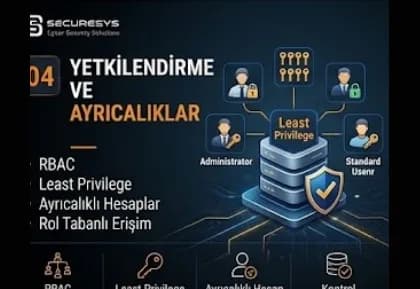
Database Authorisation: RBAC, Least Privilege and Privileged Accounts
A database authorization guide: RBAC, least privilege, privileged accounts, PAM, JIT access, access review and segregation of duties.
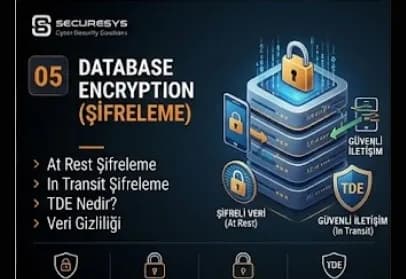
Database Encryption: What Are At Rest, In Transit and TDE?
A database encryption guide: at rest, in transit, TDE, column encryption, KMS/HSM key management, backup encryption and common mistakes.
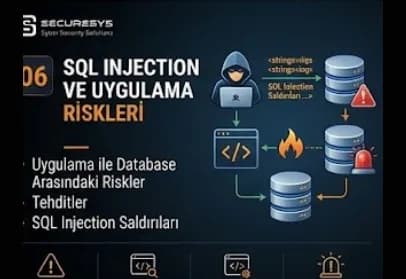
SQL Injection and Database Security: Risks Between Application and Database
SQL Injection and database security: parameterized queries, least privilege, ORM and stored procedure traps, WAF limits, SAST/DAST and incident response.
Looking for professional support on this topic?
Our expert team will reach out for a free consultation as soon as possible.