How Is a Corporate Identity Security Architecture Built? IAM + PAM + IGA + ITDR + CIEM + Zero Trust
How is a corporate identity security architecture built? The whole of the IAM, PAM, IGA, ITDR, CIEM, non-human identity and Zero Trust layers.
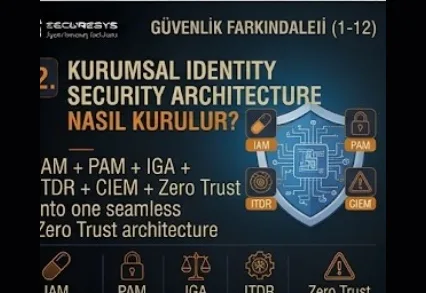
In modern organizations identity security is no longer only username and password management. Employees, managers, system administrators, service accounts, cloud workloads, API clients, service principals, automation bots and AI Agents move with different authorities inside the same digital ecosystem. For this reason a corporate Identity Security Architecture cannot be completed only by installing an IAM product, turning on MFA or taking administrator passwords into the PAM vault.
A real Identity Security Architecture must cover the whole lifecycle of the identity.
How is the identity created?
How is it verified?
Which authorities are given?
For how long are the authorities valid?
How is privilege raised?
How is the session monitored?
How is risky behaviour detected?
How are cloud permissions optimized?
How are service account and machine credentials protected?
What can the AI Agent do on which systems?
All of these questions are parts of a single architecture.
For this reason the modern Identity Security approach:
IAM + PAM + IGA + ITDR + CIEM + Passwordless + Non-Human Identity Security + Zero Trust
must be handled as an integrated security model consisting of this combination.
What Is Identity Security Architecture?
Identity Security Architecture is the security architecture that manages together the authentication, authorization, privilege, governance, detection and response processes of all the human and machine identities inside the organization.
The fundamental aim of this architecture is not only to enable the right user to enter the system.
The essential aim is:
To enable the right identity, at the right time, from the right device, to access the right resource with only the necessary minimum authority and for this access to be verified continuously.
This approach is broader than the classic access management model.
Traditional IAM most of the time focuses on the flow:
User
↓
Login
↓
Access
this flow.
Modern Identity Security, on the other hand, manages the cycle:
Identity Creation
↓
Authentication
↓
Authorization
↓
Privilege Activation
↓
Session Monitoring
↓
Behavior Analysis
↓
Risk Detection
↓
Access Adjustment / Revocation
this cycle.
For this reason Identity Security is not static but a continuously working control mechanism.
Why Has Identity Become the New Security Boundary?
Traditional security architecture was built on the network perimeter.
The internal network was accepted as trusted.
The external network was accepted as untrusted.
However, with cloud, SaaS, remote work and mobile devices this boundary disappeared.
The user can now provide access with the same identity over:
the office network,
the home network,
a mobile connection,
a cloud application
these.
For this reason network location on its own is not a trust signal.
The modern attacker too can prefer to obtain a valid identity instead of crossing the network boundary.
When a credential, token or session is obtained the attacker can look like a legitimate user.
For this reason the modern security perimeter:
Identity
has become this.
However, today the more correct expression is this:
Identity + Device + Session + Context
is the new security boundary.
The Fundamental Layers of an Identity Security Architecture
A corporate Identity Security Architecture consists of several main layers that are different from each other but work integrated.
These layers:
IAM – Identity and Access Management
PAM – Privileged Access Management
IGA – Identity Governance and Administration
ITDR – Identity Threat Detection and Response
CIEM – Cloud Infrastructure Entitlement Management
NHI Security – Non-Human Identity Security
Passwordless / Phishing-Resistant Authentication
Zero Trust
can be thought of as these.
Every layer answers a different question.
IAM:
Who can log in?
PAM:
Who can carry out a privileged operation?
IGA:
Who should have which authority?
ITDR:
Could this identity have been compromised?
CIEM:
Is there more permission than necessary on the cloud?
NHI Security:
Are the application and machine credentials safe?
Zero Trust:
Is the access really safe right now?
When these questions are answered together real Identity Security emerges.
IAM Is the Foundation of Corporate Identity Security
IAM forms the lifecycle and authentication layer of the human identities inside the organization.
When a new employee starts an identity is created.
According to department or role basic access is given.
The user can access applications over SSO.
They can carry out authentication with MFA or a Passkey.
When the user moves to another department the access is changed.
When they leave the account is disabled.
This process is handled as the Joiner-Mover-Leaver lifecycle.
Without IAM it is hard to form a strong foundation for the other Identity Security layers.
However, IAM on its own is not sufficient.
Because IAM gives the user access; it does not always solve whether this access is more than necessary or whether it has been compromised.
For this reason IAM must be integrated with the other security layers.
Where Does SSO Sit in an Identity Security Architecture?
SSO, that is, Single Sign-On, enables the user to access more than one application by authenticating once.
This is important in terms of user experience but in terms of security its more important advantage is that it centralizes authentication.
Instead of applications managing passwords separately they can use authentication over a central Identity Provider.
In this way controls such as:
MFA,
Passwordless,
Conditional Access,
Risk-Based Authentication
can be made central.
However, centralization at the same time makes the Identity Provider a high-value target.
For this reason the IdP must be protected strongly.
Phishing-Resistant Authentication Must Be a Fundamental Control
However strong the identity architecture is, if the authentication is weak the attacker can obtain initial access.
For this reason modern organizations must move away from password-only authentication.
MFA must be a fundamental control.
However, not all MFA methods are at the same security level.
For high-risk identities phishing-resistant authentication should be preferred.
Passkeys,
FIDO2 Security Keys,
WebAuthn-based authentication
methods such as these can significantly reduce the credential phishing risk.
Especially for high-impact identities such as:
Domain Admin
Global Administrator
PAM Administrator
Security Administrator
phishing-resistant MFA must be an important security baseline.
What Does Passwordless Provide in Identity Security?
Passwordless Authentication reduces the reusable password attack surface.
A traditional password:
can be stolen with phishing,
can be reused on other services,
can be used in credential stuffing.
Passkeys and FIDO2 solve this problem differently using public-key cryptography.
However, using passwordless does not mean the Identity Security programme has been completed.
After authentication artifacts such as:
a Session Token
an OAuth Grant
a Refresh Token
Device Registration
can still be attack targets.
For this reason strong authentication must be used together with continuous session security.
Why Should PAM Be a Separate Layer?
Standard user access and privileged access should not be managed inside the same security model.
Administrator accounts are much more valuable for the attacker.
When a standard user is compromised the impact can be limited.
However, when a Domain Admin is compromised the entire domain can be at risk.
For this reason a separate control layer is necessary for privileged identities.
PAM is this control layer.
Modern PAM:
Credential Vault
Password Rotation
Session Management
Session Recording
JIT Access
JEA
Zero Standing Privilege
can provide capabilities such as these.
The aim is to make privileged access minimal and controlled.
A Vault on Its Own Is Not PAM
One of the common mistakes in organizations is thinking that PAM has been applied once the password is put in the Vault.
The real target of modern PAM is to be able to enable the administrator to carry out a privileged operation without knowing the password.
The user:
authenticates to PAM.
PAM establishes the connection to the target system.
The credential is not shown to the user.
The session is monitored.
When the operation ends the password can be rotated.
In a more advanced model a temporary credential is used instead of a static password.
For this reason modern PAM:
Password Vaulting
not this:
Privileged Access Control
must be evaluated as this.
Zero Standing Privilege Is One of the Main Targets of Identity Security
Standing Privilege is the identity carrying high authority continuously.
When the attacker compromises the account they can use the existing permissions immediately.
In the Zero Standing Privilege approach permanent high privilege is brought down to the minimum level.
The user or workload receives temporary privilege only at the moment of need.
For example:
A developer is not normally a production admin.
During an incident:
they create a request,
obtain approval,
become admin for 30 minutes.
When the period ends the privilege expires.
This model can be applied for human administrators, cloud roles and AI Agents.
Why Is IGA the Identity Governance Layer?
IAM gives access.
IGA, on the other hand, questions whether this access is correct.
A user may have worked in the Finance department three years ago.
Afterwards they may have moved to the Operations team.
However, the Finance access can still remain.
This creates permission creep.
IGA:
Access Review
Access Certification
SoD
Role Mining
Entitlement Management
JML Governance
controls the access lifecycle over processes such as these.
For this reason Identity Security is not only authentication but an authorization governance problem.
Why Is Access Review Critical?
A permission given to a user must not be accepted as valid forever.
At particular intervals the business owner or manager must answer the question:
"Is this access still necessary?"
this question.
However, an access review must not be only a checkbox process.
The reviewer must see the permission's:
what it means,
how risky it is,
when it was last used
these.
For this reason IGA, CIEM and usage analytics integration increases the access review quality.
Why Is Segregation of Duties Important in Identity Security?
Least Privilege is not only reducing the number of permissions.
Some permissions can be safe separately but can become dangerous together.
For example the same user:
Vendor Creation
Payment Approval
should not have these authorities.
This is the Segregation of Duties problem.
IGA can detect these risks with Toxic Combination rules.
This is important especially for finance, ERP and compliance environments.
ITDR Is the Detection Layer of Identity Security
Preventive controls reduce attacks but no security control is absolute.
The user can be exposed to phishing.
A session token can be stolen.
A service account can be compromised.
For this reason an Identity Security Architecture must contain a detection layer.
ITDR, Identity Threat Detection and Response:
credential theft,
account takeover,
MFA fatigue,
session hijacking,
token abuse,
privilege escalation,
lateral movement
focuses on detecting identity-based attacks such as these.
This is a critical visibility layer for the modern SOC.
Why Does Authentication Success Not Mean Trust?
In the traditional model if the user has passed the MFA they can be accepted as trusted.
However, the attacker with:
AiTM phishing,
a stolen session,
social engineering
can obtain a legitimate session after authentication.
For this reason:
Authentication Successful
now:
Identity Trusted Forever
should not mean this.
A modern architecture must evaluate identity and session risk continuously.
Continuous Authentication and Continuous Access Evaluation
Continuous Authentication is the risk evaluation continuing after the user has logged in.
For example the user can be low-risk during login.
However, 20 minutes later an endpoint compromise alarm can arise.
In this case the session must be re-evaluated.
The security system:
Require MFA
Revoke Token
Block Session
can apply these.
This is the adaptive identity defense approach.
CIEM Strengthens the Cloud Authorization Layer
Cloud environments are extremely complex in terms of permissions.
AWS IAM policies,
Azure RBAC,
Google Cloud roles
can contain very granular permissions.
A user's role can carry hundreds of permissions.
However, the actual usage can be only a few of them.
CIEM analyzes this difference.
For this reason the fundamental aim of CIEM is to provide the transformation:
Granted Privilege → Required Privilege
this transformation.
The Relationship Between CIEM and Least Privilege
When Least Privilege is designed manually it is most of the time not ideal.
It can be hard to know from the start exactly which 8 permissions a developer needs.
For this reason a broad role is given.
CIEM monitors the actual usage.
After 90 or 180 days:
unused permissions
can be determined.
The role is optimized.
This is the continuous Least Privilege model.
Effective Permissions Analysis
An identity's role name on its own may not show the real privilege level.
Nested groups,
inherited roles,
resource policies,
service account impersonation
relationships such as these can increase the effective permissions.
For this reason modern Identity Security tools must analyze not the role name but the actual access paths.
This is important for both CIEM and ISPM.
What Is ISPM?
Identity Security Posture Management aims to analyze proactively the misconfigurations, excessive privileges and risky identity relationships inside the identity infrastructure.
For example ISPM:
Dormant Admin Accounts
Excessive Privileges
Weak Authentication
Risky Delegation
Attack Paths
can detect these.
While ITDR works on active threats ISPM aims to reduce the attack surface before the attack starts.
For this reason:
ISPM = Preventive Identity Posture
ITDR = Active Identity Threat Detection
it can be thought of in this way.
What Is an Identity Attack Path?
An attacker does not have to find a Domain Admin credential directly.
Starting over a low-privilege user they can progress to high privilege over permissions relationships.
For example:
User A
↓
Can Modify Group B
↓
Group B Controls Server C
↓
Server C Contains Admin Credential
↓
Domain Admin
a path such as this can arise.
This is an Identity Attack Path.
A modern Identity Security Architecture must make these relationships visible.
Why Should Non-Human Identity Security Be Included in the Main Architecture?
The number of human users in the organization can be 5,000.
However, the number of:
Service Accounts
API Keys
Service Principals
Certificates
Cloud Workloads
Automation Bots
can be much higher.
For this reason NHI Security is not a separate niche subject of Identity Security but one of its main layers.
Machine identities cannot use MFA.
For this reason different controls are necessary:
Workload Identity
Certificates
Dynamic Secrets
Short-Lived Tokens
Managed Identity
Secrets Management
must be applied.
How Is Service Account Security Integrated?
Service accounts must first be discovered.
For every account:
the Owner
Purpose
Privilege
Dependency
Credential Age
must be known.
Then:
interactive login can be closed,
permissions can be reduced,
password rotation can be automated.
At a more advanced stage instead of a static service account password a managed service identity or workload identity can be used.
This is Machine Identity modernization.
Where Is Secrets Management in the Identity Architecture?
Application secrets must not be kept inside source code or configuration files.
A central Secrets Manager can be used.
However, the most mature architecture is not only carrying the secrets to a secure store.
The essential target is to reduce the need for static secrets.
The traditional model:
Application → Password
The second level:
Application → Vault → Password
The more mature model:
Application Identity → Temporary Credential
is in this way.
This is the short-lived machine identity model.
Why Is AI Agent Identity Security Becoming a New Main Layer?
AI Agents can now carry out autonomous actions on corporate systems.
For this reason an AI Agent must be managed as a separate identity.
The agent:
must use a unique identity,
must not carry a static password,
must receive task-specific permissions,
must use approval for high-risk actions,
must be under behavior monitoring.
The agent carrying broad administrator access creates a serious risk.
For this reason AI Agent Security will in the future be one of the important use cases of PAM, CIEM and ITDR.
Identity Security Architecture for an AI Agent
An example flow for an AI Agent:
Business User / Process
↓
Agent Identity
↓
Authorization Policy
↓
Allowed Tools
↓
JIT Permission
↓
Short-Lived Token
↓
Target Resource
↓
Audit + ITDR
If there is a high-risk action:
↓
Human Approval
This model provides a controlled balance between autonomous capability and security.
What Is Identity Fabric?
Identity Fabric is the architectural approach that expresses IAM, PAM, IGA, NHI, ITDR and cloud identity systems being integrated around a common identity context and policies instead of working as silos independent of each other.
For example for the same identity:
IAM Authentication Risk
IGA Entitlement Data
PAM Privilege Data
ITDR Behavior Risk
CIEM Cloud Permission Data
can be evaluated together.
In this way a more correct access decision can be given.
This creates Identity Intelligence.
What Is Identity Intelligence?
Identity Intelligence is the context coming from different systems about an identity being combined.
For example the user:
Finance Director
PIM Eligible Global Admin
High User Risk
Unmanaged Device
may be carrying context in this way.
In this case a risk-based decision can be given instead of a simple login success.
Identity Intelligence makes security controls more context-aware.
What Is Adaptive Access?
Adaptive Access is the access policy changing dynamically according to the identity risk.
For example a low-risk user:
access with SSO.
A medium-risk user:
Step-Up MFA.
A high-risk user:
Block.
A privileged user:
Phishing-Resistant MFA + Managed Device + JIT.
This is a more advanced model than a static access policy.
Can Authorization Also Be Adaptive?
Yes.
Modern Identity Security should not make only authentication adaptive.
Authorization can also be risk-based.
For example the user normally has production read access.
When the risk level rises:
Read-Only Mode
can be applied.
Privileged actions can be blocked temporarily.
This is the Adaptive Authorization approach.
Identity Risk × Privilege × Resource Sensitivity
Modern access decisions can be thought of over three fundamental variables:
Identity Risk
The user or machine compromise probability.
Privilege
How powerful a permission the identity carries.
Resource Sensitivity
The criticality of the resource accessed.
For example:
Low-Risk User + Public Data
can be low risk.
However:
High-Risk Identity + Admin Privilege + Production Database
creates a critical risk.
This combination can form the foundation of the access decision.
How Does a Zero Trust Identity Architecture Work?
Zero Trust:
Never Trust, Always Verify
rests on this principle.
However, this does not mean continuously requesting MFA.
The essential aim is to evaluate every access request with context.
Identity
Device
Privilege
Resource
Risk
Session
the signals must be evaluated together.
For this reason Identity Security is at the centre of Zero Trust.
Are Zero Trust and Least Privilege the Same Thing?
No.
Least Privilege targets the identity carrying minimum permission.
Zero Trust targets access being verified continuously with context.
The two are used together.
For example the user may be carrying minimum privilege.
However, if they are providing access over a compromised device they must still be blocked.
Can Human, Machine and AI Identities Be Managed Under a Single Governance?
Yes, but the policies do not have to be the same.
For Human Identity:
MFA,
a Passkey,
SSO
can be applied.
For Machine Identity:
a Certificate,
Workload Identity,
a Short-Lived Token
can be applied.
For an AI Agent:
Task-Based Authorization,
JIT Permission,
Human Approval
can be applied.
However, the common governance principles are the same:
Owner
Lifecycle
Least Privilege
Monitoring
Audit
For this reason the Universal Identity Governance approach is gaining importance.
Identity Inventory Must Be the First Step
You cannot protect an identity you do not know.
For this reason the first step of an Identity Security programme must be the inventory.
Inside the inventory:
Human Users
Administrators
Service Accounts
Guest Users
Service Principals
API Keys
Certificates
Workload Identities
AI Agents
must be present.
For every identity an owner and risk class must be determined.
Identity Classification
Identities can be classified according to risk level.
For example:
Tier 0 Identities
Identity infrastructure administrators.
Privileged Identities
System administrators.
Standard Workforce Identities
Normal employees.
External Identities
Guests and vendors.
Machine Identities
Applications and services.
AI Agent Identities
Autonomous systems.
This classification enables security policies to be designed more correctly.
Privileged Identity Inventory
Especially high-impact identities must be monitored in a separate inventory.
For example:
Domain Admin
Enterprise Admin
Global Administrator
Cloud Owner
Database Admin
Backup Admin
PAM Admin
Security Admin
These identities must be reviewed regularly in terms of permanent membership and actual usage.
Identity Lifecycle Architecture
Every identity must have a lifecycle.
Create
↓
Approve
↓
Provision
↓
Use
↓
Review
↓
Modify
↓
Disable
↓
Delete
This lifecycle must be applied not only for employees but for service accounts and AI Agents too.
Dormant identities must not form an attack surface.
Joiner-Mover-Leaver Automation
For human users JML automation is a fundamental capability of Identity Security.
Joiner:
minimum birthright access.
Mover:
the old access is removed.
Leaver:
access is revoked quickly.
The Mover stage in particular is important.
Because permissions mostly accumulate here.
This reduces the permission creep problem.
Identity Security and HR Integration
The HR system can be the authoritative source for the human identity lifecycle.
An employee status change is transferred to IAM.
IAM starts provisioning/deprovisioning.
IGA adjusts the entitlements.
This automation reduces the orphaned accounts risk.
However, data quality is of critical importance.
Identity Security and SOC Integration
Without identity context the SOC can have difficulty prioritizing an incident correctly.
For example EDR:
Malware Detected – User X
produces this alert.
The Identity Security platform can add this context:
User X = Global Administrator Eligible
Finance Database Access = Yes
PAM Privilege = High
In this case the incident becomes critical.
For this reason Identity Context is extremely valuable for the SOC.
What Does the SIEM Do in an Identity Security Architecture?
The SIEM:
IAM,
PAM,
IGA,
AD,
Entra ID,
ITDR,
Secrets Manager
can collect these logs centrally.
Thanks to correlation the attack chain can be seen.
For example:
Phishing
↓
New Login
↓
MFA Reset
↓
PIM Activation
↓
Privileged Session
↓
Data Download
can be analyzed as a single incident chain.
How Does XDR Work with Identity Security?
XDR can correlate endpoint, e-mail, cloud and identity telemetry.
For example:
Phishing Email
↓
Browser Credential Theft
↓
Risky Sign-In
↓
Endpoint Command Execution
↓
Lateral Movement
can be seen as a single incident.
ITDR deepens the identity layer.
For this reason XDR and ITDR complement each other.
Why Is PAM and SIEM Integration Critical?
Privileged sessions are high-value security events.
PAM logs:
Who Accessed
Which System
When
What Session
provide context such as this.
The SIEM can detect abnormal privileged behavior.
For example if an administrator is connecting to 40 servers at 03:00 at night it can create a risk.
How Are IGA and ITDR Used Together?
ITDR detects the user compromise risk.
IGA provides access entitlement data.
When these two pieces of information are combined the response becomes stronger.
For example:
A High-Risk User
and at the same time:
Payment Approval + Vendor Creation
carries these permissions.
This incident can be critical in terms of business risk.
An access review can be started automatically.
CIEM and ITDR Integration
ITDR produces a cloud identity compromise alarm.
CIEM shows the same identity's effective permissions.
For example the identity:
Owner,
Secret Reader,
Database Contributor
can have these permissions.
In this case the SOC can understand the blast radius quickly.
This is:
Threat Context + Permission Context
the combination.
PAM and ITDR Integration
ITDR can detect a high-risk administrator.
PAM:
new privileged requests block,
active session terminate,
credential rotate
can do these.
This is the automated identity response model.
Identity Security Response Playbook
A standard incident response must be created for a compromised identity.
An example:
Detect Risk
↓
Revoke Sessions
↓
Revoke Tokens
↓
Disable / Restrict Account
↓
Rotate Credentials
↓
Remove Privilege
↓
Isolate Device
↓
Review OAuth Grants
↓
Perform Access Review
↓
Investigate Activity
This playbook can form the foundation for identity incident response.
Why Is a Password Reset Not Sufficient on Its Own?
During a modern identity compromise the attacker can have the session token.
Even if the password is changed the active session can continue.
For this reason:
Password Reset
Token Revocation
Session Revocation
MFA Method Review
must be applied together.
This is a critical subject especially for cloud identity incidents.
Recovery and Break-Glass Design
Identity systems can become completely unusable.
For this reason emergency access accounts are necessary.
However, break-glass accounts must not be used for normal operations.
Every usage:
an alert,
an audit,
a post-event review
must produce these.
Recovery security must also be designed as strongly as the primary authentication.
Identity Disaster Recovery
Identity infrastructure is a critical business service.
Active Directory,
the Identity Provider,
PAM,
the Secrets Manager
when these are unavailable many applications may not work.
For this reason an Identity DR plan must be created.
Especially:
AD Forest Recovery
Cloud Admin Recovery
PAM Recovery
Secrets Vault Recovery
must be tested.
Identity Security Architecture Roadmap
A corporate transformation should not be completed in a single project.
A healthy roadmap can proceed in stages.
Stage 1 – Identity Discovery
A human and machine identities inventory is created.
Stage 2 – Authentication Hardening
MFA, Passwordless and Conditional Access are applied.
Stage 3 – Privileged Access Control
PAM, PIM, JIT and Tiering are applied.
Stage 4 – Governance
IGA, Access Review, SoD and lifecycle automation are set up.
Stage 5 – Cloud Entitlement Optimization
CIEM and cloud Least Privilege are applied.
Stage 6 – Machine Identity Security
Secrets Management, Workload Identity and NHI governance are applied.
Stage 7 – ITDR
Identity threat detection and response are applied.
Stage 8 – AI Agent Governance
Agent identities and permissions are managed.
Stage 9 – Identity Fabric
All the systems are combined inside a context-sharing architecture.
This roadmap provides a maturity-based transformation.
Identity Security Architecture Product Selection
Identity Security is not limited to a single vendor or single product.
For IAM platforms such as Microsoft Entra ID, Okta or Ping Identity can be evaluated.
On the PAM side CyberArk, BeyondTrust, Delinea, One Identity, WALLIX or different enterprise PAM solutions can be used.
On the IGA side governance platforms such as SailPoint, Saviynt or One Identity can be found.
In the Secrets Management area HashiCorp Vault and cloud-native secret managers can be evaluated.
ITDR capabilities, on the other hand, can be provided over the different solutions of identity, endpoint and XDR vendors.
Here the fundamental criterion must be not the product list but the architecture fit.
The organization must first determine which security problem it will solve and then choose the product.
The Identity Security Product Sprawl Risk
When a different product is used for every problem identity data can be separated into silos.
IAM is on another platform.
PAM is on another platform.
IGA is on another platform.
Cloud IAM is on another platform.
ITDR is on another platform.
For this reason integrations become critical.
The Identity Security Architecture of the future must be not product-centric but:
Identity-Centric
this.
Whichever platform the identity is on a common context must be created.
Identity Security KPIs
The success of the programme must be measured.
Example KPIs:
MFA Coverage
Phishing-Resistant MFA Coverage
Passwordless Adoption
Permanent Admin Count
PAM Coverage
JIT Privilege Adoption
Access Review Completion
Dormant Account Count
Unused Permission Ratio
Overprivileged Identity Count
Service Account Rotation Coverage
Short-Lived Credential Adoption
High-Risk Identity Count
Identity Incident MTTD
Identity Incident MTTR
Agent Identity Coverage
metrics such as these can be these.
The Privilege Reduction KPI
One of the especially important KPIs can be permanent privilege reduction.
For example at the beginning there are:
300 permanent privileged accounts
these.
After the JIT/PIM rollout:
60 permanent privileged accounts
remain.
This provides a measurable security improvement.
The Identity Attack Surface KPI
The attack surface can be measured with these metrics:
Dormant Accounts
Unused Privileges
Legacy Authentication
Long-Lived Credentials
Shared Accounts
Unowned Service Accounts
Broad OAuth Grants
These metrics must be reduced continuously.
Identity Security Maturity Model
Corporate maturity can be thought of over five levels.
Level 1 – Account Management
Identity is mostly managed over a username/password. Access can be manual and broad. Visibility is low.
Level 2 – Central IAM
SSO, MFA and centralized lifecycle management are applied. Basic privileged account controls start.
Level 3 – Integrated Identity Governance
PAM, IGA, Passwordless and cloud IAM controls are integrated. Least Privilege and JIT become widespread.
Level 4 – Identity Threat Defense
ITDR, CIEM, NHI Security and behavioral analytics are applied. Identity risk is included in SOC processes.
Level 5 – Adaptive Identity Security Fabric
Human, machine and AI Agent identities are managed inside a common context. Access, privilege and session are continuously adjusted with real-time risk. Zero Standing Privilege and short-lived credentials become the default.
This transformation:
Account Management
↓
Identity Management
↓
Identity Governance
↓
Identity Threat Defense
↓
Adaptive Identity Fabric
proceeds in this way.
Corporate Identity Security Architecture Checklist
Organizations must be able to answer the following questions:
- Are all human identities in the inventory?
- Have privileged identities been classified separately?
- Are Service Accounts in the inventory?
- Are Machine Identities in the inventory?
- Are AI Agents in the inventory?
- Are the identity owners known?
- Is the JML lifecycle automated?
- Are Orphaned Accounts being detected?
- Are Dormant Accounts being closed?
- Is SSO widespread?
- Is MFA mandatory?
- Do privileged users use phishing-resistant MFA?
- Is a Passkey/FIDO2 roadmap present?
- Is Legacy Authentication being reduced?
- Is Conditional Access being applied?
- Is the PAM coverage sufficient?
- Are shared administrator accounts being removed?
- Is JIT privilege being applied?
- Is Zero Standing Privilege being targeted?
- Are privileged sessions being monitored?
- Is IGA being used?
- Are Access Reviews regular?
- Are SoD controls present?
- Is Permission Creep being monitored?
- Does CIEM analyze cloud permissions?
- Are unused cloud permissions being removed?
- Are Service Principals under governance?
- Are secrets centralized?
- Are hardcoded secrets being scanned?
- Are Short-Lived Credentials being used?
- Is Workload Identity being applied?
- Does ITDR monitor identity attacks?
- Are there Session Hijacking and Token Theft use cases?
- Is Identity Risk transferred to the SIEM and SOC?
- Are PAM/IGA/CIEM/ITDR integrated?
- Are AI Agent permissions task-scoped?
- Do high-risk AI actions require approval?
- Is an Identity Incident Response playbook present?
- Are Break-Glass accounts being monitored?
- Is Identity DR being tested?
- Are Identity Security KPIs being followed regularly?
This checklist must be used not only for audit purposes but as a continuous improvement tool.
The Most Frequently Made Mistakes in Corporate Identity Security
The first mistake frequently made in Identity Security projects is trying to solve the whole problem with a single product. Using IAM does not remove the need for PAM. Using PAM does not solve the IGA problem. Using MFA does not remove the need for ITDR. CIEM also does not take the place of human governance. Every technology answers a different security problem.
The second common mistake is focusing only on human users. When service accounts, service principals, API keys, certificates and AI Agents remain outside governance the organization's real identity attack surface becomes invisible.
The third important mistake is accepting permanent privilege as normal. If a user has once become an administrator they can remain an administrator for years. A modern architecture must make temporary privilege the default.
The fourth mistake is thinking authentication is the final point of identity security. Even if the user authenticates with strong MFA they can carry excessive permission or the session can be compromised. For this reason authorization and continuous monitoring are necessary together.
The fifth mistake, on the other hand, is keeping identity security telemetry separate from the SOC. Identity compromise is at the centre of most modern attack chains. Without identity context the SOC cannot evaluate the incident impact correctly.
Frequently Asked Questions
What is Identity Security?
Identity Security is the holistic protection of the authentication, authorization, privilege, governance, monitoring and threat response processes of human and non-human identities.
What is Identity Security Architecture?
It is the corporate identity security architecture that brings together layers such as IAM, PAM, IGA, ITDR, CIEM, NHI Security, passwordless authentication and Zero Trust.
What is IAM?
IAM manages the lifecycle, authentication, SSO and standard access management processes of user identities.
What is PAM?
PAM protects privileged accounts and high-risk administrator access with methods such as a Vault, JIT, session control and password rotation.
What is IGA?
IGA controls which permissions identities should have with governance, access review, certification and SoD processes.
What is ITDR?
Identity Threat Detection and Response aims to detect and respond to identity-based attacks such as credential theft, account takeover, session hijacking and privilege escalation.
What is CIEM?
Cloud Infrastructure Entitlement Management helps Least Privilege to be applied by analyzing the excessive and unused permissions of cloud identities.
What is ISPM?
Identity Security Posture Management is the security approach that analyzes identity misconfigurations, risky permissions and attack paths proactively.
What is Identity Fabric?
It is the architectural approach that enables IAM, PAM, IGA, NHI, ITDR and cloud identity capabilities to work integrated over a common identity context.
Should IAM and PAM be used together?
Yes. IAM manages standard workforce access, PAM manages privileged access. They complement each other.
Are PAM and PIM the same thing?
No. While PIM is used especially in privileged role activation and JIT cloud privilege use cases, PAM can contain broader privileged credential and session management capabilities.
What is the difference between IAM and IGA?
IAM provides the access technically. IGA governs whether the access is correct in terms of business and compliance.
What is the difference between IGA and CIEM?
IGA focuses on enterprise-wide access governance, CIEM on cloud infrastructure permissions and actual usage analytics.
Are ITDR and SIEM the same thing?
No. ITDR provides identity-specific threat detection. The SIEM collects telemetry from different security domains and carries out enterprise-wide correlation.
Is Identity Security part of Zero Trust?
Yes. Identity is one of the most important signals of Zero Trust access decisions.
Is passwordless sufficient?
No. Passwordless reduces the credential phishing risk but session security, authorization, privilege and monitoring are still necessary.
What is a Non-Human Identity?
It is the general name of the machine identity types used by applications, services, workloads, bots and AI Agents.
Is MFA used for Machine Identity?
Instead of human-oriented MFA mechanisms such as certificates, workload identity, managed identity and short-lived tokens are used.
What is AI Agent Identity Security?
It is the unique identity, permissions, credential lifecycle, tool access, audit and threat monitoring processes of AI Agents being managed safely.
What is Zero Standing Privilege?
It is the approach of high privilege not being present continuously on the identity but being given temporarily only at the moment of need.
What is Continuous Authentication?
It is the risk and session context being evaluated continuously after the user has logged in.
What is Adaptive Authorization?
It is the identity's permissions or access level being changed dynamically according to real-time risk and context.
Conclusion: The Security Architecture of the Future Will Be Identity-Centric
Corporate cyber security was for many years designed as network-centric.
The firewall was at the centre of the boundary.
Inside the network was accepted as trustworthy.
However, cloud, SaaS, remote work, APIs, automation and AI Agents changed this model.
Now the same identity:
an on-premises server,
a cloud application,
a database,
SaaS,
an API
can carry out operations on these within the same day.
For this reason the real centre of a modern security architecture:
Identity
has become this.
However, identity security is not only user authentication.
For an identity to be accepted as safe:
who they are,
how they authenticated,
which device they came over,
which permissions they have,
which resource they accessed,
how they behaved,
which risk signals they carry
must be evaluated together.
For this reason the formula of a modern Identity Security Architecture:
IAM
PAM
IGA
Passwordless Authentication
ITDR
CIEM
Non-Human Identity Security
AI Agent Identity Security
Zero Trust
can be thought of as this.
However, the real maturity is not these technologies being installed separately.
Real maturity is all of them being able to give a decision together over a common identity context.
For example when ITDR marks a user as high-risk:
IAM can revoke the session.
PAM can block the privileged access.
IGA can start an emergency access review.
CIEM can show the blast radius of the cloud privileges.
The SIEM/XDR can create an incident.
The SOC can isolate the endpoint.
This is:
Detect → Decide → Restrict → Respond
the identity security cycle.
In the future AI Agents and autonomous systems will also be included in this architecture.
An employee,
an administrator,
a service account,
a cloud workload
and an AI Agent
will be evaluated inside the same identity governance and risk ecosystem.
For this reason the Identity Security principle of the future can be summarized in this way:
Every Identity Must Be Known. Every Access Must Be Justified. Every Privilege Must Be Limited. Every Session Must Be Observable. Every Risk Must Be Actionable.
In its Turkish equivalent:
Every identity must be known. Every access must have a justification. Every authority must be limited. Every session must be observable. Every risk must be able to be turned into an action.
The aim of modern Identity Security is not only to enable the right person to enter the system; it is to enable every identity, whether human, machine or AI Agent, to have only the authority it needs, only for the period it needs it and inside a continuously verified trust model.
Related Articles
Identity & Access Management (PAM - IAM)
What Is Identity and Access Management? IAM, PAM, IGA and Modern Identity Security
What is identity and access management? IAM, PAM, IGA, ITDR, CIEM, non-human identity and a Zero Trust based modern identity security architecture.
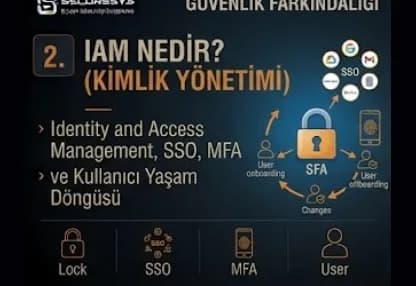
What Is IAM? Identity and Access Management, SSO, MFA and the User Lifecycle
What is IAM? A guide to the Identity Provider, SSO, MFA, passkeys, SAML/OIDC, SCIM and the joiner-mover-leaver user lifecycle.
What Is PAM? Privileged Access Management and Privileged Account Security
What is PAM? A guide to privileged account security, credential vaults, session recording, JIT/JEA, PEDM and Zero Standing Privilege.
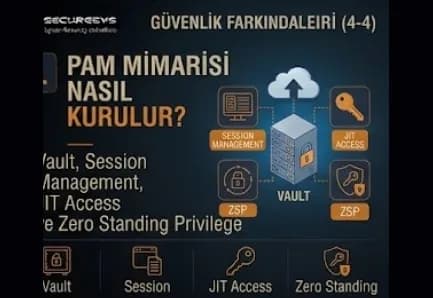
How Is a PAM Architecture Built? Vault, Session Management, JIT Access and Zero Standing Privilege
How is a PAM architecture built? Credential vault, session proxy, password rotation, JIT/JEA, Zero Standing Privilege, HA/DR and SIEM integration.
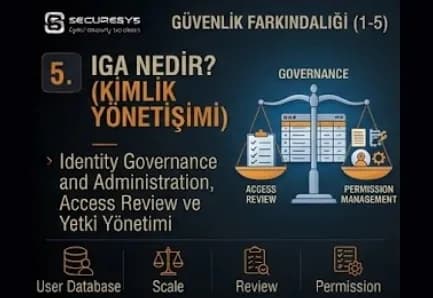
What Is IGA? Identity Governance and Administration, Access Review and Entitlement Management
What is IGA? A guide to entitlement management, access review, access certification, SoD, role mining and fighting permission creep.
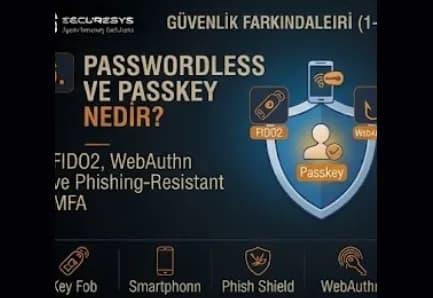
What Are Passwordless Authentication and Passkeys? FIDO2, WebAuthn and Phishing-Resistant MFA
What are passwordless authentication and passkeys? FIDO2, WebAuthn, phishing-resistant MFA and protection against MFA fatigue and AiTM attacks.
Looking for professional support on this topic?
Our expert team will reach out for a free consultation as soon as possible.