Service Account, API Key and Non-Human Identity Security: Secrets Management and Machine Identity
Service account, API key and non-human identity security: secrets management, dynamic secrets, workload identity and machine identity.
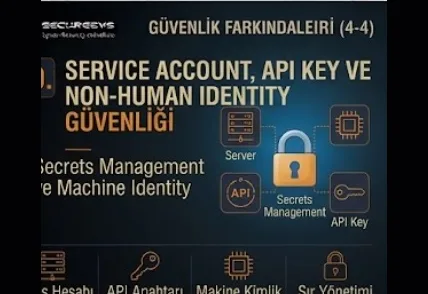
Corporate identity and access management was for many years handled predominantly over human users. Subjects such as employee accounts, administrator identities, MFA, SSO, passwordless authentication and privileged access management were at the centre of Identity Security programmes. However, together with modern cloud, DevOps, SaaS, API and automation architectures a large part of the identities organizations have no longer belongs to people.
Applications communicate with each other. The CI/CD pipeline carries out a deployment to the production environment. The backup application connects to the database. The monitoring agent collects data from servers. A Kubernetes workload uses cloud APIs. An RPA bot runs a business process. An AI Agent takes action on corporate applications.
All of these structures in some way need authentication and authorization.
This is exactly why one of the fastest growing areas of modern Identity Security has become Non-Human Identity Security – NHI Security.
Service accounts, API keys, service principals, certificates, access tokens, workload identities and application secrets form the invisible identity infrastructure of modern organizations. These credentials most of the time live longer than a user account, do not use MFA and can access production systems directly.
For this reason the fundamental question is now not only:
"Is the user account safe?"
this.
At the same time the answer to this question must be given:
"With which identity are all the machines, applications and services that carry out automated operations on behalf of the organization working and how safe are the authorities of these identities?"
What Is a Non-Human Identity?
A Non-Human Identity is the identity used by an application, service, workload, device, bot or automation process instead of a human user.
These identities can be represented with different technologies.
For example:
a Service Account
a Service Principal
an API Key
an Access Token
a Certificate
an SSH Key
a Workload Identity
a Managed Identity
can each be a Non-Human Identity mechanism.
The fundamental aim of an NHI is to provide authentication during machine-to-machine communication.
For example when an application connects to a database the database does not care whether it is human. It looks at whether the application presents a valid credential.
If this credential is compromised the attacker can behave like the application.
For this reason NHI security is directly machine authentication security.
What Is a Service Account?
A Service Account is a special account type used by an application or background service.
For example a Windows service can work with the account:
svc_backup
this account.
An application server can connect to the database with the account:
svc_app_prod
this account.
These accounts are most of the time not used for interactive user login.
However, the big problem is this:
Service account credentials are generally not changed for a long time.
Because a password change can break the application.
For this reason in organizations the approach:
"Do not touch this account's password, the system will not work."
is quite widespread.
As a result service accounts that have been using the same password for 5–10 years can emerge.
This is a serious Identity Security risk.
Why Can a Service Account Be Riskier Than a Normal User Account?
A human user's password can change at particular intervals.
MFA can be used.
Login behavior can be monitored.
When the employee leaves the account can be closed.
A service account, on the other hand, can stay active for years.
Its owner may not be known.
MFA cannot be applied.
The password can be kept inside the application configuration.
In addition a service account can carry high privilege.
For this reason when the attacker obtains a service account credential they can provide access for a long time without being noticed.
There are three fundamental factors that increase the risk of service accounts:
Long-Lived Credential
High Privilege
Low Visibility
These three together form a serious attack surface.
Why Is a Service Account Inventory the First Step?
The most important starting point of a Service Account Security programme is the inventory.
The organization must be able to answer these questions:
How many service accounts are there?
On which systems are they used?
Who is the owner?
Which application uses it?
Which permissions does it have?
Is interactive login open?
When did the password change?
Where is the credential stored?
If the answers to these questions are not known safe rotation or governance cannot be applied.
Because changing a service account password can stop the connected application.
For this reason discovery and dependency mapping are of critical importance.
What Is Dependency Mapping?
Dependency Mapping is the process of determining by which systems and applications a service account or secret is used.
For example the account:
svc_reporting
can be used by a Windows Scheduled Task,
two application servers
and a reporting engine
these.
Before the password is changed these dependencies must be known.
Otherwise after the rotation:
services stop,
application errors,
database connection failures
can arise.
For this reason service account security is not only password rotation.
The essential subject is:
Credential Lifecycle + Dependency Awareness
to manage these together.
How Is Service Account Password Rotation Carried Out?
Service account credentials must be rotated regularly.
However, manual rotation can create an operational risk.
Modern PAM and Secrets Management platforms can automate this process.
For example the system:
changes the service account password,
updates the target application configuration,
restarts the service,
carries out a health check.
This is the automated rotation model.
The aim is to reduce the static credential lifetime.
What Is an API Key?
An API Key is the credential type used for an application or user to provide access to an API service.
Because it is simple and useful it is used widely.
For example an application can use a mechanism like:
Authorization: API_KEY
this.
However, an API key carries an important risk in terms of security.
Because an API key is mostly a bearer credential.
That is, whoever knows the key can use it.
For this reason if the key leaks to a source code repository the attacker can provide access.
How Is API Key Security Provided?
The fundamental principles for API keys are these:
It must be stored as a secret.
It must not be written inside source code.
Minimum permissions must be given.
Regular rotation must be applied.
Usage monitoring must be carried out.
Expiry must be used if possible.
For sensitive APIs stronger authentication methods should be preferred instead of a static API key.
This approach is the intersection point of API security and Identity Security.
What Is a Hardcoded Secret?
A Hardcoded Secret is a password, API key, token or other credential being written directly inside source code.
For example:
DB_PASSWORD = "Prod12345"
or:
AWS_ACCESS_KEY = "..."
configurations such as these are a hardcoded secret risk.
When this secret is pushed to a source code repository it can be seen by everyone who has repository access.
If it is a public repository it can be discovered by an attacker over the internet.
Because of git history even if the secret is deleted afterwards it can remain in past commits.
For this reason a hardcoded secret is a serious security finding in terms of DevSecOps.
If the Secret Is Deleted from the Git Repository Does the Risk End?
No.
If the secret was committed earlier it must be accepted as exposed.
Only deleting it from the file is not sufficient.
The credential must be rotated.
Because the attacker may have obtained the secret from a past commit or a cached repository.
For this reason the fundamental incident response approach:
Secret Exposed → Revoke / Rotate
should be this.
What Is Secrets Management?
Secrets Management is the security approach that provides for the sensitive credentials used by applications and workloads to be managed centrally, in a controlled and automated way.
Secrets:
Passwords
API Keys
Tokens
Certificates
Encryption Keys
Database Credentials
can be these.
The fundamental duty of a Secrets Manager is to store these credentials safely, to apply an access policy, to create an audit trail and where possible to provide rotation.
For this reason Secrets Management is one of the fundamental components of a modern DevSecOps architecture.
What Is a Secret Vault?
A Secret Vault is the central structure in which sensitive credentials are stored encrypted and access-controlled.
Instead of keeping the secret inside source code the application can obtain it over the Vault during runtime.
The traditional model:
Application Code → Static Password
The modern model:
Application Identity → Vault → Secret
is in this way.
In a more advanced model even the secret does not have to be static.
The Vault can produce a temporary credential.
What Are Dynamic Secrets?
Dynamic Secrets are credentials created at the moment of need and automatically expired after a particular period.
For example when an application wants to connect to the database the Vault can create a new database username and password.
The credential:
30 minutes
is valid for this.
Afterwards it is revoked.
This approach can seriously reduce the static service account password risk.
Because even if the attacker obtains the credential the usage period is limited.
The fundamental security model of Dynamic Secrets:
Create on Demand → Use → Expire → Destroy
is in this way.
What Is a Short-Lived Credential?
A Short-Lived Credential is an authentication credential that is valid for a short period instead of a long-lived static password or API key.
This credential:
a token,
a certificate,
a temporary password
can be these.
The security advantage is that it reduces the attack window.
Even if the attacker obtains the credential they cannot use it after expiry.
For this reason a modern machine identity architecture should as far as possible turn towards the transformation:
Long-Lived Secrets → Short-Lived Credentials
this transformation.
What Is Workload Identity?
Workload Identity is the model that enables workloads such as an application, container, virtual machine, serverless function or CI/CD pipeline to authenticate with their own identity.
In this approach the application does not have to carry a static username and password.
The platform recognizes the workload and gives a temporary token.
This is a strong model for cloud-native environments.
Workload Identity is one of the most important components of modern Machine Identity Security.
Why Is a Managed Identity Important?
A Managed Identity is the workload identity model managed by the cloud provider.
The application does not have to store a manual secret.
For example instead of using a client secret for database access the application can carry out authentication with a managed identity.
This reduces these risks:
Secret Storage
Secret Rotation
Credential Leakage
Hardcoded Credentials
For this reason where possible a managed identity can be preferred over a static service principal secret.
Service Principal Security
A Service Principal is the machine identity used for a cloud application or automation.
A service principal can carry high privilege.
For example a CI/CD pipeline can use the Contributor role on the production subscription.
The problem is that the service principal credential is valid for a long time.
For this reason:
certificate-based authentication,
federated identity,
a short-lived token,
least privilege
should be preferred.
Service principal permissions must be reviewed regularly with CIEM and IGA.
What Is Workload Identity Federation?
Workload Identity Federation enables an external system to authenticate to a cloud provider without storing a static credential.
For example a CI/CD platform instead of storing:
a permanent AWS access key
can use a federated identity token.
The cloud platform verifies this token and produces a temporary credential.
This model can seriously reduce the credential storage risk.
Why Are CI/CD Secrets Critical?
CI/CD pipelines can carry out operations on production environments with high authority.
They can carry out a deployment.
They can run database migrations.
They can create cloud infrastructure.
For this reason CI/CD secrets are extremely valuable for the attacker.
When the repository or pipeline is compromised the attacker can obtain production credentials.
For this reason pipeline secrets:
a central secret store,
a short-lived credential,
OIDC federation,
a restricted scope
must be managed with these.
Why Is Putting an Administrator Password in the Pipeline Wrong?
A static administrator password being present inside a CI/CD pipeline creates a serious risk.
Because the secret can leak over pipeline logs,
the configuration,
a backup,
the repository
these.
In addition the credential may not change for a long time.
The safer model:
Pipeline Identity → Temporary Role → Deployment
is in this way.
This is the DevSecOps and Zero Trust machine identity approach.
Are Kubernetes Secrets Safe?
Kubernetes Secrets can be used for applications to carry sensitive data.
However, using a Kubernetes Secret on its own does not mean enterprise-grade secrets management.
Secret storage, encryption, RBAC and cluster security must be configured correctly.
For critical secrets external secrets manager integration can be evaluated.
The aim is to prevent application secrets spreading in an uncontrolled way inside the cluster configuration.
What Is a Kubernetes Service Account?
A Kubernetes Service Account can enable a pod or workload to authenticate with the Kubernetes API.
An incorrect RBAC configuration can give the service account more permission than necessary.
For example when a pod is compromised the attacker can provide broader access on the cluster using the service account token.
For this reason for Kubernetes service accounts:
Least Privilege
Dedicated Identity
Token Expiry
RBAC Review
must be applied.
Certificate-Based Machine Identity
Machine authentication is not carried out only with passwords and tokens.
Certificates can also be used for machine identity.
Mutual TLS, that is, mTLS, can enable two systems to verify each other over a certificate.
This provides strong authentication especially for service-to-service communication.
However, if the certificate lifecycle is not managed different risks arise.
Expired certificates can create outages.
Long-lived certificates can increase the compromise risk.
For this reason the certificate lifecycle is also part of Machine Identity Security.
The Relationship Between PKI and Machine Identity
Public Key Infrastructure enables digital certificates to be created, distributed, verified and revoked.
In modern environments as machine identities increase the number of certificates can also increase seriously.
For this reason organizations must take into the inventory and lifecycle management scope not only user certificates but also the certificates on:
servers,
services,
containers,
APIs,
IoT devices
these.
This area is gaining importance increasingly as Machine Identity Management.
SSH Key Security
SSH keys are used widely especially for Linux server administration and automation.
However, if the private key is used for years without changing it becomes a static credential.
Shared SSH keys can lead to an accountability problem.
When an administrator leaves it can be hard to know on which servers the key is present.
For this reason SSH key inventory and rotation are important.
Where possible temporary certificates or centrally managed access models can be evaluated.
What Is Secrets Sprawl?
Secrets Sprawl is credentials spreading in an uncontrolled way inside the organization.
A secret:
source code,
an environment variable,
an Excel file,
a ticket,
an e-mail,
a configuration file,
a developer laptop
can be located in many places such as these.
This situation makes secret rotation harder.
The most important problem is that the organization does not know in how many places the same secret is used.
For this reason one of the targets of a Secrets Management programme is to reduce secrets sprawl.
What Is the Secret Zero Problem?
One of the classic questions of a Secrets Management architecture is this:
How will the application authenticate to the Vault?
The Vault may be storing the secret.
However, if the application uses another secret in order to access the Vault a starting problem arises.
This is known as the Secret Zero problem.
The modern solution is to verify the application with the environment identity.
For example:
Workload Identity
Managed Identity
a Certificate
Federated Identity
can be used.
In this way the need for a static bootstrap password is reduced.
Are PAM and Secrets Management the Same Thing?
No.
PAM can focus especially on human privileged access, administrator accounts, session management and credential vaulting use cases.
Secrets Management, on the other hand, concentrates on the credentials used by applications, DevOps pipelines and machine identities.
However, the two areas are approaching each other.
In a modern enterprise environment both human privileged credentials and machine secrets must be evaluated inside a central security architecture.
If we simplify:
PAM → Human Privileged Access
Secrets Management → Machine/Application Credentials
However, modern platforms can partly offer these two areas together.
Where Is HashiCorp Vault Positioned?
HashiCorp Vault is one of the platforms widely evaluated in secrets management, dynamic credentials and machine authentication use cases.
Sensitive data such as database credentials, API secrets, tokens and certificates can be managed centrally.
Dynamic Secrets is one of the important capabilities.
However, a Secrets Vault and full enterprise PAM are not the same thing.
For example a full PAM deployment:
RDP Session Recording
SSH Session Proxy
Privileged Human Workflow
can require capabilities such as these.
For this reason the product category must be understood correctly.
Cloud-Native Secret Managers
Cloud providers can also offer secrets management services.
These services can enable application secrets to be managed centrally inside the cloud environment.
However, in multi-cloud or hybrid environments secrets can be distributed to different platforms.
For this reason the organization needs to clarify its:
centralized governance,
rotation,
ownership,
audit
model.
The aim is for the secret lifecycle to be kept under control whichever product is used.
Non-Human Identity Governance
NHI is not only a credential management problem.
Governance is also necessary.
For every machine identity this information must be known:
Who is the owner?
What is the business purpose?
Which application uses it?
Which resources does it access?
What is the privilege level?
What is the credential type?
Is there an expiration?
When was the last use?
What will happen if the owner leaves the organization?
For this reason modern IGA programs are broadening into the NHI governance area.
Why Is NHI Ownership Critical?
The owner of a human account is known.
The owner of a service account or API key is most of the time not known.
This situation creates a serious problem during remediation.
The security team finds an unused secret but is afraid to delete it.
Because they do not know which application will break.
That is why a technical and business owner must be defined for every NHI.
No Owner = No Governance
this principle can be applied.
What Is a Dormant Non-Human Identity?
A service account, API key or service principal that has not been used for a long time can be evaluated as a dormant identity.
These credentials continue to form an attack surface.
For example the old project has ended but the service principal still carries the Contributor role.
If the attacker finds the old credential they can use it.
For this reason last-used analytics is important for NHI.
Non-Human Identity and CIEM
Machine identities can carry excessive permissions in a cloud environment.
A service principal can have 300 permissions but may be using only 5 of them.
CIEM can analyze the difference between actual usage and granted permissions.
This provides critical visibility for machine identity Least Privilege.
Non-Human Identity and ITDR
ITDR should not monitor only human identities.
Machine identity behavior must also be analyzed.
For example a service account normally produces only the traffic:
Application Server → Database
this traffic.
If one day it starts to be used over:
Developer Laptop → Cloud Console
it is abnormal.
This behavior can be an NHI compromise indicator.
Why Is Service Account Interactive Login Risky?
If a service account was created to be used by an application interactive login is in most cases not necessary.
If when the attacker obtains the credential they can log in with RDP or SSH the risk increases.
For this reason service account logon rights must be limited.
The account must be used only inside the necessary service context.
Why Should the API Key Scope Be Minimal?
If an API key will be used only for a particular endpoint or operation full API access should not be given.
For example if a monitoring application will only carry out:
Read Metrics
it does not need the:
Delete Resource
permission.
This Least Privilege principle is valid for API credentials too.
How Is the Secret Rotation Frequency Determined?
The same rotation period may not be appropriate for every secret.
A risk-based approach can be used.
A High-Privilege Static Secret
can be rotated more frequently.
For low-risk or short-lived credentials a different lifecycle can be applied.
The essential target is not manual calendar rotation but where possible to move to a credential model that is:
Automatic + Short-Lived + On-Demand
this model.
Why Is Credential Expiry Important?
Credentials without an expiry can be forgotten.
An API key can stay usable for 7 years.
For this reason where possible an expiration must be defined.
Before the credential period ends renewal can be carried out with automation.
This approach reduces the dormant credentials risk.
What Is Secret Scanning?
Secret Scanning is the security control aimed at detecting accidentally committed credentials inside source code and repositories.
During the scan:
API Keys
Cloud Credentials
Passwords
Private Keys
Tokens
are attempted to be detected.
Secret scanning can be integrated into the DevSecOps pipeline.
Detection can be carried out before the commit or at the CI stage.
However, when an exposed secret is found it must not only be deleted from the code; the credential must be rotated.
Pre-Commit Secret Detection
Before the developer pushes a credential to the repository a local hook or development tooling can detect the secret pattern.
This is a preventive control.
The scanning in the CI pipeline, on the other hand, can provide a detective control.
The strongest approach is to use the two layers together.
Secrets Management and Zero Trust
Zero Trust is valid for machine identity too.
An application should not be accepted as automatically trusted because it is inside a trusted network.
Every workload must authenticate with a unique identity.
Access:
Identity
Resource
Context
Minimum Permission
must be given over these.
This is the Zero Trust for Workloads approach.
mTLS and Zero Trust Service-to-Service Communication
Inside a microservices architecture services continuously establish communication with each other.
The network being internal should not on its own be a reason for trust.
When mTLS is used every service can authenticate with a certificate.
This provides service identity verification.
Service mesh architectures can automate this model.
For this reason modern Zero Trust is applied not only to users but to workloads too.
Is an AI Agent a Non-Human Identity?
If an AI Agent carries out operations on applications on behalf of a user or autonomously it must be evaluated as a machine identity.
Giving the agent a shared human account is not appropriate.
A unique identity must be used for every agent.
In this way:
which agent carried out which operation,
with which permission they carried it out,
which data they accessed
can be audited.
An important part of AI Agent Security will be identity management.
How Should AI Agent Secrets Be Protected?
An AI Agent can use API keys, cloud tokens or database credentials.
These secrets must not be kept inside a prompt or in the code configuration.
The agent can obtain a temporary credential over the Secrets Manager during runtime.
In a more advanced model using the agent's workload identity the static secret can be removed completely.
This is an important design principle for Agentic AI Security.
Least Privilege for an AI Agent
Broad administrator permissions should not be given to an AI Agent.
The agent must have only the actions necessary for its duty.
For example if the SOC Agent's work is to isolate an endpoint only the:
Read Alert
Isolate Endpoint
permissions can be sufficient.
A global EDR administrator permission is not necessary.
This is the Task-Scoped Agent Authorization approach.
Agent Credential Lifetime
Autonomous agents can work continuously.
For this reason giving a permanent credential can look easy.
However, in the case of a compromise it creates a high risk.
The safer model is the agent using:
short-lived tokens,
workload identity,
dynamic credentials
these.
In this way the permanent secret attack surface is reduced.
The Difference Between Machine Identity and Human Identity
A Human Identity generally:
SSO
MFA
Passwordless
can use these.
A Machine Identity, on the other hand:
a Certificate
a Token
an API Key
Workload Identity
can use these.
Human identity behavior can be analyzed over hours and devices.
Machine identity behavior, on the other hand, can be baselined over protocols, source systems and API actions.
For this reason the same security policy is not sufficient for the two identity types.
However, the common principles are the same:
Unique Identity
Least Privilege
Short Credential Lifetime
Continuous Monitoring
Clear Ownership
How Is a Machine Identity Security Architecture Built?
A modern architecture can be thought of over this flow:
Workload
↓
Machine Identity
↓
Authentication / Federation
↓
Secrets or Token Service
↓
Short-Lived Credential
↓
Target Resource
↓
Audit & Monitoring
In this model the workload does not have to carry a static credential.
The credential can be created during runtime and can expire after the operation.
This approach is much stronger than traditional service account security.
Secrets Management and SIEM and SOC Integration
The events on the secrets infrastructure have high value for security monitoring.
For example:
Secret Read
Secret Rotation
Failed Vault Authentication
New Secret Creation
Mass Secret Retrieval
Policy Change
events such as these can be sent to the SIEM.
If an application that normally reads a secret 5 times a day suddenly carries out 10,000 secret reads it can be unusual behavior.
For this reason the secrets platform must be used not only as storage but also as a security telemetry source.
A Break-Glass Machine Credential
In some critical environments in the case of an automation failure an emergency credential can be necessary.
However, this credential must also be tightly controlled.
It can be protected offline or in an isolated way.
Every usage can require an audit and immediate rotation.
A break-glass secret must not be kept inside the normal application configuration.
Secrets Backup Security
Vault or secrets platform backups are extremely critical.
An encrypted secret database backup can be a high-value target for the attacker.
For this reason:
backup encryption,
access restriction,
offline/immutable protection,
restore testing
must be applied.
If the secrets platform cannot be restored application recovery may also not be possible.
For this reason Secrets Management is at the same time a Business Continuity subject.
Why Is High Availability Important for Secrets Management?
If applications are connected to the Vault during runtime a secrets platform outage can affect production services.
For this reason an HA architecture is important.
However, if caching is used the security trade-off must be evaluated.
How long the secret will remain cached on the application must be determined.
A balance must be established between availability and credential exposure.
How Should a Secrets Management Programme Be Started?
The first step should be enterprise-wide secret discovery.
Source code repositories,
CI/CD pipelines,
configuration files,
cloud platforms,
databases
can be examined.
The credentials found can be classified according to risk level.
The priority:
Cloud Administrator Keys
Database Admin Credentials
Production API Keys
CI/CD Secrets
can be high-impact credentials such as these.
Afterwards central Vault adoption can be started.
NHI Security Roadmap
A mature Non-Human Identity Security programme can proceed with these stages:
Discovery: Service accounts, API keys and machine identities are found.
Ownership: An owner is determined for every identity.
Classification: Privilege and business criticality are determined.
Centralization: Secrets are taken into a central platform.
Rotation: Static credentials are rotated.
Modernization: A move is made to Workload Identity and short-lived credentials.
Least Privilege: Permissions are optimized.
Monitoring: NHI behavior is monitored.
Governance: Periodic review is applied.
This transformation requires not only technology but process and ownership.
Non-Human Identity Security KPIs
Programme success can be monitored over these metrics:
Total Non-Human Identity Count
Unknown Owner NHI Count
Dormant Service Account Count
Long-Lived Secret Count
Hardcoded Secret Findings
Static API Key Count
Secret Rotation Coverage
Workload Identity Adoption
Managed Identity Adoption
Short-Lived Credential Ratio
Overprivileged Service Account Count
Expired Certificate Incidents
NHI Security Incident Count
These metrics help to measure the organization's machine identity attack surface.
The Most Frequently Made Mistakes in Service Account and Secrets Management
These mistakes are frequently seen in organizations:
- Not determining an owner for Service Accounts
- Not changing the password for years
- Using shared service accounts
- Giving Domain Admin to Service Accounts
- Leaving interactive login open
- Storing API keys inside source code
- Thinking the risk ends when the secret is deleted from the repository
- Sharing secrets by Excel or e-mail
- Putting a static administrator password in the CI/CD pipeline
- Using Long-Lived Cloud Keys
- Not rotating Service Principal secrets
- Giving broad RBAC to Kubernetes Service Accounts
- Not changing SSH keys for years
- Not keeping a secret inventory
- Not mapping credential dependencies
- Using the Secrets Manager only as encrypted storage
- Not evaluating Workload Identity
- Missing the opportunity to use Dynamic Secrets
- Not carrying out NHI behavior monitoring
- Giving AI Agents shared human credentials
Non-Human Identity and Secrets Security Checklist
Organizations can evaluate the following controls:
- Is a Service Account inventory present?
- Is the owner of every service account known?
- Is the business purpose recorded?
- Is Service Account interactive login restricted?
- Are Service Account privileges minimal?
- Are the credential dependencies known?
- Is automatic rotation being applied?
- Are static passwords being reduced?
- Is an API Key inventory present?
- Is the API Key scope minimal?
- Do API Keys use expiry?
- Is Hardcoded Secret scanning being carried out?
- Are Git repositories within the secret scanning scope?
- Are exposed secrets rotated immediately?
- Is a central Secrets Manager being used?
- Is Vault access protected with MFA/policy?
- Are secrets logs going to the SIEM?
- Are Dynamic Secrets being evaluated?
- Are Short-Lived Credentials being used?
- Is a Managed Identity being used?
- Is Workload Identity being applied?
- Is Workload Identity Federation being evaluated?
- Are CI/CD secrets managed centrally?
- Are Kubernetes service accounts least privilege?
- Are certificates in the inventory?
- Is there certificate expiry monitoring?
- Are SSH keys in the inventory?
- Is dormant NHI being detected?
- Does CIEM analyze machine identities?
- Does ITDR monitor NHI behavior?
- Do AI Agents use a unique identity?
- Are agent credentials short-lived?
- Are agent permissions task-scoped?
- Has Vault HA/DR been tested?
Non-Human Identity Security Maturity Model
Level 1 – Static Credentials: Service account passwords, API keys and secrets are kept manually inside applications. Inventory and ownership are limited.
Level 2 – Central Secrets Management: Critical secrets are taken into a central Vault. Basic rotation and audit are applied.
Level 3 – Automated Credential Lifecycle: Service account rotation, CI/CD integration, secret scanning and certificate lifecycle are automated.
Level 4 – Workload Identity Security: Static credentials are reduced. Managed Identity, federation, dynamic secrets and short-lived credentials become widespread.
Level 5 – Adaptive Machine Identity Security: Human, Machine and AI Agent identities are managed inside a common governance. Permissions are continuously optimized over usage and risk signals. Permanent machine secrets come down to the minimum level.
This transformation:
Static Service Accounts
↓
Central Vault
↓
Automated Secrets Management
↓
Workload Identity
↓
Ephemeral Machine Identity
proceeds in this way.
Frequently Asked Questions
What is a Non-Human Identity?
A Non-Human Identity is the identity used by an application, service, workload, bot, device or automation process instead of a human user.
What is a Service Account?
It is the special account type used by an application or background service for authentication and authorization.
What is Machine Identity?
It is the identity a server, application, workload or automated system uses to verify itself inside the digital environment.
What is an API Key?
It is the credential type used for an application to provide authentication or access to an API service.
Is an API Key safe?
If the correct scope, secure storage, rotation and monitoring are applied it can be used. However, long-lived and broad API keys can create a serious risk.
What is a Hardcoded Secret?
It is a credential such as a password, API key or token being written directly inside source code.
How is a Hardcoded Secret prevented?
Secrets must be provided outside source code over a central Secrets Manager or runtime identity mechanisms. Secret scanning can also be used.
What is Secrets Management?
It is the central and secure lifecycle management of sensitive credentials such as passwords, API keys, tokens and certificates used by applications and workloads.
What is a Dynamic Secret?
It is a credential created at the moment of need and automatically expired or revoked a short time later.
What is a Short-Lived Credential?
It is an authentication credential that is valid for a particular short period.
What is a Managed Identity?
It is the identity model whose lifecycle is managed by the cloud provider and that enables the workload to carry out authentication without storing a manual secret.
What is Workload Identity?
It is the machine identity a workload such as an application, container, serverless function or pipeline uses for authentication.
What is Workload Identity Federation?
It is the workload providing temporary access to the cloud environment over an external identity token without carrying a long-lived static credential.
What is a Service Principal?
It is the cloud-based Non-Human Identity type used by an application or automation.
Are a Secrets Manager and PAM the same thing?
No. While PAM concentrates more on human privileged access and privileged sessions, Secrets Management concentrates on applications and machine credentials. The two areas complement each other.
Is HashiCorp Vault PAM?
HashiCorp Vault provides strong Secrets Management and dynamic credential use cases. However, full human PAM capabilities such as RDP/SSH privileged session management must be evaluated separately.
Does Service Account password rotation break the system?
Rotation carried out without the dependencies being analyzed correctly can create an outage. For this reason dependency mapping and automated update mechanisms are important.
Can MFA be used for an NHI?
Human-oriented MFA is not appropriate for most machine identities. Instead workload identity, certificates, short-lived tokens and cryptographic authentication are used.
Is an AI Agent a Non-Human Identity?
Yes. An AI Agent that carries out autonomous or delegated action on corporate systems must be managed as a separate machine identity.
Conclusion: Identity Security Is No Longer Only Protecting People
In modern organizations the number of employees can be a few thousand.
However, the number of applications, service accounts, API keys, certificates, containers, cloud workloads and automation identities can go far above this.
For this reason the Identity Security problem of the future is largely a Non-Human Identity Security problem.
The organization on all its employees:
MFA,
a Passkey,
Conditional Access,
PAM
can use these.
However, if the administrator password of the production database has been sitting unchanged inside the application configuration for years identity security is still incomplete.
Similarly all administrators may be using phishing-resistant MFA.
However, if the CI/CD pipeline carries a permanent cloud administrator access key inside source code the attack surface continues.
For this reason a modern Identity Security architecture:
Human Identity Security
and
Machine Identity Security
must apply common principles without making a distinction between these.
These principles:
Unique Identity
Least Privilege
Short Credential Lifetime
Centralized Governance
Continuous Monitoring
should be these.
The most important transformation on the machine identity side, on the other hand, is moving away from static secrets.
The traditional model:
Application → Username + Password
was this.
The more modern model:
Application → Vault → Secret
has become this.
The next stage, on the other hand, is the model:
Workload → Identity → Temporary Credential
this model.
In the most mature model no permanent secret is left on the application.
The credential is created only when it is needed.
When the operation is completed it is expired.
This approach:
Zero Standing Credential
can be thought of as this.
As AI Agents, autonomous automation and cloud-native applications become widespread this approach will become even more critical.
Because in the organizations of the future not only people but also software will have identities.
And the privileges these identities have will form an important part of the organization's real attack surface.
The most important sentence of this chapter:
The success of modern Identity Security should be measured not only by protecting employee passwords and administrator accounts but by managing with the same discipline the identity, credential and authority of every application, service, workload and AI Agent that carries out operations on behalf of the organization.
Related Articles
Identity & Access Management (PAM - IAM)
What Is Identity and Access Management? IAM, PAM, IGA and Modern Identity Security
What is identity and access management? IAM, PAM, IGA, ITDR, CIEM, non-human identity and a Zero Trust based modern identity security architecture.
What Is IAM? Identity and Access Management, SSO, MFA and the User Lifecycle
What is IAM? A guide to the Identity Provider, SSO, MFA, passkeys, SAML/OIDC, SCIM and the joiner-mover-leaver user lifecycle.
What Is PAM? Privileged Access Management and Privileged Account Security
What is PAM? A guide to privileged account security, credential vaults, session recording, JIT/JEA, PEDM and Zero Standing Privilege.
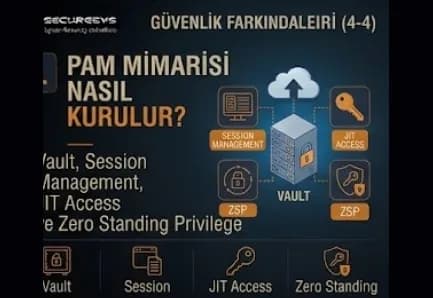
How Is a PAM Architecture Built? Vault, Session Management, JIT Access and Zero Standing Privilege
How is a PAM architecture built? Credential vault, session proxy, password rotation, JIT/JEA, Zero Standing Privilege, HA/DR and SIEM integration.
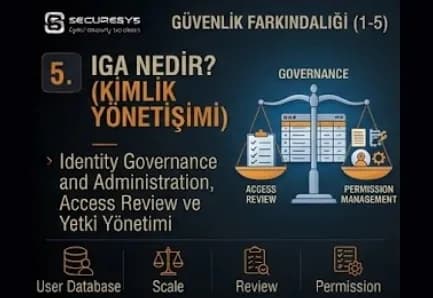
What Is IGA? Identity Governance and Administration, Access Review and Entitlement Management
What is IGA? A guide to entitlement management, access review, access certification, SoD, role mining and fighting permission creep.
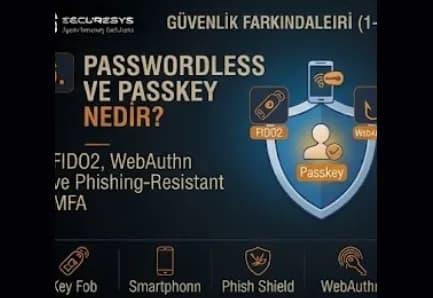
What Are Passwordless Authentication and Passkeys? FIDO2, WebAuthn and Phishing-Resistant MFA
What are passwordless authentication and passkeys? FIDO2, WebAuthn, phishing-resistant MFA and protection against MFA fatigue and AiTM attacks.
Looking for professional support on this topic?
Our expert team will reach out for a free consultation as soon as possible.