What Are Cloud IAM and CIEM? AWS IAM, Azure RBAC, Google Cloud IAM and Excess Privilege Risks
What are Cloud IAM and CIEM? AWS IAM, Azure RBAC, Google Cloud IAM, excessive permissions, effective permissions and cloud least privilege.
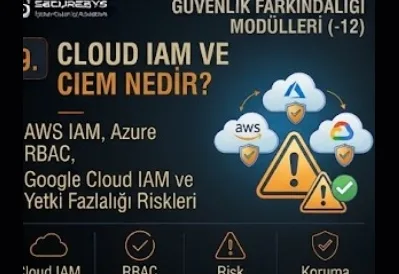
In cloud environments identity and authority management has become much more complex than the traditional data center architecture. While in on-premises systems users' access to particular servers, applications or network resources is most of the time managed over Active Directory groups, local administrator accounts and network-level controls; on cloud platforms the same user, role or machine identity can have hundreds or even thousands of different action permissions.
For this reason in cloud security the essential problem is not only the question "who logged in?". The more important question is this:
"What exactly can this identity do on the cloud?"
Cloud IAM, that is, Cloud Identity and Access Management, is the fundamental security layer that determines which authorities users, service accounts, applications and workload identities have on cloud resources. However, as the cloud environment grows over time roles, policies and permissions also grow. Authorities given to users temporarily become permanent, service principals receive more privilege than necessary and applications start to work with far broader access than they need.
This situation brings out security problems such as Excessive Permissions, Overprivileged Identity, Permission Creep and Cloud Entitlement Risk.
CIEM, that is, Cloud Infrastructure Entitlement Management, is the security approach that aims to make this complexity visible and to reduce the unnecessary, unused or high-risk authorities in the cloud environment.
For this reason modern cloud identity security handles these two questions together:
Cloud IAM → Who has which authority?
CIEM → How much of this authority is really necessary?
Cloud security maturing is possible by being able to answer these two questions continuously and correctly.
What Is Cloud IAM?
Cloud IAM is the structure that manages the authentication and authorization processes for users, groups, service accounts, applications and workloads in cloud environments.
IAM here does not mean only user login.
The really critical layer is authorization, that is, determining which operations the identity can carry out on the cloud.
For example a user:
can create a virtual machine,
can read a storage account,
can delete a database,
can change the network configuration,
can assign an IAM role
or can close the security logs.
These actions are controlled over permissions.
Cloud providers manage these authorities with different names and models but the fundamental principle is the same:
Identity + Role/Policy + Resource + Action
It forms the fundamental structure of the cloud authorization model.
What Is AWS IAM?
AWS IAM is the fundamental identity and access management service that enables users, roles, policies and permissions to be managed in the Amazon Web Services environment.
In the AWS IAM model permissions for particular actions can be given to an identity.
For example:
carrying out operations on EC2 instances,
reading S3 buckets,
managing IAM roles,
running Lambda functions
actions such as these can be defined over a policy.
However, the strong side of AWS IAM is at the same time the source of complexity.
Because of the very granular permission model policies can broaden over time.
For example while a developer needs only read access to a particular S3 bucket, if a broad policy such as:
AmazonS3FullAccess
is given more authority than necessary can arise.
This is the Excessive Permission problem.
Why Is the AWS Root Account Critical?
When an AWS account is created there is a root user.
The root user has very broad authority and should not be used in daily operations.
If the root account is compromised the impact can be extremely high.
For this reason for the root account:
strong MFA,
restricted usage,
monitoring
must be applied and IAM roles must be used for normal administration.
Root access must be kept only for genuinely necessary emergency scenarios.
This is one of the fundamental principles of cloud privileged access security.
Why Is Using an IAM Role Instead of an IAM User Safer?
In the traditional approach a long-lived access key can be created for a user or application.
These credentials can be used for years.
If the attacker obtains the access key they can access the cloud environment.
The IAM Role and temporary credentials model, on the other hand, can be safer.
The user or workload assumes a role.
A temporary credential is created.
The credential expires after a particular period.
This approach provides the transformation:
Static Credential → Temporary Credential
this transformation.
And this too is one of the most important principles of cloud security.
What Is Azure RBAC?
Azure RBAC, that is, Role-Based Access Control, manages which identity can carry out which actions on Azure resources.
For example roles:
Owner
Contributor
Reader
can be broad roles such as these.
More granular custom roles can also be created.
The problem is that because of convenience the user is continuously given:
Owner
or:
Contributor
these.
In this case the Least Privilege principle is broken.
In Azure environments especially high-impact permissions such as Subscription Owner and Global Administrator must be present on a minimum number of identities.
The Relationship Between Azure RBAC and Entra ID
Microsoft Entra ID provides identity authentication and directory services.
Azure RBAC, on the other hand, manages the authorization on Azure resources.
For example the user authenticates over Entra ID.
However, what they can do on which Azure subscription or resource group is determined with RBAC role assignments.
For this reason the distinction:
Authentication ≠ Authorization
is especially important in a cloud environment.
The user may have authenticated correctly with strong MFA.
However, if there are more Azure permissions than necessary on them the risk continues.
What Is Google Cloud IAM?
Google Cloud IAM provides authorization for users, groups, service accounts and other principals on Google Cloud resources.
Permissions can be grouped inside roles.
Predefined roles or custom roles can be used.
In Google Cloud too broad roles can create risk over time.
For example instead of very broad permissions such as:
Owner
Editor
task-specific roles should be preferred.
This is the cloud least privilege approach.
Why Is Least Privilege Hard in Cloud IAM?
In theory Least Privilege is simple:
Only the permission they need should be given to the user.
However, in practice cloud permissions are extremely complex.
An application can use dozens of API permissions in order to work.
The developer may not know exactly which permission is necessary.
For this reason the easy solution can be:
"Let us give Full Access, let the system work."
this.
This approach solves the operational problem but creates security debt.
Over time broad permissions become normal.
For this reason one of the fundamental problems of cloud security is the approach:
Functionality First → Security Later
this approach.
CIEM helps to make this accumulated security debt visible.
What Is CIEM?
CIEM, Cloud Infrastructure Entitlement Management, is the security approach that aims to detect excessive, unused and risky entitlements by analyzing the permissions identities have in cloud environments.
CIEM does not only show which role the user has.
At the same time it tries to answer the questions:
which permissions are really used,
which are never used,
which access paths are high-risk,
which identities are overprivileged
these questions.
For this reason CIEM is an important tool for cloud Least Privilege implementation.
What Is an Entitlement?
In a cloud environment an entitlement is the action or permission the identity can carry out on a resource.
For example:
Read Object
Delete VM
Create IAM Role
Modify Network Rule
Read Secret
can each be an entitlement.
A role can contain hundreds of entitlements.
The user actually using only a few of them is a common situation.
What Is Excessive Permission?
Excessive Permission is the identity having more privilege than its business or technical need.
For example a developer may need only to read logs.
However, if the Contributor role has been given they can also have the authority to change or delete a resource.
This enlarges the blast radius for the attacker.
When the user account is compromised the attacker can use all of the user's permissions.
For this reason even the identity's unused permissions become the attacker's opportunity.
How Does Permission Creep Arise in a Cloud Environment?
Cloud environments change quickly.
The user joins a new project.
A role is added.
The project ends.
The role is not removed.
They move to another team.
New permissions are added.
Over time the identity's entitlement set grows continuously.
This is called Permission Creep.
Traditional IGA can handle this problem in terms of the user lifecycle.
CIEM, on the other hand, provides more technical visibility over actual cloud permission usage.
The Difference Between Used Permission and Granted Permission
One of the most valuable analyses for cloud security is the difference between:
Granted Permissions
and
Actually Used Permissions
this difference.
For example the role contains 200 permissions.
The user has used only 7 permissions in the last 90 days.
In this case the remaining 193 permissions can be potential excessive privilege.
Of course an unused permission is not always unnecessary.
It can be necessary for emergency operations.
However, it requires a risk-based review.
CIEM makes this difference visible.
What Is a Permission Gap?
A Permission Gap can be thought of as the difference between the total privileges an identity has and the privileges it really uses.
As the gap grows the possibility of overprivilege increases.
For this reason one of the modern cloud security KPIs:
Unused Permission Ratio
can be this.
This ratio can be evaluated to measure cloud least privilege maturity.
The Difference Between CIEM and IGA
IGA focuses on access governance across the organization.
Access reviews,
approvals,
role lifecycle,
SoD,
entitlement certification
are the fundamental areas of IGA.
CIEM, on the other hand, provides more technical analytics on cloud infrastructure permissions.
For example IGA asks:
"Should Ahmet have the Developer Role?"
this question.
CIEM, on the other hand, provides the information:
"Inside the Developer Role there are 120 permissions but Ahmet uses only 8 of them."
this information.
For this reason IGA and CIEM complement each other.
The Difference Between CIEM and CSPM
CSPM, that is, Cloud Security Posture Management, analyzes cloud configuration risks.
For example:
a public storage bucket,
an open firewall rule,
an unencrypted database
it can detect misconfigurations such as these.
CIEM, on the other hand, concentrates on permissions and identities.
If we simplify:
CSPM → Resource Configuration Risk
CIEM → Identity Permission Risk
Inside modern CNAPP architectures these capabilities can be offered together.
The Relationship Between Cloud IAM and CNAPP
CNAPP, Cloud-Native Application Protection Platform, can be a broad approach that brings together the different layers of cloud security.
Inside this architecture:
CSPM,
CWPP,
CIEM,
Kubernetes Security,
Vulnerability Management
capabilities such as these can be found.
Because identity permissions form an important part of cloud attack paths CIEM is one of the critical components of a modern CNAPP architecture.
What Is a Service Principal?
A Service Principal is the machine identity used by an application or automation process.
It does not carry out an interactive login like a human user.
The application can provide resource access over an API.
Service principals can carry high privilege.
For example the deployment pipeline can have Contributor or Owner access.
For this reason service principal security is among the most critical areas of cloud IAM.
Why Is a Service Principal Secret Risky?
A client secret can be used for service principal authentication.
If this secret is kept hardcoded inside source code or a CI/CD configuration it can be obtained by the attacker.
For this reason safer models such as:
a Secrets Vault,
Certificate-Based Authentication,
Workload Identity,
Managed Identity
can be used.
The aim is to reduce the use of a long-lived static secret.
What Is a Managed Identity?
A Managed Identity is the machine identity model whose lifecycle is managed by the cloud platform.
Instead of storing a secret manually the application can use a platform-managed identity.
In this way operational risks such as:
secret creation,
rotation,
storage
can decrease.
This provides an important advantage in terms of Non-Human Identity Security.
What Is Workload Identity?
Workload Identity is the identity that workloads such as an application, container, serverless function or automation process use for authentication.
Inside a modern cloud-native architecture workload identities can be far more numerous than human users.
For this reason a cloud IAM strategy cannot be built only on employees.
Human and Machine Identities must be managed together.
Why Is Workload Identity Federation Important?
Workload Identity Federation can enable external workloads to access cloud resources over a temporary identity token without keeping long-lived static cloud credentials.
This approach is important for DevOps and multi-cloud environments.
For example instead of storing a permanent cloud access key on the CI/CD platform a temporary federated identity can be used.
This is the transformation:
Stored Credential → Federated Temporary Credential
this transformation.
The Cloud Access Key Risk
Long-lived cloud access keys are valuable credentials for the attacker.
A source code repository,
a developer laptop,
a CI/CD pipeline,
a configuration file
they can leak inside these.
For this reason an access key inventory must be carried out.
Unused keys must be removed.
Regular rotation must be applied.
Where possible a move to short-lived credentials must be made.
Why Are Temporary Credentials Important?
Temporary Credentials are valid for a particular period.
Even if the credential is compromised the attacker's usage period is limited.
This security principle can be summarized in this way:
Credential Lifetime = Attack Opportunity Window
The shorter the period for which the credential is valid the narrower the attack window after a compromise can be.
For this reason the cloud identity architecture must move from long-lived credentials to short-lived credentials.
What Is JIT Cloud Access?
Just-in-Time Cloud Access is the approach of the user not carrying a high privilege role continuously but activating it temporarily only at the moment of need.
For example instead of the Azure Subscription Owner role being permanent it can be activated temporarily with PIM.
In an AWS environment a high-privilege role can be assumed temporarily.
This is the cloud implementation of the Zero Standing Privilege approach.
How Is Zero Standing Privilege Applied in the Cloud?
Permanent admin rights on cloud identities are kept at the minimum level.
The user normally carries standard access.
At the moment of need with:
strong authentication,
approval,
justification
they receive temporary privilege.
When the operation ends the permission expires.
This is:
Always Admin
instead of this:
Admin When Needed
this model.
Why Are Permission Boundaries and Guardrails Important?
Cloud IAM is related not only to giving permission but also to determining the maximum authority limit.
Organization-level policies,
permission boundaries,
service control policies
controls such as these can form broad guardrails.
The aim is to prevent an individual administrator going outside the security boundary by mistake or consciously.
This is the defense-in-depth approach.
Why Does Role Explosion Arise in the Cloud?
While Least Privilege is being applied too many custom roles can be created.
A separate role for every project.
A separate role for every application.
A different variation for every department.
Over time hundreds of roles arise.
This is called Role Explosion.
As the number of roles increases governance becomes harder.
For this reason a balance is necessary.
Neither too broad roles,
nor roles so granular they cannot be managed.
Cloud Role Mining
CIEM and analytics tools can provide role optimization suggestions over usage patterns.
For example the actual permissions usage of 50 developers is analyzed.
Over the common pattern a smaller custom role can be suggested.
This is the cloud infrastructure version of the traditional IGA Role Mining approach.
What Is a Cloud IAM Attack Path?
Cloud permissions can form a direct or indirect privilege escalation path.
A user may not be an administrator directly.
However, over permissions such as:
new role create,
policy attach,
service account impersonate,
secret read
they can obtain higher privilege.
For this reason looking only at the role name is not sufficient.
Permission relationships must be analyzed.
This can be thought of as Cloud Identity Attack Path Analysis.
Indirect Privilege Escalation
In a cloud environment some permissions can indirectly give high privilege.
For example the user is not directly an admin.
However, they can change the configuration of a highly privileged function.
If this function works with a high privilege identity the attacker can provide indirect privilege escalation.
For this reason CIEM must analyze not only direct permissions but effective permissions and attack paths.
What Is an Effective Permission?
An Effective Permission is the total authorization level an identity really has when inheritance, groups, roles, policies and resource-level permissions are included.
A user can appear on the UI to have only one role.
However, because of nested groups or inherited policies they can have far more privilege.
Security analysis must be carried out over effective permissions.
Should a Shared Account Be Used in the Public Cloud?
No.
Cloud administration must be carried out over personal identities.
Shared accounts such as:
admin@company
reduce accountability.
The question of who made which change becomes harder.
The Personal Identity + JIT Role model should be preferred.
A Break-Glass Cloud Administrator Account
When the cloud identity platform is completely inaccessible emergency administrator access can be necessary.
For this reason a limited number of break-glass accounts can be kept.
However, these must be:
not used in daily operations,
strongly protected,
monitored,
alerted
these.
Every usage can require a post-incident review.
Cloud IAM and MFA
High privilege cloud roles must be protected with phishing-resistant MFA.
AWS, Azure or Google Cloud administrator access must not be left with only a password.
Strong MFA makes the attacker's progress after credential theft harder.
However, MFA on its own does not solve the excessive permission problem.
Strong authentication + Least Privilege are necessary together.
Cloud IAM and Conditional Access
Cloud identity access decisions can be shaped according to the device and risk context.
For example privileged cloud access can be possible only with:
a managed device,
a trusted identity,
strong MFA
these.
This is the Zero Trust cloud administration approach.
Cloud IAM and PAM
While PAM is used for traditional server credentials cloud IAM can be more role-driven.
However, the two structures are approaching each other.
Cloud PAM use cases:
privileged role activation,
JIT access,
session control,
secret management,
third-party privileged access
can include these areas.
A modern PAM strategy should not leave cloud privileges outside the scope.
Why Is Third-Party Cloud Access Risky?
Consultants, managed service providers or vendors can receive temporary access to the cloud environment.
If these identities are left with permanent access a risk arises.
For vendor access:
a time-bound role,
MFA,
approval,
least privilege,
monitoring
must be applied.
When the project ends the access must be revoked automatically.
External Identity and Guest Access
Because of cloud collaboration external identities can access organization resources.
Guest accounts can stay active for years.
For this reason guest identity lifecycle governance is important.
External user access:
a business owner,
an expiry date,
an access review
must be managed with these.
Cloud IAM and IGA Integration
IGA can manage the user lifecycle and approvals.
CIEM can analyze actual cloud permissions usage.
When these two data sets are combined a higher-quality access review can be carried out.
For example the reviewer can see not only the information:
"The user has the Contributor Role."
but also:
"92% of the permissions inside this role were not used in the last 180 days."
this information.
This strengthens the access governance decision.
Cloud IAM and ITDR
ITDR can detect the suspicious behavior of cloud identities.
For example:
a new admin role,
unusual token use,
a service principal anomaly,
privilege escalation
can be an identity threat signal.
CIEM shows the posture risk,
ITDR shows the active threat
these.
These two layers are important together.
CIEM and SIEM/SOC Integration
CIEM findings can be used for SOC incident prioritization.
For example EDR is producing a user compromise alert.
CIEM shows that the same identity carries:
subscription owner,
database admin,
secret reader
these permissions.
In this case the incident severity should be much higher.
This is the:
Threat × Entitlement = Impact
approach.
How Can Cloud Identity Risk Be Calculated?
Cloud identity risk can be evaluated over a few factors:
Privilege Level
Unused Permissions
Resource Sensitivity
Credential Type
Authentication Strength
Behavior Risk
for example these can be used together.
If an identity carries:
high privilege,
a long-lived access key,
no MFA,
unused broad permissions
the risk level is high.
AI Agents and Cloud IAM
As AI Agents start to take action on cloud resources a new identity class is emerging in terms of cloud IAM.
The agent:
can create a VM,
can read storage,
can carry out a database query,
can carry out a security remediation.
In this case giving the agent a broad admin role is risky.
For an AI Agent:
a Unique Identity
a Scoped Role
a Temporary Credential
Task-Based Authorization
an Audit Trail
must be applied.
The agent must receive permission only for the action it needs to carry out.
This is the foundation of the modern Agentic Cloud IAM approach.
Why Is an Owner-Like Role Risky for an AI Agent?
An AI Agent can make a mistake.
It can be exposed to prompt manipulation.
It can choose the wrong action.
It can be compromised.
If the agent carries a broad Owner role the blast radius of the mistake becomes very large.
For this reason for AI Agents:
Maximum Capability
not this:
Minimum Necessary Capability
must be designed.
Agent privilege security will be one of the important areas of the cloud IAM programmes of the future.
Why Is Multi-Cloud IAM Harder?
Many organizations at the same time:
AWS,
Azure,
Google Cloud
can use these.
Every provider has a different IAM terminology and authorization model.
AWS Policy,
Azure RBAC,
Google Cloud Roles
use different semantics.
For this reason centralized visibility becomes harder.
One of the important advantages of CIEM is that it can analyze multi-cloud entitlement data in a common risk model.
The Cloud Identity Fabric Approach
In modern organizations workforce identity, cloud identity, SaaS access, privileged access and machine identity are managed inside different systems.
The Identity Fabric approach aims to make these silos more integrated.
Cloud IAM is one of the authorization layers of this fabric.
CIEM, on the other hand, provides cloud entitlement intelligence.
For this reason the identity architecture of the future must be designed not on a product basis but on a relationship basis.
How Should a Cloud IAM Project Be Started?
The first step should not be changing all users' roles manually.
First:
an Identity Inventory,
a Role Inventory,
a Service Account Inventory,
an Access Key Inventory,
a High-Privilege Role Inventory
must be created.
Afterwards high-risk identities must be determined.
The priority:
Root
Owner
Global Admin
IAM Admin
Security Admin
can be broad privileged identities such as these.
At the following stage unused permissions and static credentials can be reduced.
How Should a CIEM Project Be Started?
The first target of a CIEM implementation should be visibility.
First the cloud environments are connected.
Identities and effective permissions are extracted.
Then findings such as:
unused permissions,
overprivileged identities,
high-risk combinations,
public exposure + high privilege
are analyzed.
Direct automatic permission removal can be risky.
First observe,
then recommend,
then controlled remediation
this approach is safer.
How Should Permission Remediation Be Carried Out?
A permission appearing unused does not mean it must be removed immediately.
For example a disaster recovery role can be used only once a year.
For this reason during remediation:
the Business Owner
Usage History
Criticality
Emergency Need
must be evaluated together.
High-confidence unused permissions can be automated.
Critical roles can require human approval.
Cloud IAM KPIs
Cloud identity security maturity can be monitored with these metrics:
Permanent Admin Count
Root Account Usage
MFA Coverage
Phishing-Resistant MFA Coverage
Unused Permission Ratio
Overprivileged Identity Count
Long-Lived Access Key Count
Dormant Service Account Count
JIT Role Adoption
Temporary Credential Usage
Guest Account Expiry Rate
KPIs such as these can be used.
CIEM KPIs
More specific metrics for CIEM:
Effective Permission Reduction
Unused Entitlement Reduction
High-Risk Entitlement Count
Overprivileged Service Account Count
Permission Remediation Rate
Role Optimization Rate
Identity Attack Path Count
indicators such as these can be these.
The aim is not only to produce findings but to provide:
Privilege Surface Reduction
this.
The Most Frequently Made Mistakes in Cloud IAM and CIEM
These mistakes are frequently seen in organizations:
- Giving every developer a broad Administrator role
- Using the AWS Root account daily
- Leaving the Azure Owner role permanent
- Using broad roles such as Google Cloud Owner/Editor widely
- Creating Long-Lived Access Keys
- Storing access keys inside source code
- Not changing Service Principal secrets for years
- Not evaluating the opportunity to use a Managed Identity
- Not using Workload Identity Federation
- Not analyzing unused permissions
- Not measuring Permission Creep
- Not determining an expiry for Guest Accounts
- Giving external vendors permanent cloud access
- Not using JIT/PIM
- Not making MFA mandatory for privileged users
- Seeing CIEM only as a reporting tool
- Managing IGA and CIEM as separate silos
- Leaving Service Accounts and Machine Identities outside governance
- Not analyzing Cloud IAM attack paths
- Giving AI Agents broad admin permissions
Cloud IAM and CIEM Security Checklist
Organizations can evaluate the following controls:
- Is AWS Root usage at a minimum?
- Is Root MFA active?
- Are Azure Owner assignments at a minimum?
- Are Global Administrator roles at a minimum?
- Are Google Cloud broad roles being reduced?
- Are High-Risk Cloud Roles in the inventory?
- Are Permanent Admin roles being reduced?
- Is JIT role activation being used?
- Do privileged users use phishing-resistant MFA?
- Are Long-Lived Access Keys in the inventory?
- Are Unused Access Keys being removed?
- Are Service Principal secrets being rotated?
- Is a Managed Identity being evaluated?
- Is Workload Identity being used?
- Are Temporary Credentials being made widespread?
- Is CIEM being used?
- Are Effective Permissions being analyzed?
- Are Unused Permissions being detected?
- Is Permission Creep being measured?
- Are Cloud Attack Paths being analyzed?
- Does External User access expire?
- Is vendor access time-bound?
- Are Guest Accounts being reviewed?
- Are IGA and CIEM integrated?
- Do CIEM findings provide context to the SIEM/SOC?
- Does ITDR monitor cloud identities?
- Are Service Accounts under behavior monitoring?
- Do AI Agents use a unique identity?
- Are AI Agent privileges scoped and temporary?
- Is a Cloud Identity Incident Response playbook present?
Cloud IAM and CIEM Maturity Model
Level 1 – Broad Cloud Access: Users and applications carry broad permissions. Static access keys are widespread. Least Privilege is limited.
Level 2 – Centralized Cloud IAM: Roles and policies are standardized. MFA is applied. High-risk identities are taken into the inventory.
Level 3 – JIT and Machine Identity Security: Permanent admin decreases, PIM/JIT is used, service principals and workload identities are controlled, static credentials are reduced.
Level 4 – CIEM and Entitlement Analytics: Effective permissions, unused access and attack paths are analyzed continuously. A permission remediation programme is applied.
Level 5 – Adaptive Cloud Authorization: Human, Machine and AI Agent identities use dynamic and short-lived privileges over context, usage and real-time risk signals. Zero Standing Privilege is targeted.
This transformation:
Broad Cloud Roles
↓
Controlled IAM
↓
JIT Privilege
↓
CIEM-Based Least Privilege
↓
Adaptive Cloud Authorization
proceeds in this way.
Frequently Asked Questions
What is Cloud IAM?
Cloud IAM is the identity and access management structure that manages which actions users, groups, applications and workloads can carry out on cloud resources.
What is CIEM?
CIEM, Cloud Infrastructure Entitlement Management, is the security approach that aims to detect the excessive, unused and high-risk permissions cloud identities have and to apply Least Privilege.
What is AWS IAM?
AWS IAM is the identity and access management service that enables users, roles, policies and permissions to be managed in the Amazon Web Services environment.
What is Azure RBAC?
Azure RBAC is the access control model that provides role-based authorization to identities on Azure resources.
What is Google Cloud IAM?
Google Cloud IAM is the authorization system that manages the permissions of users, groups, service accounts and other principals for Google Cloud resources.
What is Excessive Permission?
It is the identity having more access or privilege than is necessary to carry out its work.
What is Permission Creep?
It is a user or service account's privilege set growing as a result of receiving new permissions over time without the old permissions being removed.
What is an Effective Permission?
It is the total authorization level an identity really has when groups, roles, inherited policies and resource-level permissions are included.
Are CIEM and IGA the same thing?
No. While IGA focuses on enterprise-wide identity governance and access certification, CIEM provides deeper analysis on cloud infrastructure entitlements and actual permission usage.
What is the difference between CIEM and CSPM?
CIEM focuses on identity permissions and CSPM on cloud resource configurations and security posture.
What is a Service Principal?
It is the cloud-based Non-Human Identity type used by an application or automation.
What is a Managed Identity?
It is the machine identity model managed by the cloud platform that helps applications to carry out authentication without storing a manual secret.
What is Workload Identity?
It is the machine identity used by a workload such as an application, container, pipeline or automation process.
What is a Temporary Credential?
It is the authentication credential that is valid for a particular period and becomes automatically unusable when its period ends.
What is JIT Cloud Access?
It is a high privilege role being given only at the moment of need for a particular period instead of being kept continuously active.
What does Zero Standing Privilege mean in the cloud?
It is the approach of privilege being given only temporarily at the moment of need without leaving permanent high privilege on users and workloads.
Why is CIEM important?
Because cloud roles contain a large number of permissions identities can accumulate more privilege than necessary over time. CIEM helps Least Privilege to be applied by making this excessive access visible.
Are AI Agents within the scope of cloud IAM?
AI Agents that carry out operations on cloud resources must be evaluated as a machine identity and managed with a unique identity, scoped permissions and short-lived credentials.
Conclusion: The Biggest Problem of Cloud Security Is Not a Lack of Authority but More Authority Than Necessary
Cloud platforms offer extremely granular authorization capabilities.
Theoretically only the permission it needs can be given to an identity.
However, in practice because of operational convenience broad roles are used.
Full Access is given to the developer.
The Owner role is assigned to the application.
A permanent secret is created for the Service Principal.
Temporary project access is forgotten.
These decisions accumulate and form a large Cloud Permission Debt.
From the attacker's point of view this is extremely valuable.
Because the attacker may not have to create new privilege.
On the identity they have compromised there can already be more than enough privilege.
For this reason modern cloud security cannot be completed only by strengthening authentication.
You can use phishing-resistant MFA.
You can apply strong passwordless authentication.
However, if there are excessive permissions on the identity the attacker's blast radius is still large.
That is why the fundamental model of modern Cloud Identity Security:
Strong Authentication + Least Privilege + Temporary Credentials + Entitlement Analytics + Continuous Monitoring
should be this.
CIEM provides the Least Privilege intelligence layer of this model.
IGA provides business governance.
PAM limits privileged access.
ITDR detects active identity threats.
When these technologies are used together:
Identity Security Fabric
starts to arise.
As the cloud environment grows the challenge will increase even more.
Because now there are not only human users.
Service Principals,
Workload Identities,
CI/CD Pipelines,
Automation Bots
and AI Agents
are carrying out actions on the same cloud resources.
For this reason the Cloud IAM programme of the future:
Human Identity Management
not this:
Universal Identity and Entitlement Management
will become this.
The fundamental principle of modern cloud authorization can be summarized in this way:
Never grant what is not needed, never keep privilege longer than required, and never leave entitlement unobserved.
In its Turkish equivalent:
Do not give the authority that is not necessary, do not leave it open longer than necessary and do not leave the authority given unobserved.
And the most important sentence of this chapter:
In cloud security real Least Privilege is not giving the user a small role; it is removing unnecessary privilege by continuously measuring the difference between the authorities they have and the authorities they really use.
Related Articles
Identity & Access Management (PAM - IAM)
What Is Identity and Access Management? IAM, PAM, IGA and Modern Identity Security
What is identity and access management? IAM, PAM, IGA, ITDR, CIEM, non-human identity and a Zero Trust based modern identity security architecture.
What Is IAM? Identity and Access Management, SSO, MFA and the User Lifecycle
What is IAM? A guide to the Identity Provider, SSO, MFA, passkeys, SAML/OIDC, SCIM and the joiner-mover-leaver user lifecycle.
What Is PAM? Privileged Access Management and Privileged Account Security
What is PAM? A guide to privileged account security, credential vaults, session recording, JIT/JEA, PEDM and Zero Standing Privilege.
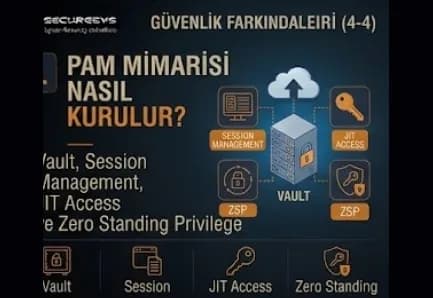
How Is a PAM Architecture Built? Vault, Session Management, JIT Access and Zero Standing Privilege
How is a PAM architecture built? Credential vault, session proxy, password rotation, JIT/JEA, Zero Standing Privilege, HA/DR and SIEM integration.
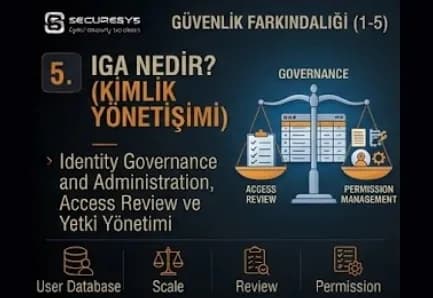
What Is IGA? Identity Governance and Administration, Access Review and Entitlement Management
What is IGA? A guide to entitlement management, access review, access certification, SoD, role mining and fighting permission creep.
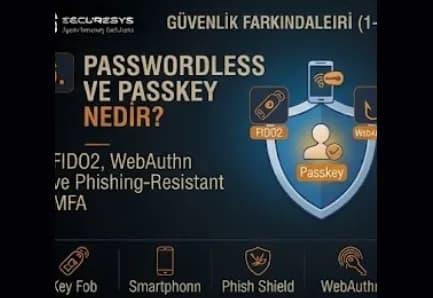
What Are Passwordless Authentication and Passkeys? FIDO2, WebAuthn and Phishing-Resistant MFA
What are passwordless authentication and passkeys? FIDO2, WebAuthn, phishing-resistant MFA and protection against MFA fatigue and AiTM attacks.
Looking for professional support on this topic?
Our expert team will reach out for a free consultation as soon as possible.