Why Is Penetration Testing Necessary?
Why does the attack surface keep growing in a digital organisation, and why are security products not enough on their own? The case for verifying from an attacker's perspective.
Penetration and Bypass Testing

Digital transformation has fundamentally changed how organisations work. From customer-facing services to financial transactions, from production processes to human resources, a great many critical activities now run on information technology. To stay competitive, organisations invest more each year in web applications, mobile platforms, cloud services and corporate network infrastructure.
Those investments accelerate the business — and at the same time create new targets for attackers. Cyber attacks today affect not only large technology companies but SMEs, public sector institutions, financial organisations, manufacturing plants, healthcare and e-commerce firms. A single vulnerability is enough for an attacker to enter the network, reach critical data and bring operations to a halt.
Picture an organisation.
It has an ERP system built up over years.
It has a web application serving its customers.
Its mobile app is actively used by thousands of people.
Employee accounts are managed through Active Directory.
Critical services run on cloud infrastructure.
It uses a next-generation firewall.
An EDR solution is in place.
It buys a 24/7 SOC service.
At first glance, everything looks secure.
Then, one Monday morning, the first call comes in.
"We can't access our files."
Support lines start ringing.
The web application stops responding.
Unusual activity is spotted on internal systems.
By the end of the day it is clear this is not just an outage: customer data has been exfiltrated, a ransom has been demanded, and the organisation's reputation has taken serious damage.
At this point most organisations ask the same question.
"We had security products. How did this still happen?"
Because security is not something you buy. Security comes from testing your systems regularly from the perspective of a real attacker, finding the weak points, and closing them before an attacker does.
That is precisely what a penetration test is for.
A penetration test is a controlled security assessment carried out by ethical hackers within an agreed scope. Its purpose is to identify the vulnerabilities a malicious actor could exploit, using genuine attack techniques, to assess the resulting risk and to raise the organisation's security posture.
Penetration testing today is more than a technical exercise. It is a strategic security investment that helps organisations:
- protect their information assets,
- maintain business continuity,
- build customer trust,
- meet regulatory obligations,
- protect their brand and manage their cyber risk.
Over this series we will work step by step through what penetration testing is, why it is needed, which types exist, how the process runs, which standards and regulations require it, and how to choose the right provider.
So Which Systems Should Organisations Have Tested, and What Exactly Does a Penetration Test Cover?
Next chapter → What Is Penetration Testing?
Related Articles
Penetration Testing
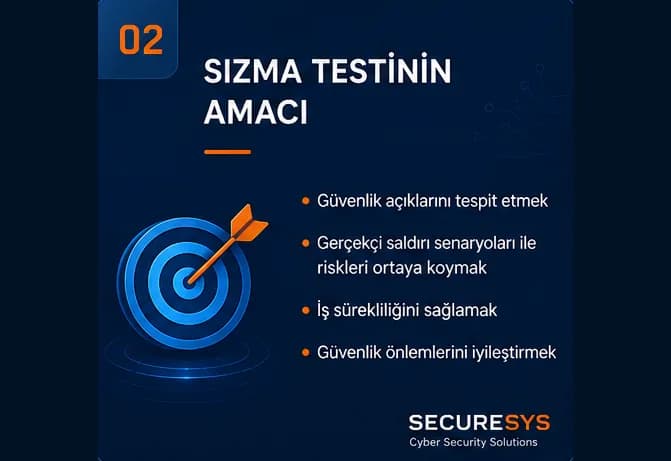
What Is Penetration Testing?
The definition, the purpose, and how it differs from a vulnerability scan — what it delivers to the organisation and what it means for decision-makers and engineers.
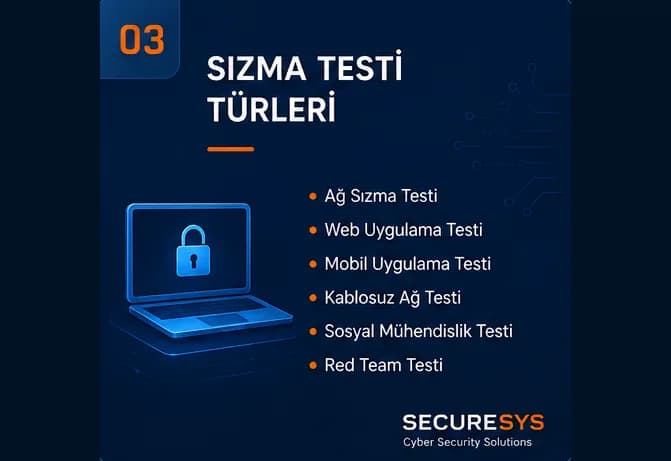
Types of Penetration Testing
Web, API, mobile, internal and external network, Active Directory, wireless, cloud, OT/ICS, social engineering, DDoS, VoIP and continuous assessment — the scope, methodology and deliverables of each.
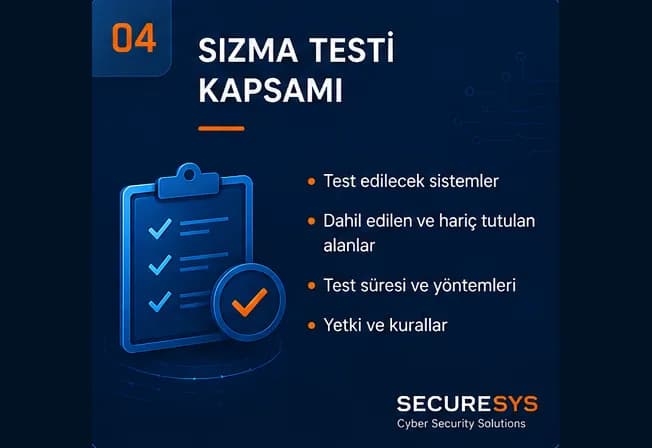
How Is the Scope of a Penetration Test Determined?
Which systems are in, which are out, and why that decision drives budget, duration and the quality of the findings — plus the five mistakes made most often.
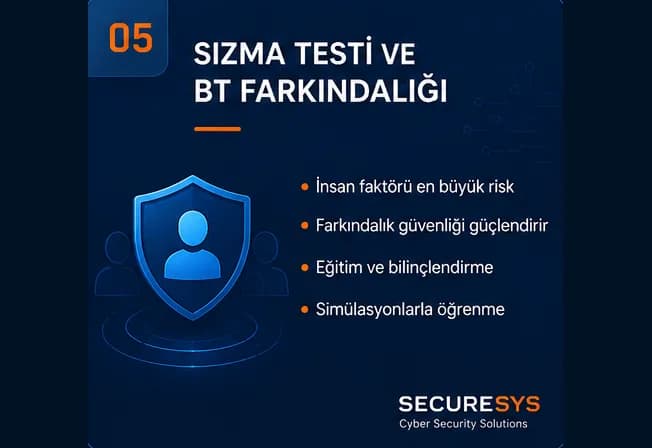
Social Engineering: A Chain of Attacks That Starts With One Click
A real attack chain that began with a single email, the role of the human factor, and the measurable value of awareness work.

Black Box, Gray Box and White Box Penetration Testing
Three different starting points, three different perspectives. Which approach suits which system, and what each one reveals — with real-world scenarios.

What Should a Penetration Tester Know? Competencies and Certifications
Two specialists using the same tool can reach entirely different results. The technical competencies, the internationally recognised certifications, and why a certificate alone is not enough.
Looking for professional support on this topic?
Our expert team will reach out for a free consultation as soon as possible.