What Is a Cyber Security Maturity Model? Gap Analysis, Security Level Measurement and Enterprise Roadmap
What is a cyber security maturity model? NIST CSF 2.0, ISO 27001, IEC 62443, gap analysis, maturity levels and how to build an enterprise security roadmap.
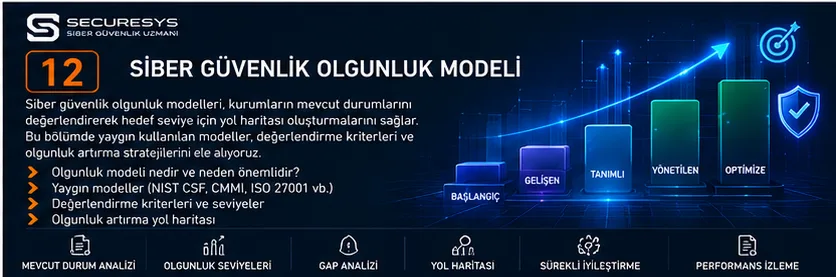
What Is a Cyber Security Maturity Model?
A cyber security maturity model is a systematic approach used to measure an organisation's current security level and identify areas for improvement by assessing its cyber security processes, technical controls, human resources and management capabilities against defined criteria.
A maturity assessment does not merely examine whether security products are in place.
It also analyses how the organisation manages those products, how quickly it can respond to security incidents, how it assesses its risks and the extent to which it has made its security processes sustainable.
For example, two different organisations may use the same firewall, SIEM and EDR products.
However, one organisation may monitor security events on a regular basis while the other does not review its alerts.
Even if the technical product inventories of these two organisations are similar, their operational security maturity is different.
Short answer: Cyber security maturity analysis is the process of measuring the current state, defining the target security level, uncovering gaps and preparing a risk-based improvement roadmap.
1. Why Does Cyber Security Maturity Matter?
Organisations' cyber security investments are not always at the same level.
Some organisations may have invested in a large number of security technologies without sufficiently developing their fundamental security processes.
For example:
- A firewall is in place, but its rules are never reviewed.
- EDR is used, but its alerts are not monitored.
- Backups exist, but restore tests are never performed.
- Penetration tests are carried out, but the findings are not closed.
- An ISO 27001 certificate exists, but the risk records are out of date.
In such cases, the presence of a product or a certificate does not by itself mean effective security.
Key benefits of maturity analysis
Identifying security gaps.
Establishing investment priorities.
Reducing operational risks.
Improving management reporting.
Measuring the effectiveness of security controls.
Supporting compliance efforts.
Enabling continuous improvement.
2. The Difference Between Cyber Security Maturity Analysis and Gap Analysis
Maturity analysis and gap analysis are complementary assessments, but they serve different purposes.
| Criterion | Maturity Analysis | Gap Analysis |
|---|---|---|
| Primary purpose | Measuring the level of development of security capabilities | Identifying the difference between the current state and the target requirements |
| Approach | Level and performance assessment | Requirement comparison |
| Output | Maturity score and assessment | List of gaps |
| Use | Strategic development | Compliance and improvement plan |
| Example | SOC maturity is 2/5 | Incident response procedure is missing |
Example
Let us assume that an organisation uses a SIEM to monitor security events.
A gap analysis may show that the incident response procedure is missing.
A maturity analysis, on the other hand, may reveal that SIEM alerts are assessed manually, that use cases are not updated regularly and that response performance is not measured.
Conclusion: Gap analysis helps you understand what is missing, while maturity analysis helps you understand how well developed the existing capability is.
3. What Are the Cyber Security Maturity Levels?
Organisations can use a five-level maturity model for assessment purposes.
The model below is an example of an enterprise assessment approach; it is not an official five-level certification system defined by NIST CSF 2.0 or ISO 27001.
| Level | Definition | General characteristic |
|---|---|---|
| 1 | Initial | Security activities are ad hoc and dependent on individuals |
| 2 | Repeatable | Some basic processes have been established |
| 3 | Defined | Processes are documented and standardised |
| 4 | Managed | Controls are measured and monitored regularly |
| 5 | Optimised | Continuous improvement and advanced automation are applied |
Level 1: Initial
Security activities are mostly carried out after an incident has occurred.
Level 2: Repeatable
Basic controls have begun to be implemented, but practices are not at the same level across all systems.
Level 3: Defined
Policies, procedures and responsibilities have been established.
Level 4: Managed
Security performance is measured and reported to management on a regular basis.
Level 5: Optimised
Security processes are continuously improved using measurement results, threat intelligence and operational experience.
4. Should Every Organisation Aim for Level 5?
No.
The maturity target should be set according to the organisation's risks, activities, size and resources.
For example, the security requirements of a small consulting firm are not the same as those of an organisation operating critical energy infrastructure.
When setting the target
Critical assets.
Sector.
Regulatory obligations.
Threat profile.
Business continuity requirements.
Budget.
Human resources.
Key point
The aim of a maturity assessment is not to achieve the highest score in every area, but to establish a security level that is proportionate to the risks and sustainable.
5. What Is the NIST Cybersecurity Framework 2.0?
The NIST Cybersecurity Framework (CSF) 2.0 is a framework developed to help organisations manage their cyber security risks.
NIST CSF 2.0 consists of six core functions.
The six core functions
- Govern
- Identify
- Protect
- Detect
- Respond
- Recover
These functions cover the different stages of security management.
Key point
NIST CSF 2.0 is not a five-level maturity certification model.
The CSF Profiles and the CSF Tiers approach, which has four implementation tiers, support the assessment of risk management practices.
Organisations may also develop their own scoring methodologies for internal assessments.
6. Govern: Cyber Security Governance
The Govern function focuses on how the organisation manages its cyber security risks.
Assessment areas
Security strategy.
Policies.
Responsibilities.
Risk management.
Supplier security.
Management oversight.
Example
The organisation has an information security officer.
However, there is no standard process for reporting critical risks to management.
This may indicate that governance maturity needs to be improved.
Control questions
Has a cyber security strategy been defined?
Have management responsibilities been assigned?
Has a risk appetite been established?
Are critical risks assessed on a regular basis?
7. Identify: Identifying Assets and Risks
The Identify function enables the organisation to understand the assets it needs to protect and the risks it faces.
Core areas
Hardware inventory.
Software inventory.
Cloud assets.
Data classification.
Critical business processes.
System dependencies.
Risk assessment.
Example
An organisation has internet-facing servers.
However, some of these servers are not included in the inventory.
This may represent a gap in asset management and attack surface management.
8. Protect: Protective Security Controls
The Protect function covers the protective measures aimed at reducing cyber security risks.
Example controls
MFA.
Access control.
PAM.
Firewall.
EDR.
Encryption.
Security awareness.
Secure configuration.
Example
In one organisation, MFA is enabled only for some users.
Some administrator accounts do not have MFA.
This may represent a priority risk from an identity security perspective.
9. Detect: Detecting Security Events
The Detect function focuses on identifying potential cyber security events.
Example capabilities
SIEM.
EDR/XDR.
Network monitoring.
Log analysis.
Anomaly detection.
Threat intelligence.
Example
The organisation collects security logs but does not regularly review the alerts generated on critical systems.
In this case, even if log collection capacity is in place, event detection maturity may be limited.
10. Respond: Incident Response
The Respond function covers responding appropriately to detected security events.
Core processes
Incident classification.
Escalation.
Response.
Coordination.
Communication.
Evidence management.
Example
EDR generates a critical alert.
However, it has not been defined which team will assess the alert or within what time frame.
This may indicate a gap in incident response processes.
11. Recover: Recovery and Business Continuity
The Recover function focuses on restoring services and systems after incidents.
Core areas
Backup.
Disaster recovery.
Restore tests.
Recovery plans.
Crisis communication.
Example
An organisation performs daily backups.
However, no restore test has been carried out in the last two years.
Even though backups exist, the recovery capability may not have been verified.
12. Example Maturity Assessment by NIST CSF 2.0 Functions
The table below shows the assessment results for an example organisation.
| Function | Current level | Target level |
|---|---|---|
| Govern | 2 | 4 |
| Identify | 3 | 4 |
| Protect | 3 | 4 |
| Detect | 2 | 4 |
| Respond | 2 | 4 |
| Recover | 3 | 4 |
Assessment
The organisation's protective security controls may have been developed to a certain level.
However, further improvement may be needed in governance, detection and response.
Key point
These scores are examples.
A real assessment must be based on evidence, interviews and technical verification.
13. Maturity Analysis with ISO/IEC 27001
ISO/IEC 27001 is the international standard for establishing an information security management system.
Maturity analysis, on the other hand, can be used to assess the level of development of existing security processes.
Common areas
Risk management.
Security policies.
Access control.
Incident management.
Business continuity.
Supplier security.
Internal audit.
Example
A risk assessment procedure may have been prepared within the scope of ISO 27001.
A maturity analysis can assess how consistently this procedure is applied and to what extent risks are kept up to date.
Critical point
An ISO 27001 certificate does not correspond to a specific five-level maturity score.
14. Industrial Cyber Security Assessment with IEC 62443
The IEC 62443 family of standards focuses on the security of industrial automation and control systems.
It is particularly important in energy, manufacturing, transport and other OT/ICS environments.
Assessment areas
OT asset inventory.
Network segmentation.
Remote access.
Industrial system risk analysis.
Secure system architecture.
Supplier security.
Incident management.
Examples of relevant standards
IEC 62443-2-1: Requirements for the industrial security programme of asset owners.
IEC 62443-3-2: Industrial system risk assessment and system design.
IEC 62443-3-3: System security requirements and security levels.
IEC 62443-4-1: Secure product development lifecycle.
IEC 62443-4-2: Technical security requirements for industrial automation components.
Key point
The Security Level concept within IEC 62443 is not the same as general enterprise maturity levels.
15. The Difference Between IT and OT Maturity Analysis
| Topic | IT Environment | OT Environment |
|---|---|---|
| Priority | Data, system and service security | Safe and uninterrupted physical operation |
| Assets | Servers, applications, databases | PLCs, SCADA, HMI, control systems |
| Patch management | Can be more flexible | Operational constraints may apply |
| Testing approach | Controlled security tests | Assessment with production safety as the priority |
| Risk impact | Data and service loss | Impact on physical processes and safety |
Example
Applying an active security test directly to a PLC system in a manufacturing facility may create operational risk.
For this reason, OT security assessments should be planned with appropriate test methods, authorisation and operational safety measures.
16. Which Areas Are Examined in a Cyber Security Maturity Analysis?
Different assessment areas can be defined according to the organisation's needs.
Example areas
- Security governance
- Risk management
- Asset management
- Identity and access management
- Network security
- Endpoint security
- Security monitoring
- Incident response
- Vulnerability management
- Application security
- Data security
- Cloud security
- Backup and recovery
- Supplier security
- Security awareness
These areas are an example assessment structure.
Using the same weightings for every organisation may not be appropriate.
17. How Is Network Security Maturity Measured?
A network security assessment examines the current network architecture and the effectiveness of protective controls.
Control areas
Firewall architecture.
Network segmentation.
VPN.
IDS/IPS.
Network access control.
Management access.
Configuration management.
Example maturity indicators
Are firewall rules reviewed regularly?
Are unnecessary accesses removed?
Are critical systems segregated?
Is management access to network devices restricted?
Key point
Just as important as the presence of security devices is that they are configured correctly and managed regularly.
18. Identity and Access Management Maturity
Identity and access management plays an important role in reducing the risk of unauthorised access.
Control areas
MFA.
PAM.
RBAC.
Privileged accounts.
Account lifecycle.
Access reviews.
Example
The accounts of employees who leave the organisation are not disabled in time.
This may indicate that access management maturity needs to be improved.
Measurement indicators
MFA coverage rate.
Privileged account inventory.
Rate of accounts disabled on time.
Access review completion rate.
19. How Is a SOC Maturity Analysis Performed?
SOC maturity is the assessment of operational capabilities for detecting, analysing and managing security events.
Assessment areas
Log sources.
SIEM use cases.
Alert quality.
Threat intelligence.
Incident escalation.
Response processes.
Reporting.
Example
The organisation receives a 24/7 monitoring service.
However, response responsibilities and escalation processes for critical alerts have not been defined.
In this case, even though a monitoring service is in place, incident management maturity may remain limited.
20. How Is SIEM Maturity Measured?
A SIEM assessment should not examine only licences or log capacity.
Control questions
Are critical log sources connected to the system?
Do the logs have time synchronisation?
Are correlation rules in place?
Are false-positive alerts assessed?
Are use cases kept up to date?
Are alerts passed into the incident management process?
Example
100 different log sources may be connected to a SIEM system.
However, if there are no effective rules for critical attack scenarios, its security value may remain limited.
21. How Is EDR/XDR Maturity Assessed?
EDR/XDR products support the detection of endpoint and related security events.
Assessment areas
Agent coverage rate.
Policy configuration.
Alert monitoring.
Isolation capabilities.
Response processes.
Exception management.
Example
The organisation has 500 devices.
The EDR agent is active on only 350 devices.
In this case, the endpoint coverage rate is 70%.
However, the coverage rate alone is not an indicator of effectiveness; agent health and response capabilities must also be assessed.
22. Vulnerability Management Maturity
Vulnerability management covers the systematic identification and remediation of security weaknesses.
Maturity indicators
Asset coverage.
Scanning regularity.
Risk-based prioritisation.
Remediation times.
Re-verification.
Example
The organisation performs monthly vulnerability scans.
However, the time taken to close critical findings is not measured.
In this case, even though scanning activity exists, risk management processes should be improved.
23. Penetration Test Maturity
Penetration tests contribute to verifying technical security controls.
Assessment areas
Test scope.
Test methodology.
Authorisation.
Finding management.
Retesting.
Risk acceptance processes.
Example
A penetration test is performed once a year.
However, the closure of test findings is not tracked.
In this case, the risk-reduction effect of the testing activity may remain limited.
24. Application Security Maturity
Application security covers the implementation of security requirements across the software development lifecycle.
Assessment areas
Secure SDLC.
Threat modelling.
SAST.
DAST.
SCA.
API security.
Code review.
Example
A software team performs security testing after the application has gone into production.
Bringing security controls into the early stages of the development process can increase maturity.
25. Data Security Maturity
Data security focuses on protecting the organisation's critical and sensitive information.
Control areas
Data classification.
Encryption.
DLP.
Access control.
Data masking.
Retention and disposal.
Backup.
Example
Critical customer data is transferred to the test environment with its real content.
Appropriate masking or the use of synthetic data should be considered.
26. Cloud Security Maturity
In cloud environments, security responsibilities may vary depending on the service model.
Assessment areas
IAM.
Cloud configuration.
Logging.
Encryption.
Network security.
Backup.
Asset visibility.
Example
A cloud storage bucket may have been opened to public access because of a misconfiguration.
A cloud security assessment helps identify risks of this kind.
27. Backup and Disaster Recovery Maturity
Backup helps the organisation reduce the risks of data loss and service interruption.
Assessment areas
Backup scope.
Backup frequency.
Protection of backups.
Restore tests.
Disaster recovery.
RTO/RPO targets.
Example
The organisation performs backups, but there is not enough segregation to prevent the backups from being deleted as well in a ransomware attack.
In this case, the backup architecture should be reviewed.
28. Supplier Security Maturity
Organisations obtain many services from third parties.
Assessment areas
Supplier inventory.
Risk classification.
Contractual security provisions.
Access management.
Incident notification.
Service termination.
Example
An outsourced software company has permanent administrator access to the production database.
This access should be assessed on a risk basis.
29. Cyber Security Awareness Maturity
Employee behaviour can directly affect security risks.
Assessment areas
Awareness training.
Phishing simulations.
New employee training.
Role-based training.
Incident reporting culture.
Example
Employees do not know through which channel to report suspicious emails.
This may indicate a gap in security awareness and incident reporting processes.
30. How Is a Cyber Security Maturity Score Calculated?
Organisations can create a scoring model for assessment purposes.
Example
Each area is scored from 1 to 5.
However, the risk weighting of each area may differ.
Weighted scoring
Overall Maturity Score = Σ (Area Score × Area Weight) / Σ Area Weights
Example table
| Area | Score | Weight |
|---|---|---|
| Governance | 2 | 15% |
| Risk management | 3 | 15% |
| Network security | 3 | 15% |
| SOC | 2 | 20% |
| Access security | 3 | 15% |
| Business continuity | 2 | 20% |
Calculation
(2 × 0.15) + (3 × 0.15) + (3 × 0.15) + (2 × 0.20) + (3 × 0.15) + (2 × 0.20)
Overall example maturity score: 2.45 / 5
Key point
This score is the result of an example internal assessment.
It is not an official certification grade issued by NIST, ISO or IEC.
31. How Is the Maturity Score Interpreted?
Organisations can use an example interpretation scale.
| Score range | Example interpretation |
|---|---|
| 1.00–1.79 | Initial |
| 1.80–2.59 | Developing |
| 2.60–3.39 | Defined |
| 3.40–4.19 | Managed |
| 4.20–5.00 | Optimised |
Important clarification
These ranges belong to an example assessment methodology.
They are not universal or official NIST CSF score ranges.
32. How Is a Cyber Security Gap Analysis Performed?
Gap analysis is the comparison of existing controls with the target requirements.
Stage 1: Scope
The systems and processes to be examined are determined.
Stage 2: Reference framework
NIST CSF.
ISO 27001.
IEC 62443.
Applicable legislation.
Stage 3: Current state
Documents are reviewed.
Interviews are held.
Technical controls are assessed.
Stage 4: Gaps
Missing controls are identified.
Stage 5: Risk prioritisation
The business impact of the gaps is assessed.
Stage 6: Roadmap
Improvement actions are planned.
33. Evidence Management in Gap Analysis
The reliability of a maturity assessment depends on evidence.
Example evidence
Policies.
Risk records.
System configurations.
Logs.
Penetration test reports.
Vulnerability reports.
Backup tests.
Access review records.
Example
An organisation states that it uses MFA.
However, the coverage and configuration details cannot be verified.
In this case, the effectiveness of the control should not be considered verified on the basis of a statement alone.
34. How Are Cyber Security Gaps Prioritised?
Not all gaps pose the same level of risk.
Prioritisation criteria
Business impact.
Likelihood of exploitation.
Connection to critical systems.
Regulatory obligation.
Cost of remediation.
Implementation time.
Example
The absence of MFA on an internet-facing critical system may take a higher priority than a low-risk gap in internal documentation.
Critical point
Prioritisation should not be based solely on a technical vulnerability score.
Business impact and the current threat conditions should also be taken into account.
35. How Is a Cyber Security Roadmap Prepared?
A roadmap defines the activities required to move from the current security level to the target level.
What a roadmap should include
Action.
Owner.
Priority.
Estimated effort.
Dependencies.
Target date.
Success criterion.
Example
| Action | Priority | Target |
|---|---|---|
| MFA on administrator accounts | Critical | First 30 days |
| Critical asset inventory | High | First 45 days |
| SIEM use cases | High | 90 days |
| Disaster recovery test | High | 120 days |
| SOC maturity assessment | Medium | 180 days |
These timeframes are example planning targets.
36. The First 90-Day Cyber Security Improvement Plan
Days 1–30
Identifying critical assets.
Assessing high-risk access.
Reviewing MFA coverage.
Prioritising critical vulnerabilities.
Days 31–60
Assessing log sources.
Preparing incident response procedures.
Reviewing backup security.
Reviewing supplier access.
Days 61–90
Developing SIEM use cases.
Planning security tests.
Running an incident response exercise.
Management reporting.
Key point
The first 90 days should focus on reducing critical risks and strengthening basic processes.
37. The 180-Day Security Development Plan
Once the fundamental risks have been addressed in the first 90 days, operational security capabilities can be developed.
Example activities
Improving SOC processes.
Automating vulnerability management.
PAM implementations.
Network segmentation.
Application security processes.
Supplier security assessments.
Disaster recovery tests.
Objective
Ensuring that security controls are not merely implemented but also managed and measured on a regular basis.
38. The 12-Month Cyber Security Strategic Roadmap
A long-term roadmap aims to improve the organisation's security maturity in a sustainable way.
First quarter
Reducing critical risks.
Basic security controls.
Second quarter
Improving operational processes.
SOC and incident response.
Third quarter
Secure software development.
Supplier security.
Advanced security testing.
Fourth quarter
Control effectiveness assessment.
Re-measurement of maturity.
Investment plan for the new period.
39. Cyber Security KPI and KRI Indicators
Measuring security performance is an important component of maturity assessment.
KPI examples
MFA coverage rate.
Critical vulnerability closure time.
EDR coverage rate.
Incident response time.
Backup restore success.
KRI examples
Number of overdue critical vulnerabilities.
Number of high-risk internet-facing systems.
Proportion of unprotected critical endpoints.
Number of critical services dependent on a single supplier.
Key point
KPI and KRI targets should be set in line with the organisation's risk tolerance and business requirements.
40. What Should a Cyber Security Maturity Report Contain?
A professional maturity assessment report should support both technical and managerial decisions.
Executive summary
Overall security posture.
Critical risks.
Priority actions.
Technical assessment
Control areas.
Maturity scores.
Evidence.
Gaps.
Risk analysis
Critical findings.
Potential impacts.
Recommended measures.
Roadmap
90-day plan.
180-day plan.
12-month plan.
Management output
Investment priorities.
Responsibilities.
Progress indicators.
41. Common Mistakes in Cyber Security Maturity Analysis
1. Looking only at the product inventory
The effectiveness of the products must also be assessed.
2. Not collecting evidence
Controls must be verified.
3. Giving every area the same weight
Risk-based weighting should be applied.
4. Presenting the maturity score as if it were a certificate
The nature of the scoring methodology must be stated clearly.
5. Separating technical and managerial processes
Security management should be approached holistically.
6. Not creating a roadmap
The assessment must be turned into concrete improvement actions.
7. Not reassessing
Maturity must be re-measured over time.
8. Ignoring critical business functions
The assessment must be linked to business impact.
42. SECURESYS Cyber Security Maturity and Gap Analysis Consultancy
SECURESYS provides technical consultancy services that help organisations assess their current cyber security levels and build risk-based improvement roadmaps.
Cyber Security Maturity Assessment
Security governance, technical controls and operational processes are assessed.
NIST CSF 2.0 Gap Analysis
The organisation's current security capabilities are mapped to the NIST CSF functions.
ISO 27001 Gap Analysis
Information security management system processes and related controls are assessed.
IEC 62443 Consultancy
Security requirements, risks and technical controls in industrial automation and control systems are examined.
SOC Maturity Analysis
Security monitoring, incident detection and response processes are assessed.
Penetration Tests
The effectiveness of technical security controls can be verified through authorised tests.
Source Code Security
The secure development and testing processes of critical applications can be assessed.
Cyber Security Roadmap
A prioritised improvement plan can be prepared in line with the organisation's risks and objectives.
In the SECURESYS approach, the fundamental aim of a cyber security maturity assessment is not merely to produce a score, but to create measurable and sustainable security improvements that reduce the organisation's real risks.
Frequently Asked Questions (FAQ)
1. What is a cyber security maturity model?
It is an approach that assesses an organisation's security processes and technical capabilities against defined criteria.
2. Why is a cyber security maturity analysis performed?
It is performed to measure the current security level, identify gaps and plan improvement investments.
3. What is gap analysis?
It is the identification of the gaps between the current state and the target requirements.
4. Are maturity analysis and gap analysis the same thing?
No. Gap analysis focuses on gaps, whereas maturity analysis focuses on the level of development of processes.
5. What is NIST CSF 2.0?
It is the NIST framework that helps organisations manage cyber security risks.
6. How many functions does NIST CSF 2.0 consist of?
It consists of six functions: Govern, Identify, Protect, Detect, Respond and Recover.
7. How many levels does cyber security maturity have?
It depends on the model used. Organisations may, for example, establish a five-level assessment approach.
8. Does an ISO 27001 certificate indicate a maturity level?
No. ISO 27001 certification does not directly express a specific maturity score.
9. Can IEC 62443 be used in maturity analysis?
Yes. The relevant requirements can be used as a reference, particularly in OT/ICS security assessments.
10. What is SOC maturity analysis?
It is the assessment of the monitoring, detection and response processes for security events.
11. How is SIEM maturity measured?
Areas such as log coverage, use cases, alert quality and incident management are examined.
12. How is EDR maturity assessed?
Agent coverage rate, policy configuration, alert monitoring and response capabilities are assessed.
13. How is a cyber security maturity score calculated?
Depending on the assessment model chosen, control areas can be scored and risk-based weighting can be applied.
14. How long does a maturity analysis take?
It varies according to the size of the organisation, the number of systems and the scope of the assessment.
15. How often a year should a maturity analysis be performed?
It should be determined according to the organisation's risks and rate of change. Regular reassessment is beneficial.
16. Which documents are required for a gap analysis?
Risk records, policies, system inventory, security reports and relevant technical evidence can be reviewed.
17. What is a cyber security roadmap?
It is a prioritised action plan prepared to close security gaps.
18. Can small companies carry out a maturity analysis?
Yes. The scope of the assessment can be adapted to the size and risks of the company.
19. Does a maturity analysis replace a penetration test?
No. A penetration test assesses technical vulnerabilities; a maturity analysis examines broader security processes.
20. What does cyber security maturity consultancy provide?
It supports the assessment of the current security level, the identification of gaps and the preparation of an actionable improvement roadmap.
Conclusion: How Can Cyber Security Maturity Be Increased?
Cyber security maturity cannot be increased simply by purchasing new technologies.
Organisations first need to identify their critical business processes and assets.
Existing security controls must be assessed.
Security risks must be analysed.
Gaps must be verified with evidence.
Risk-based prioritisation must be carried out.
Improvement activities must be planned with owners and target dates.
The effectiveness of controls must be measured.
The maturity assessment must be repeated on a regular basis.
The key indicator of cyber security maturity is not how many security products an organisation uses, but how effectively it manages its risks, how quickly it detects incidents and how securely it can sustain its critical services.
Official Sources and References
NIST Cybersecurity Framework 2.0: https://www.nist.gov/cyberframework
NIST CSF 2.0 – Official Publication: https://doi.org/10.6028/NIST.CSWP.29
ISO/IEC 27001: https://www.iso.org/standard/27001
IEC – International Electrotechnical Commission: https://www.iec.ch
CISA – Cybersecurity Performance Goals: https://www.cisa.gov/cross-sector-cybersecurity-performance-goals
Related Articles
Cyber Security Compliance & Advisory Centre

What Is Cyber Hygiene? Essential Cyber Security Controls and Implementation Guide for Organisations
What is cyber hygiene and why does it matter? A guide to MFA, patch management, asset inventory, backup and access control for organisations.
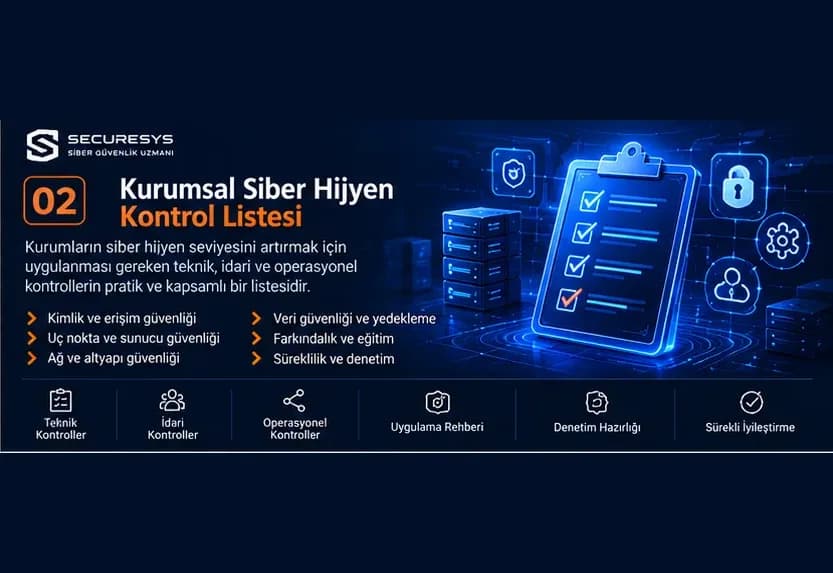
Enterprise Cyber Hygiene Checklist: 25 Critical Security Controls and Implementation Guide
Enterprise cyber hygiene checklist: a guide to implementing 25 critical controls, from MFA, patch management and EDR to backup and access security.
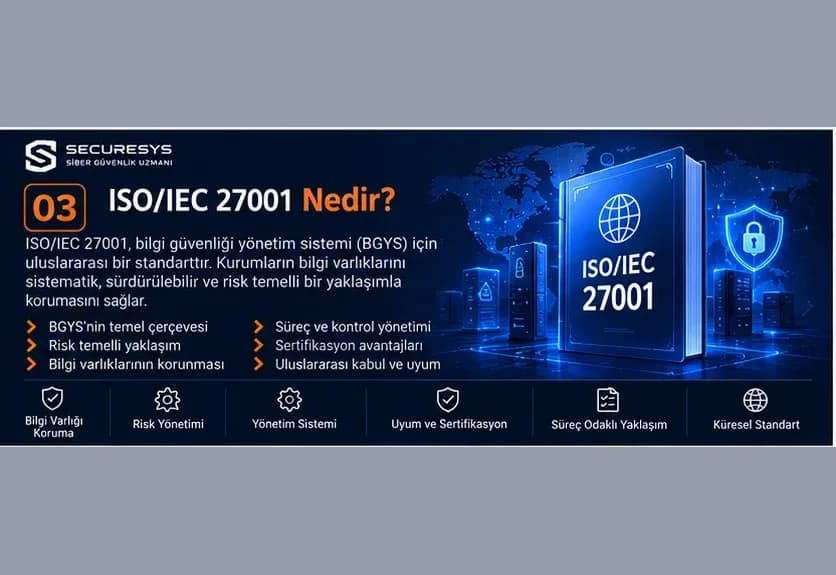
What Is ISO/IEC 27001? ISMS, 93 Controls and Certification Guide
What is ISO/IEC 27001? Learn the 2022 standard, its 93 controls, ISMS setup, risk analysis, SoA, TÜRKAK accreditation and the certification process.
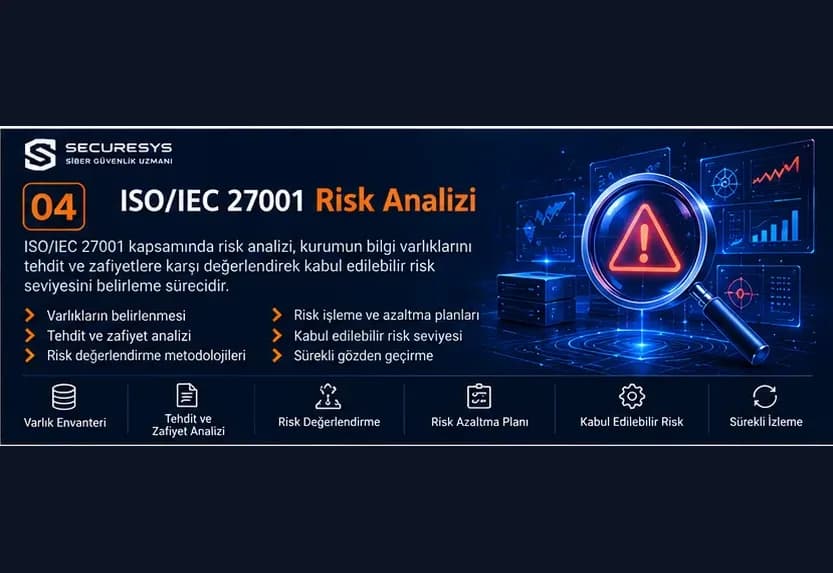
How to Perform an ISO/IEC 27001 Risk Analysis: Risk Assessment, Risk Treatment and SoA Preparation Guide
How is an ISO 27001 risk analysis done? 5×5 risk matrix, risk register, risk treatment plan, residual risk, SoA examples and an ISMS audit guide.
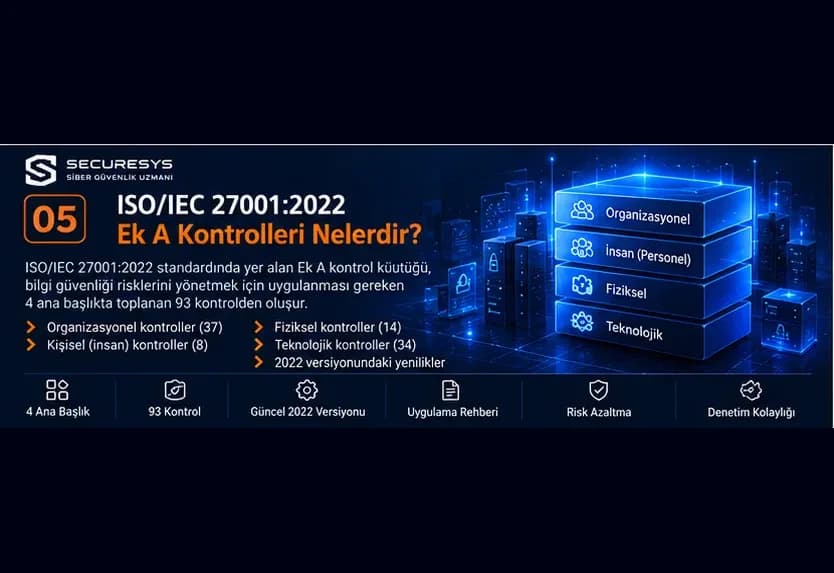
ISO/IEC 27001:2022 Annex A Controls: 93 Information Security Controls and Implementation Guide
Explore the 93 security controls in ISO 27001:2022 Annex A. Learn the organisational, people, physical and technological controls with implementation examples.
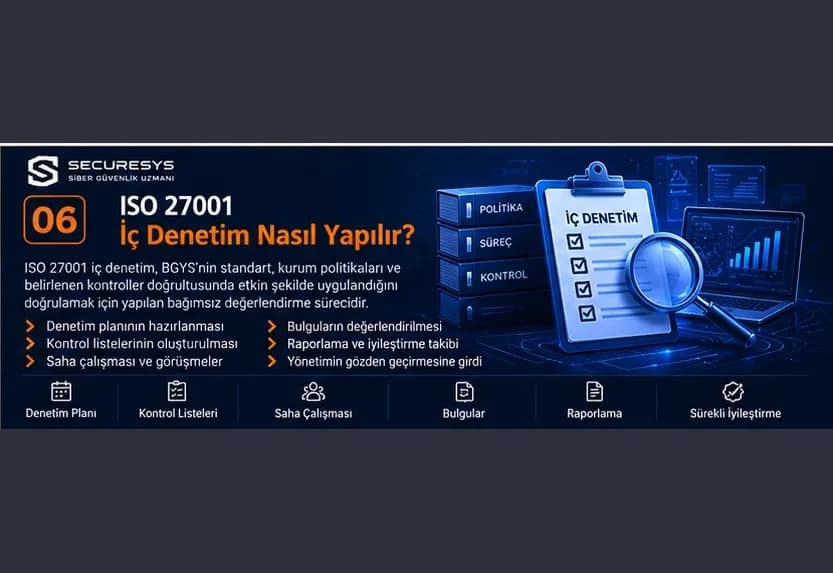
How to Conduct an ISO 27001 Internal Audit: Audit Plan, Nonconformity Management and Certification Readiness
How is an ISO 27001 internal audit done? Learn the audit plan, checklist, major and minor nonconformities, corrective actions and certification readiness.
Looking for professional support on this topic?
Our expert team will reach out for a free consultation as soon as possible.