Data Security, Classification & Protection
Corporate data security from discovering data to protecting it. From classification and data discovery to DLP and encryption, from DSPM and insider threat to data protection in the age of AI — a 12-part guide series prepared by our expert team.
What Is Data Security? Data Protection and Modern Corporate Data Security Architecture
What is data security? Data discovery, data classification, DLP, DSPM, DAM, encryption and a modern corporate data security architecture.
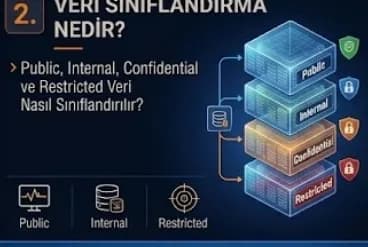
What Is Data Classification? How Are Public, Internal, Confidential and Restricted Data Classified?
Data classification separates organization data into levels such as Public, Internal, Confidential and Restricted according to its sensitivity and business value. This guide covers how to build the taxonomy, automatic classification, labeling, DLP integration, KVKK mapping, DSPM context and the role of classification in AI and RAG environments.
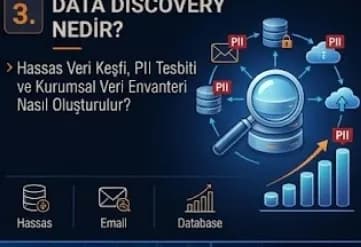
What Is Data Discovery? Sensitive Data Discovery, PII Detection and Building a Data Inventory
Data Discovery is the data security process that discovers where the data inside an organization is located, what it contains and how sensitive it is. This guide covers PII detection, structured and unstructured scanning, the corporate data inventory, data mapping, Shadow and Dark Data, DSPM and DLP integration and the discovery of new AI data sources such as vector databases and the RAG corpus.
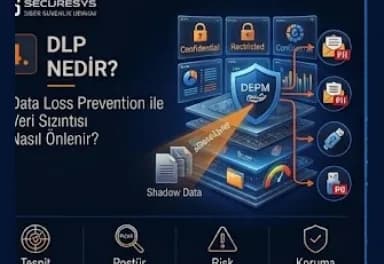
What Is DLP? Preventing Data Leakage With Data Loss Prevention
DLP (Data Loss Prevention) is the data security layer that detects and prevents sensitive data going outside the organization over e-mail, USB, web, cloud, SaaS and AI applications. This guide covers the endpoint, e-mail, web and cloud DLP channels, policy design, the phased transition through monitor mode, insider risk and SOC integration and new areas such as Shadow AI and prompt DLP.
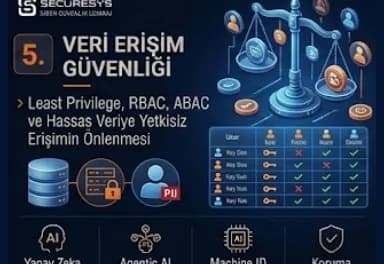
Data Access Security: Least Privilege, RBAC, ABAC and Preventing Unauthorised Access
Data access security ensures that only the right identity accesses sensitive data, with the right authorization and for the right period. This guide covers the Least Privilege and Need-to-Know principles, the RBAC and ABAC models, access review and IGA processes, JIT access, Zero Trust with continuous authorization and authorization control in AI Agent and RAG systems.
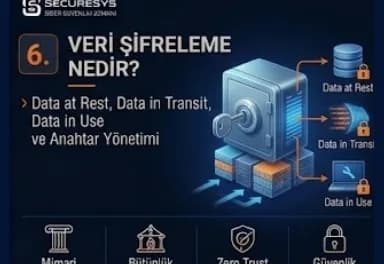
What Is Data Encryption? Data at Rest, Data in Transit, Data in Use and Key Management
Data encryption prevents sensitive data being read by unauthorized people with cryptographic algorithms. This guide covers the Data at Rest, Data in Transit and Data in Use states, symmetric and asymmetric encryption, TDE and disk encryption, TLS and mTLS, tokenization and masking, and key management subjects such as KMS, HSM, key rotation, BYOK/HYOK and crypto-agility.
What Is Database Activity Monitoring (DAM)? Monitoring Database Access and Protecting Sensitive Data
Database Activity Monitoring (DAM) makes visible who runs which query on the database, which sensitive table they access and how much data they take out. This guide covers the DAM architectures, DBA and service account monitoring, bulk data export detection, PAM, SIEM, DLP and DSPM integrations and the monitoring of AI Agent and Text-to-SQL accesses.
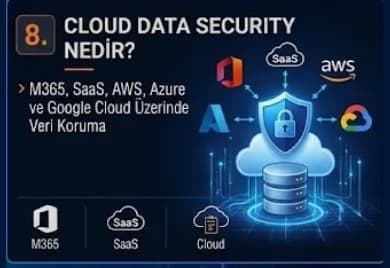
What Is Cloud Data Security? Protecting Data on Microsoft 365, SaaS, AWS, Azure and Google Cloud
Cloud Data Security covers the protection of corporate data on Microsoft 365, SaaS, AWS, Azure and Google Cloud. This guide covers the shared responsibility model, SharePoint, OneDrive and Teams sharing risks, Shadow SaaS and Shadow Data, CASB and cloud DLP, the DSPM and CSPM difference, cloud identity management and Shadow AI with RAG and AI Agent accesses.
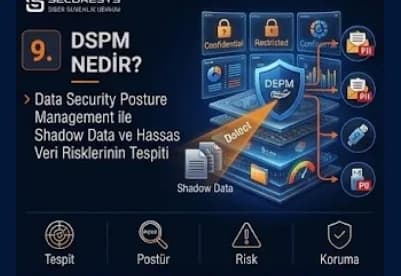
What Is DSPM? Data Security Posture Management, DDR, Shadow Data and Sensitive Data Risk
DSPM makes visible where sensitive data is, who can access it and why it is at risk; DDR detects the active threats towards this data. This guide covers the Shadow Data, Dark Data and ROT Data concepts, data access graph and toxic combination analysis, the relationship of DSPM with CSPM, CIEM, DLP and DAM, and data risk in AI Agent and RAG environments.
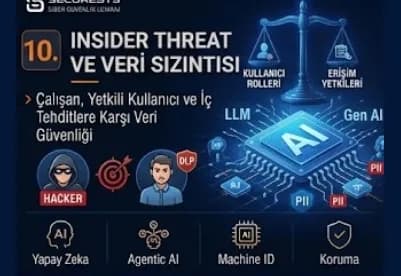
Insider Threat and Data Leakage: Protecting Data Against Employees, Privileged Users and Internal Threats
An Insider Threat is the data security risk that appears over an employee, privileged user, third party, service account or AI Agent that has legitimate access to organization data. This guide covers the internal threat types, data exfiltration channels, low-and-slow exfiltration, the DLP, DAM, PAM, UEBA, ITDR and DDR layers, the employee privacy balance and AI Agent originated risks.
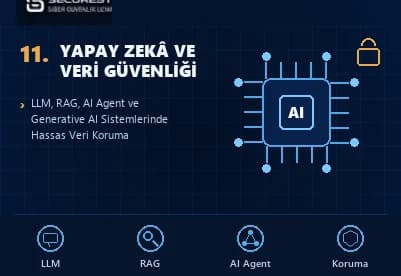
AI and Data Security: Protecting Sensitive Data in LLM, RAG, AI Agent and Generative AI Systems
Because artificial intelligence systems can access corporate data far above human speed they are redefining data security. This guide covers prompt security, Shadow AI and AI DLP, Permission-Aware RAG with vector database protection, the prompt injection risk, AI Agent identity and Least Privilege, Agent Memory security and AI monitoring with DSPM and DDR.
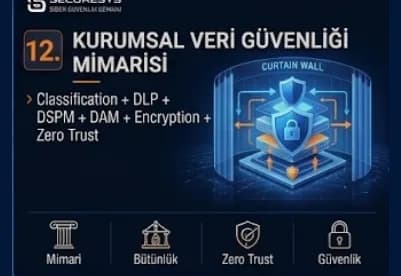
How Is a Corporate Data Security Architecture Built? Classification + DLP + DSPM + DAM + Encryption + Zero Trust
A corporate data security architecture is not a single product; it is the Data Discovery, Classification, IAM/IGA/PAM, Encryption, DLP, DSPM, DAM, DDR, Zero Trust and SIEM/SOC/SOAR layers working together. This guide explains the 15 layers one by one, gives a phased implementation roadmap and offers a maturity model with a checklist.
Looking for professional support on these topics?
Our expert team will reach out for a security assessment tailored to your organization.