Red Teaming & Threat Intelligence
Real-world attack scenarios, threat intelligence and adversary simulation. From red team operations to OSINT, lateral movement to dark web monitoring — a 12-part guide series prepared by our expert team.
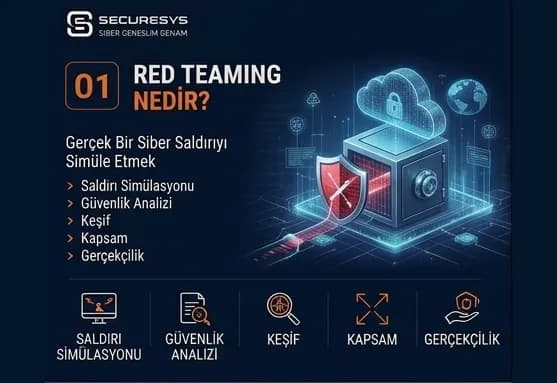
What Is Red Teaming? Simulating a Real Cyber Attack
Red Teaming measures an organisation's resilience across people, process and technology by simulating a real attacker's tactics and techniques under control. In this chapter we walk through the stages of a Red Team operation using a real-world scenario.
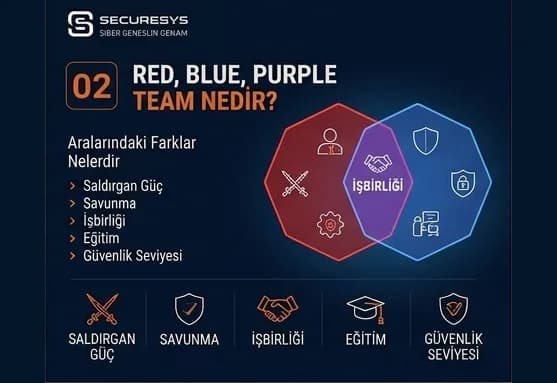
What Are Red Team, Blue Team and Purple Team? How Do They Differ?
The Red Team simulates the attack, the Blue Team runs the defence, and the Purple Team combines both to improve detection capability. This chapter covers the three roles, detection engineering and MITRE ATT&CK coverage analysis.
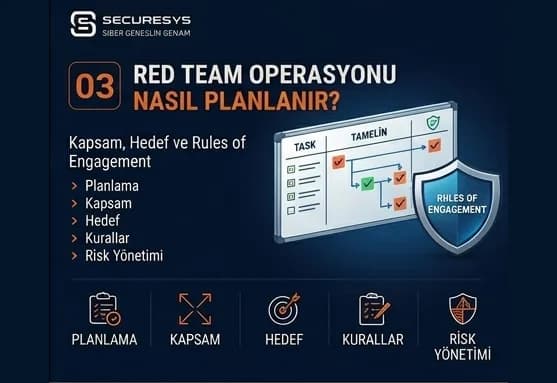
How Is a Red Team Operation Planned? Scope, Objectives and Rules of Engagement
A Red Team operation begins with correct planning, not with attack tools. This chapter covers objective setting, crown jewels, scope, rules of engagement, the White Team and stop conditions.
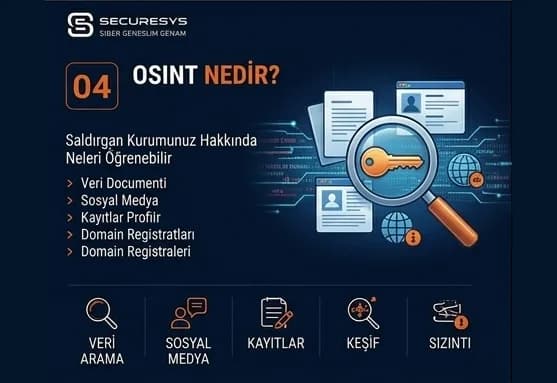
What Is OSINT? What Can an Attacker Learn About Your Organisation?
Attackers get to know an organisation before touching a single system. This chapter examines how open source intelligence — from domains and certificate transparency to LinkedIn and leaked credentials — builds a corporate attack surface.
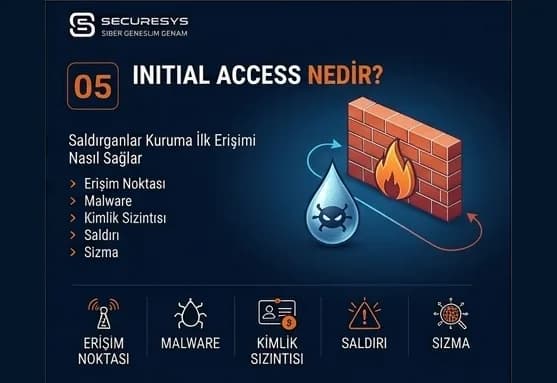
What Is Initial Access? How Do Attackers Gain Their First Foothold?
Initial access is the door to the attack, not its end. This chapter examines initial access methods — from phishing and valid accounts to internet-facing applications and the supply chain — along with the initial access broker ecosystem.
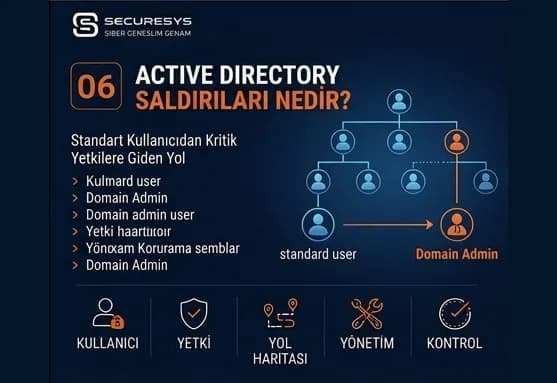
What Are Active Directory Attacks? The Path from Standard User to Critical Privileges
In Active Directory the real danger is not a single vulnerability but the route between them. This chapter covers Kerberos attacks, service accounts, ACL and delegation risks, and attack path analysis.
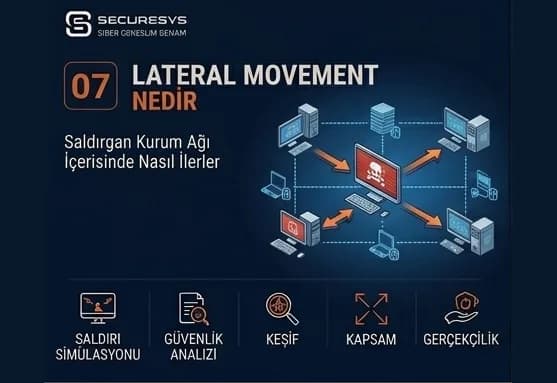
What Is Lateral Movement? How Does an Attacker Move Through a Corporate Network?
The real risk of an attack emerges not at initial access but in how far the attacker can move inside the network. This chapter covers RDP, SMB, WinRM, pass-the-hash, network segmentation, PAM and Zero Trust.
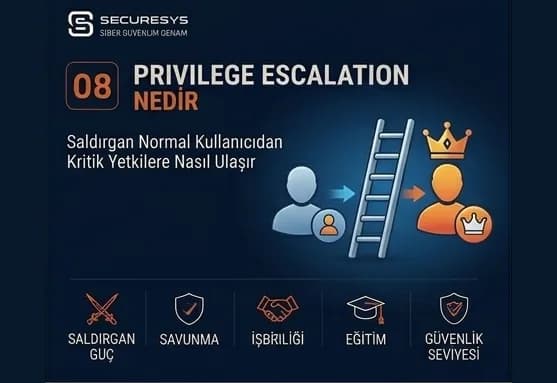
What Is Privilege Escalation? How Does an Attacker Reach Critical Privileges?
The attacker's target is not your password but the privileges that account can reach. This chapter covers local and domain privilege escalation, privilege creep, service accounts, and the PAM, JIT, JEA and PAW approaches.
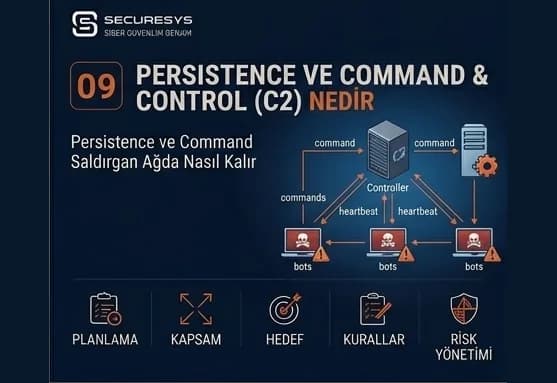
What Are Persistence and Command & Control (C2)? How Does an Attacker Stay in the Network?
Keeping the attacker out is not enough — you must also stop them staying in. This chapter covers persistence methods, C2 communication, beaconing and DNS detection, and the dwell time and time-to-detect metrics.
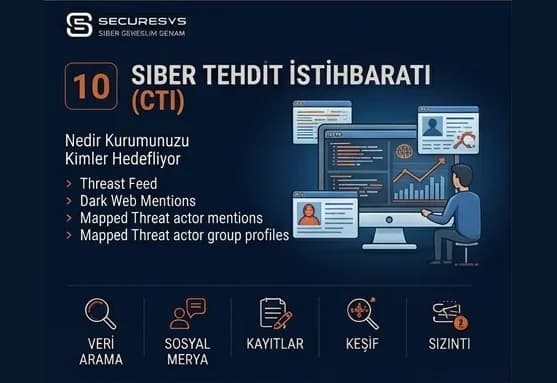
What Is Cyber Threat Intelligence (CTI)? Who Is Targeting Your Organisation?
Not every threat matters equally to you. This chapter covers the four levels of threat intelligence, the difference between IOCs and TTPs, the intelligence lifecycle and the threat-informed defense approach.
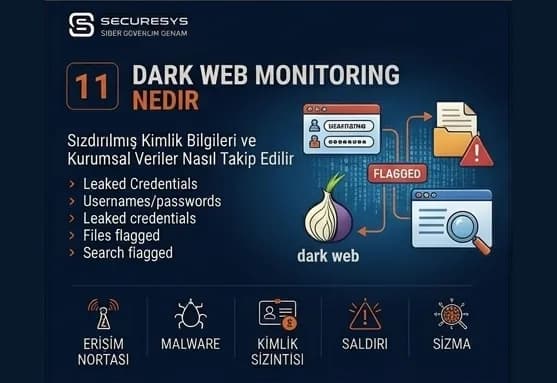
What Is Dark Web Monitoring? Tracking Leaked Credentials and Corporate Data
You must see what the attacker already holds. This chapter covers leaked credentials, stealer logs, initial access broker listings, ransomware leak sites and brand impersonation.
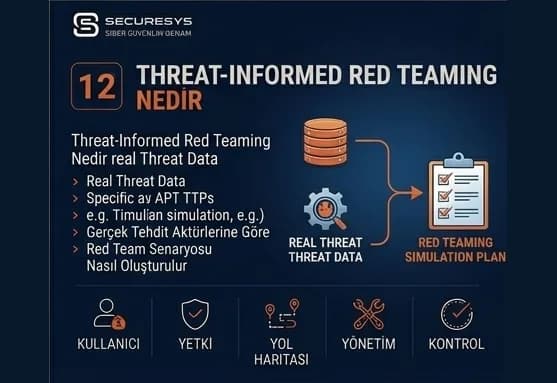
What Is Threat-Informed Red Teaming? Building Scenarios from Real Threat Actors
The best Red Team scenario is not the most complex one but the most realistic. This chapter covers building a threat profile, adversary emulation, MITRE ATT&CK mapping and continuous security validation.
Looking for professional support on these topics?
Our expert team will reach out for a security assessment tailored to your organization.