Corporate DDoS Attack Simulation
Strengthen your infrastructure with DDoS readiness and resilience testing. From attack types to protection architecture, detection to incident response — a 12-part guide series prepared by our expert team.
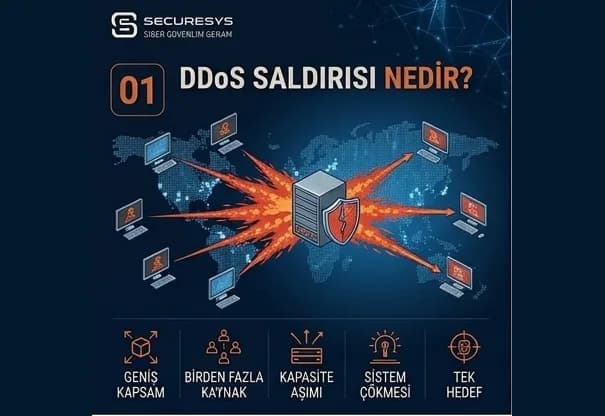
What Is a DDoS Attack? Risks, Attack Types and Protection Methods for Organisations
The aim of a DDoS attack is not to break into the system but to make it unusable. This chapter covers attack types, botnet structure, protection layers and why resilience testing is essential.
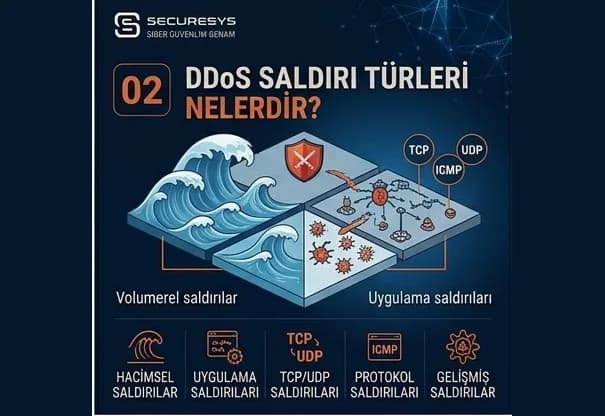
What Are the Types of DDoS Attack? Volumetric, Protocol and Application Layer
Not every DDoS attack is the same. This chapter covers volumetric, protocol and application layer attacks, reflection and amplification techniques, DNS attacks and multi-vector DDoS.
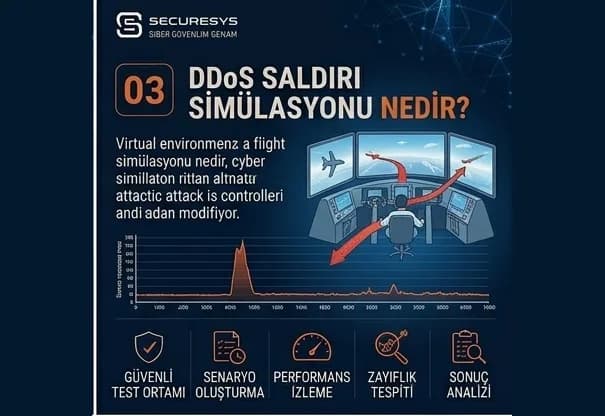
What Is DDoS Attack Simulation? How Are Corporate Systems Tested?
Having DDoS protection and being ready for DDoS are not the same thing. This chapter covers controlled attack simulation, ramp-up and burst testing, stop conditions and the metrics that must be measured.
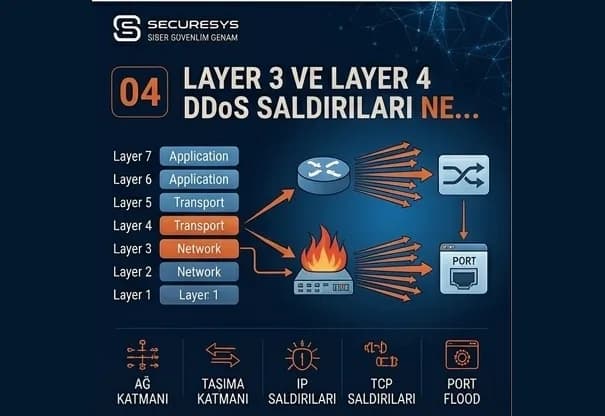
What Are Layer 3 and Layer 4 DDoS Attacks? SYN Flood, UDP Flood and Network Layer Risks
Gbps alone does not show DDoS resilience. This chapter covers SYN flood, UDP flood, ACK flood and connection exhaustion, along with PPS/CPS metrics, the firewall session table and scrubbing architecture.
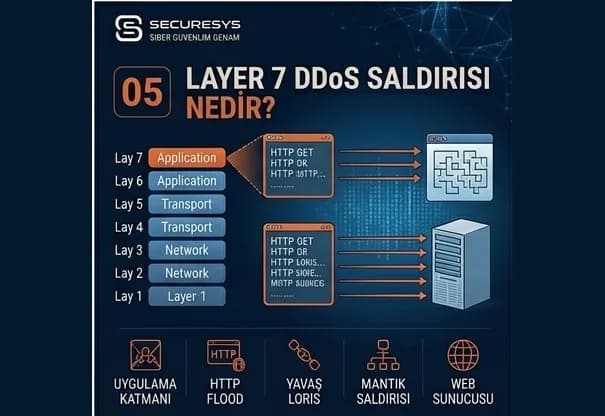
What Is a Layer 7 DDoS Attack? HTTP Flood, API DDoS and Application Layer Attacks
The biggest DDoS attack is not always the one sending the most traffic. This chapter covers HTTP floods, API and GraphQL risks, bot management, rate limiting and application bottlenecks.
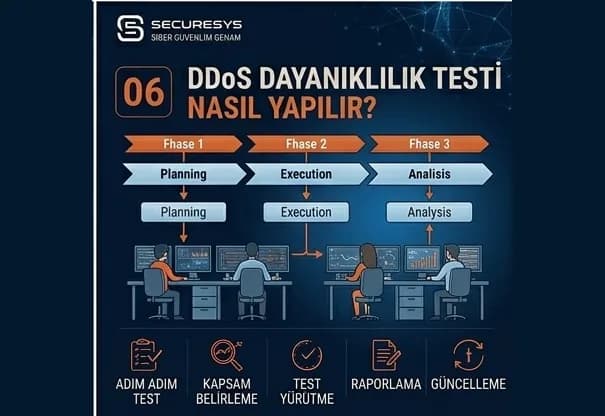
How Is a DDoS Resilience Test Performed? Capacity, Thresholds and Bottleneck Analysis
DDoS resilience is not a single number. This chapter covers capacity planning, the Gbps/PPS/CPS/RPS metrics, threshold setting, bottleneck analysis and the detect-mitigate-recover timings.
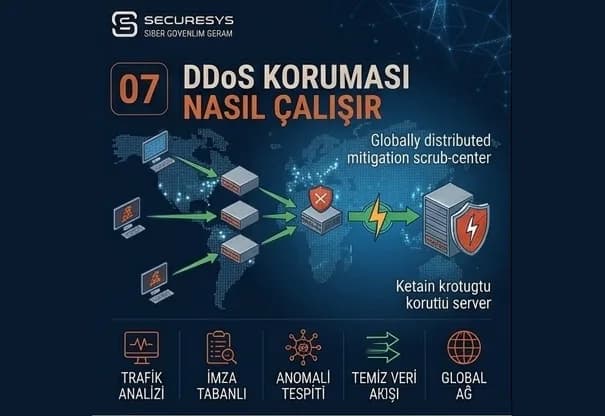
How Does DDoS Protection Work? Firewall, WAF, CDN, Anti-DDoS and Scrubbing Centres
DDoS protection is not a single device. This chapter covers the roles of the firewall, WAF, CDN, anti-DDoS and scrubbing centre, along with origin protection and the always-on/on-demand models.
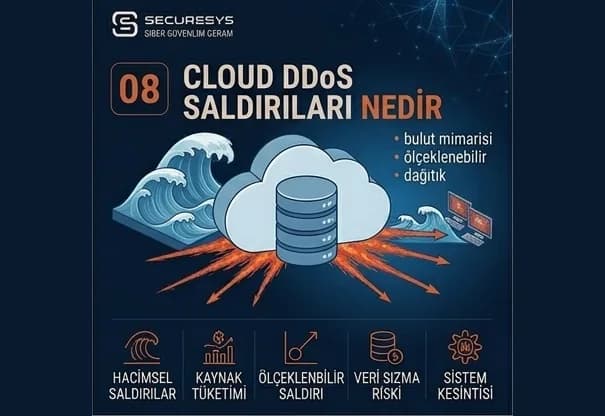
What Are Cloud DDoS Attacks? Protecting Cloud Infrastructure Against DDoS
Moving to the cloud does not remove DDoS risk, it changes its shape. This chapter covers public IP and origin exposure, autoscaling and EDoS risk, and Kubernetes and serverless resilience.
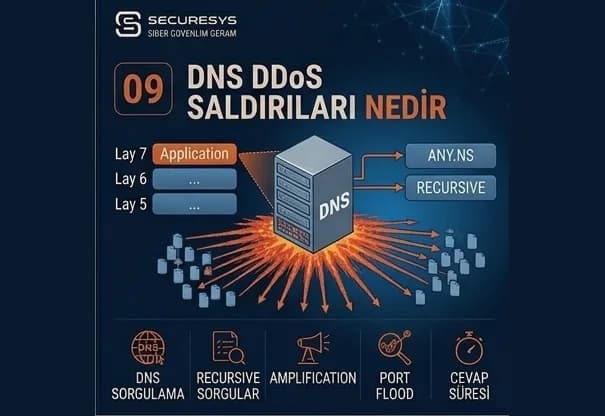
What Are DNS DDoS Attacks? DNS Flood, Amplification and DNS Security
Even if your application is up, your service goes down if DNS fails. This chapter covers DNS floods, amplification and reflection, random subdomain attacks, and the anycast, secondary DNS and RRL defences.
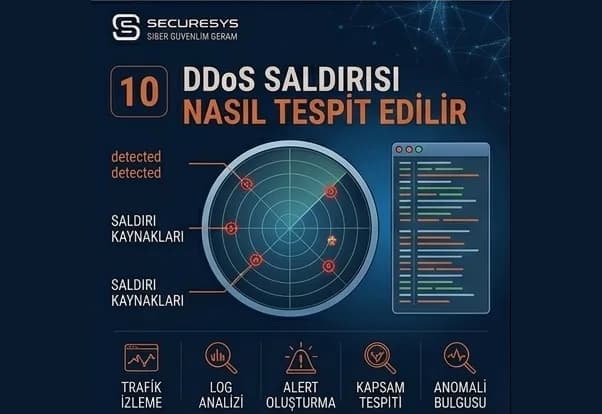
How Is a DDoS Attack Detected? SOC, SIEM, NDR and Traffic Analysis
You cannot manage a DDoS attack you cannot see. This chapter covers traffic baselines, anomaly detection, distinguishing a flash crowd from an attack, and SOC/SIEM/NDR correlation.
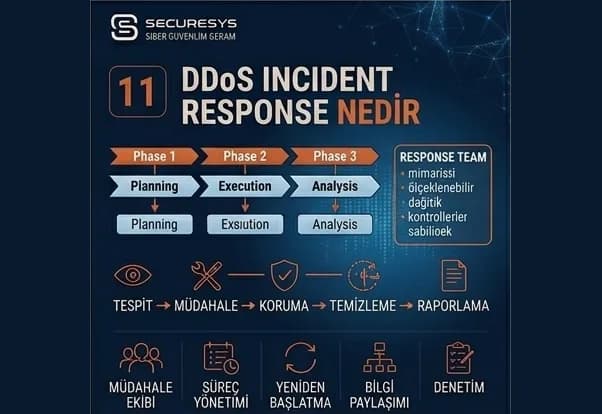
What Is DDoS Incident Response? What Should Organisations Do During an Attack?
During a DDoS attack the most valuable resource is time. This chapter covers the first 5, 15 and 60 minutes, the playbook and escalation matrix, the war room, the recovery phase and the post-incident review.
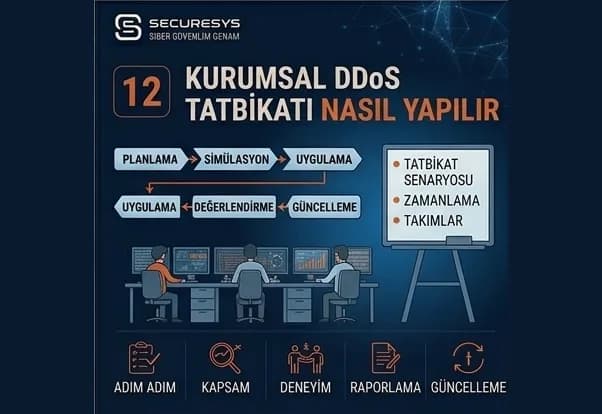
How Is a Corporate DDoS Exercise Run? Testing, Reporting and Resilience Strategy
DDoS resilience is not bought, it is built through testing. This chapter covers planning a corporate exercise, scenario design, detection/control/process gaps and maturity levels.
Looking for professional support on these topics?
Our expert team will reach out for a security assessment tailored to your organization.