Skills and Certifications Required for a Penetration Testing Specialist
The significance of OSCP, CEH, and other certifications; why a certification alone is not enough; and questions to ask when purchasing services.
The success of a penetration test does not depend solely on the tools used. Two different experts using the same tool may achieve completely different results. This is because a penetration test is a process that requires a significant degree of expertise, experience, and analytical thinking skills.
There are many automated security scanning tools on the market today. These tools can quickly detect known security vulnerabilities in systems. However, a professional penetration test is not limited to tool outputs alone.
An experienced penetration testing expert can analyze business logic vulnerabilities, authorization errors, chained attack scenarios, and design flaws that automated scanning tools cannot detect. Therefore, expert human resources form the foundation of a successful penetration test.
Who Is a Penetration Testing Specialist?
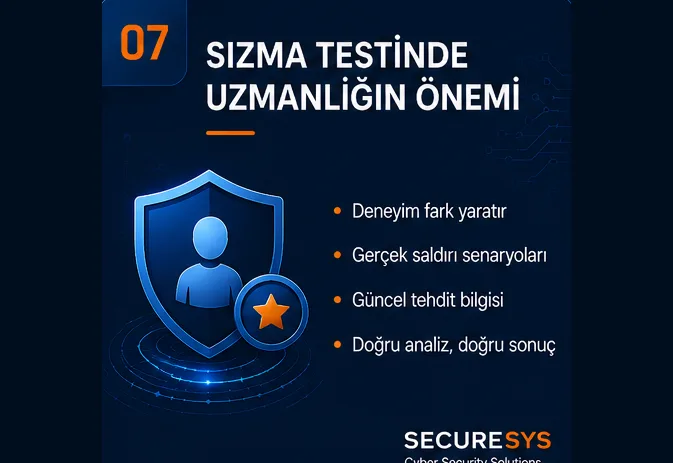
A penetration testing specialist (pentester) is a cybersecurity expert who analyzes information systems from the perspective of a malicious attacker, identifies security vulnerabilities within an ethical framework, and reports on the risks posed by these vulnerabilities.
Their role is not limited to simply finding security vulnerabilities.
A professional pentester also:
- Plans attack scenarios.
- Assess risk levels.
- Verifies whether vulnerabilities can actually be exploited.
- Filters out false positives.
- Prepares actionable solution recommendations for technical teams.
- Presents risks to senior management in an understandable manner.
Technical Competencies Required for a Good Penetration Tester
A successful penetration tester must be proficient in many different technologies. This is because the infrastructures used by organizations today do not consist of a single system.
The primary areas in which a professional penetration tester is expected to be knowledgeable are as follows:
- TCP/IP and network protocols
- Windows and Linux operating systems
- Active Directory architecture
- Web application security
- API security
- Mobile application security
- Cloud platforms (AWS, Azure, GCP)
- Database systems
- Authentication and authorization mechanisms
- Secure software development principles
- Fundamentals of Cryptography
- Programming and scripting languages (Python, PowerShell, Bash, JavaScript, etc.)
This technical knowledge is critical for accurately simulating real-world attack scenarios.
Internationally Recognized Penetration Testing Certifications
There are many certifications in the cybersecurity sector. However, not every certification provides the same level of technical proficiency. While some focus on theoretical knowledge, others measure a candidate’s actual skills through entirely hands-on exams.
Below are some of the most widely recognized penetration testing certifications worldwide.
OSCP (OffSec Certified Professional)
OSCP is one of the world’s most prestigious hands-on penetration testing certifications. Candidates are expected to penetrate real systems within a specified timeframe and prepare a technical report.
This certification;
- Network penetration testing
- Privilege escalation
- System exploitation
- Pivoting
- Reporting
require advanced-level knowledge in these areas.
OSWE (OffSec Web Expert)
OSWE is a hands-on certification that assesses advanced expertise in web application security.
Specifically:
- Source code analysis
- Secure software development
- Custom web applications
- Complex web security vulnerabilities
.
OSEP (OffSec Experienced Penetration Tester)
OSEP covers advanced network attacks and attack techniques targeting modern enterprise environments.
Content:
- Active Directory
- EDR Bypass
- Pivoting
- Tunneling
- Advanced attack techniques
is based on.
eWPTX
The eWPTX certification, offered by eLearnSecurity, covers advanced web application security topics.
Specifically:
- Business logic security
- API security
- Authentication
- Modern web attacks
are the primary focus.
CRTO and CRTE
These certifications focus specifically on Red Team operations and Active Directory attack techniques.
Conducted on corporate networks;
- Command & Control
- Active Directory attacks
- Privilege escalation
- Lateral Movement
are evaluated through hands-on exercises.
CEH (Certified Ethical Hacker)
CEH is one of the most widely recognized certifications in the field of ethical hacking.
While it provides important foundational knowledge for penetration testing processes, it is more appropriate to evaluate it in conjunction with hands-on, advanced-level certifications.
Is the Certification Alone Sufficient?
No.
International certifications are an important indicator of technical knowledge; however, they are not sufficient on their own for a successful penetration test.
The systems encountered in real-world projects are far more complex than scenarios in a lab environment.
Therefore, a penetration tester must:
- have project experience across various industries,
- Keep up with the latest attack techniques,
- continuously improve their skills,
- Have worked with various technologies,
- Be able to translate technical findings into clear reports
is just as important as the certifications they hold.
What Should You Consider When Purchasing a Penetration Testing Service?
When an organization purchases a penetration testing service, it should not focus solely on price or the number of certifications.
The following criteria should be evaluated together:
- Is the testing methodology compliant with international standards?
- What is the manual testing ratio?
- Is expert analysis performed in addition to automated tools?
- Does the testing team have industry-specific experience?
- Are the identified vulnerabilities actually verified?
- Is an executive summary provided along with the technical report?
- Is a retest service provided?
- Is technical support provided during the remediation process?
The answers to these questions directly affect the quality of the service you will receive.
The Securesys Approach
At SecureSys, we do not view penetration testing as a service based solely on automated scanning tools. In our projects, we rely on international methodologies, combine manual security testing with automated analysis, and incorporate the field experience we have gained across various industries into every project.
Our goal is not merely to list security vulnerabilities; it is to highlight the impact of these vulnerabilities on the business, prioritize risks, and provide actionable recommendations that will enhance an organization’s security maturity.
Just as important as having the right experts and the right methodology is determining when and how often a penetration test should be conducted.
Many organizations believe that conducting a penetration test just once is sufficient. However, IT infrastructures are constantly evolving, new applications are being deployed, and new security vulnerabilities emerge every day.
Related Articles
Penetration Testing
Why Is a Penetration Test Necessary?
Why is the attack surface growing in digitalizing organizations, and why aren’t security products enough on their own? The rationale for verification from the perspective of a real attacker.
What Is a Penetration Test?
Its definition, purpose, and how it differs from a vulnerability scan. What benefits it provides to the organization, and what it means for decision-makers and technical teams.
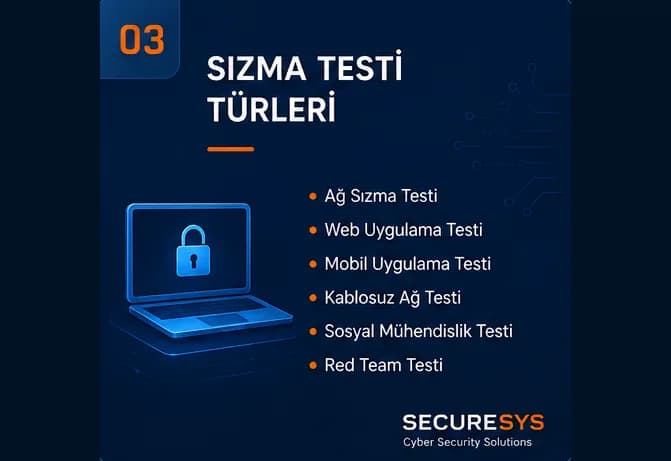
What Are the Types of Penetration Tests?
The scope of the topics "Network," "Web," "Mobile," "API," "Wireless," "Social Engineering," and "Red Team"; which one yields the correct result in which scenario.
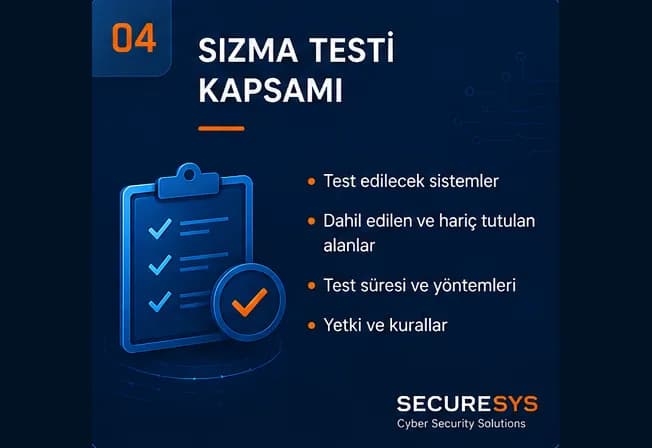
How Is the Scope of a Penetration Test Determined?
Which systems are included, and which are excluded? The direct impact of the scope decision on the budget, timeline, and quality of findings.
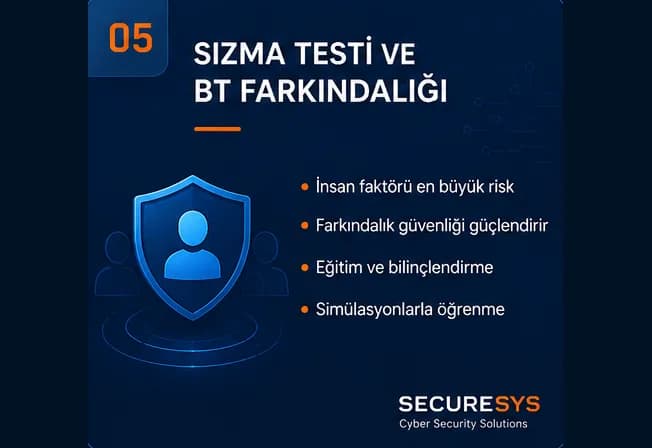
Social Engineering: A Chain of Attacks That Starts with a Single Click
A real-life attack chain that began with a single email, the role of the human factor, and the measurable impact of awareness campaigns.
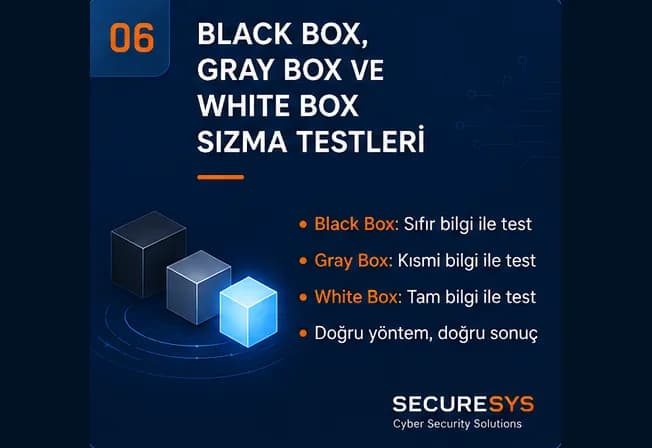
What Are Black-Box, Gray-Box, and White-Box Penetration Tests?
The advantages of the zero-knowledge, partial-knowledge, and full-knowledge approaches, differences in processing time, and selecting the appropriate method based on the organization.
Looking for professional support on this topic?
Our expert team will reach out for a free consultation as soon as possible.