Why Is a Penetration Test Necessary?
Why is the attack surface growing in digitalizing organizations, and why aren’t security products enough on their own? The rationale for verification from the perspective of a real attacker.
Penetration and Bypass Testing

Digital transformation has fundamentally changed the way organizations operate. Today, a wide range of critical activities—from customer-facing services to financial transactions, and from production processes to human resources management—are conducted through information technology infrastructures. To gain a competitive advantage, organizations are investing more and more each day in web applications, mobile platforms, cloud services, and corporate network infrastructure.
While these investments accelerate business processes, they also create new targets for attackers. Today, cyberattacks directly affect not only large technology companies but also small and medium-sized enterprises (SMEs), public institutions, financial institutions, manufacturing facilities, the healthcare sector, and e-commerce firms. Attackers can now infiltrate organizational networks, access critical data, and bring operations to a standstill by exploiting a single security vulnerability.
Consider an organization…
It has an ERP system it has been developing for years.
It has a web application that serves its customers.
Its mobile app is actively used by thousands of users.
Employee accounts are managed via Active Directory.
It has critical services running on a cloud infrastructure.
It uses a next-generation firewall.
An EDR solution is in place.
It receives 24/7 SOC support.
At first glance, everything looks secure.
Then, one Monday morning, the first call comes in.
"We can't access the files."
Shortly after, customer service starts receiving a flood of calls.
The web application stops responding.
Unusual activity is detected in the internal systems.
By the end of the day, it becomes clear that this is not just a system outage; customer data has been leaked, a ransom has been demanded, and the organization’s reputation has been seriously damaged.
At this point, the same question comes to mind for most organizations:
“We had security products—so how did this happen?”
Because security isn’t achieved simply by purchasing products. Security is achieved by regularly testing existing systems from the perspective of a real attacker, identifying vulnerabilities, and patching them before attackers can exploit them.
This is precisely the purpose of a penetration test.
A penetration test is a controlled security test conducted by ethical hackers within a predefined scope. The goal is to identify security vulnerabilities that could be exploited by malicious actors using real attack techniques, assess risks, and enhance the organization’s security level.
Today, penetration testing is not merely a technical security activity. It also enables organizations to:
- protect their information assets,
- ensure business continuity,
- build customer trust,
- comply with legal regulations,
- protect their brand reputation, and manage their cyber risks.
We will address topics such as what a penetration test is, why it is necessary, what types exist, how the testing process proceeds, which standards and regulations require penetration testing, and how to select the right service provider—step by step.
So, which systems should organizations have tested? What exactly does a penetration test cover?
Related Articles
Penetration Testing
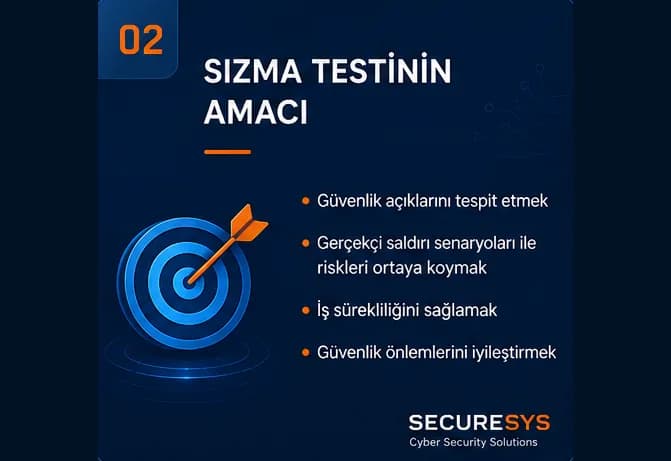
What Is a Penetration Test?
Its definition, purpose, and how it differs from a vulnerability scan. What benefits it provides to the organization, and what it means for decision-makers and technical teams.
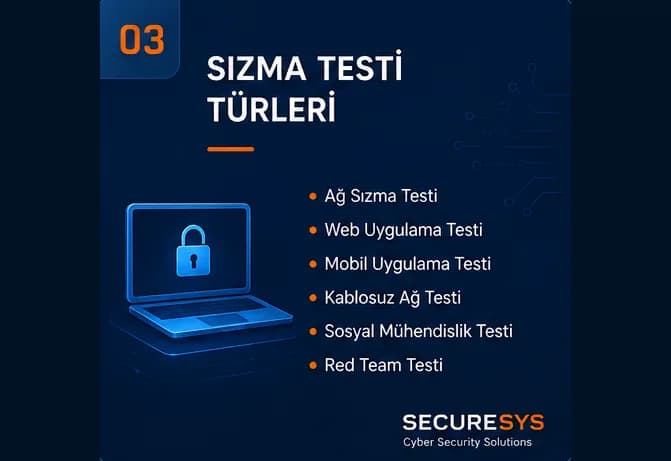
What Are the Types of Penetration Tests?
The scope of the topics "Network," "Web," "Mobile," "API," "Wireless," "Social Engineering," and "Red Team"; which one yields the correct result in which scenario.
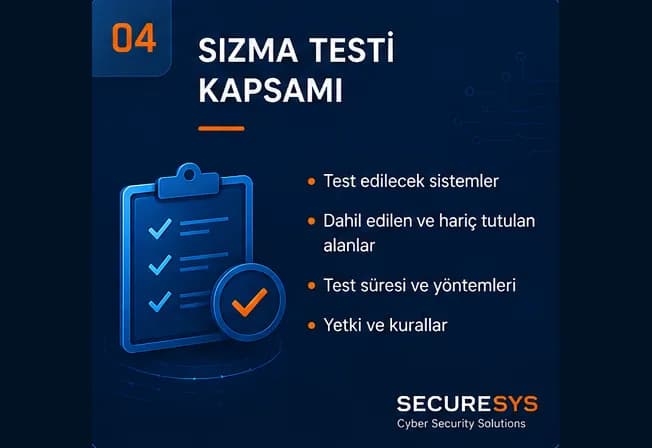
How Is the Scope of a Penetration Test Determined?
Which systems are included, and which are excluded? The direct impact of the scope decision on the budget, timeline, and quality of findings.
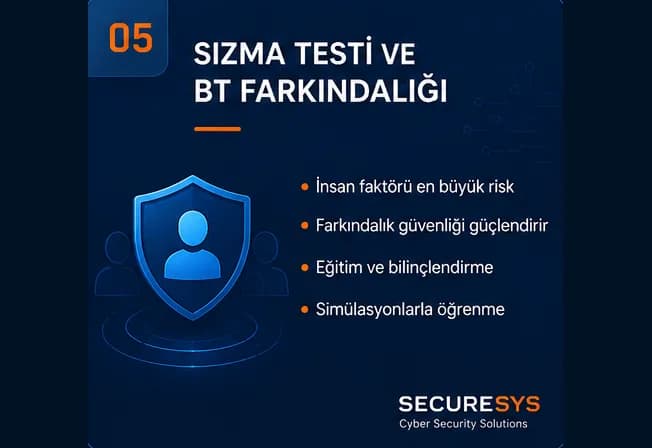
Social Engineering: A Chain of Attacks That Starts with a Single Click
A real-life attack chain that began with a single email, the role of the human factor, and the measurable impact of awareness campaigns.
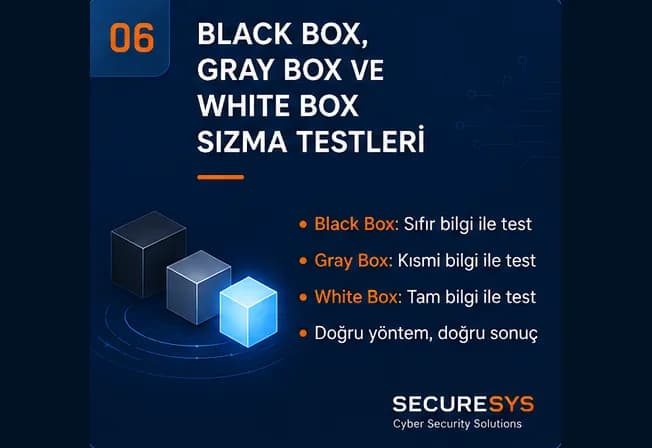
What Are Black-Box, Gray-Box, and White-Box Penetration Tests?
The advantages of the zero-knowledge, partial-knowledge, and full-knowledge approaches, differences in processing time, and selecting the appropriate method based on the organization.

Skills and Certifications Required for a Penetration Testing Specialist
The significance of OSCP, CEH, and other certifications; why a certification alone is not enough; and questions to ask when purchasing services.
Looking for professional support on this topic?
Our expert team will reach out for a free consultation as soon as possible.