What Is a Penetration Test?
Its definition, purpose, and how it differs from a vulnerability scan. What benefits it provides to the organization, and what it means for decision-makers and technical teams.
As digital transformation gains momentum, organizations’ information technology infrastructures have become more complex than ever. Web applications, mobile applications, API services, cloud platforms, corporate networks, Active Directory infrastructures, and remote access systems are critical to organizations’ ability to maintain their operations. However, the fact that these systems are accessible via the internet also creates a broad attack surface for cyber attackers.
Millions of automated attacks are carried out worldwide every day. Attackers target not only large organizations but also small and medium-sized businesses. This is because many organizations continue their operations without being aware of security vulnerabilities in their infrastructure. This is where Penetration Testing (Pentest) stands out as one of the most important technical security assessment methods for measuring an organization’s security level.
What Is a Penetration Test?

A penetration test is the process of systematically testing for security vulnerabilities in information systems, applications, and network infrastructures using methods and techniques that real attackers might employ.
During this process, ethical hackers (pentesters) operate with the organization’s permission and within the defined scope. The goal is not to damage the system, but to identify vulnerabilities that could be exploited by a malicious attacker before they do, to highlight the risks posed by these vulnerabilities, and to recommend necessary improvements.
In other words, a penetration test is not merely a “security vulnerability scan.” Security scanning tools can list potential vulnerabilities; however, in a real penetration test, experts verify these findings, combine different vulnerabilities to create attack chains, and assess the impact of these vulnerabilities on the organization.
For example, an authentication vulnerability that appears low-risk on its own can grant access to critical systems when combined with an authorization error. Similarly, a misconfigured API, when combined with a business logic vulnerability, could lead to the compromise of customer data. For this reason, a professional penetration test analyzes not only technical vulnerabilities but also how these vulnerabilities could be exploited in real-world scenarios.
What Is the Purpose of a Penetration Test?
Many organizations conduct penetration testing solely due to legal requirements or customer requests. However, the purpose of a successful penetration test is much broader.
Through penetration testing:
- Security vulnerabilities in information systems are identified.
- Exploitation scenarios that cyber attackers could use are identified.
- The risk level of critical systems is measured.
- Vulnerabilities that could impact business continuity are uncovered.
- The level of protection for sensitive data is assessed.
- The effectiveness of existing security controls is tested.
- The actual effectiveness of security investments is verified.
- The organization’s cyber resilience is enhanced.
In short, penetration testing is conducted not only to find vulnerabilities but also to measure the organization’s actual security level.
Are Penetration Testing and Vulnerability Scanning the Same Thing?
These two concepts are often confused with one another.
A vulnerability assessment uses automated tools to detect known security vulnerabilities in systems. This method is fast and quite useful for an initial evaluation of large-scale systems.
However, automated tools cannot detect:
- business logic vulnerabilities,
- authorization errors,
- Complex attack chains,
- Inappropriate security designs,
- or the exploitation of multiple vulnerabilities in combination
most of the time.
In penetration testing, however, experienced security experts do not rely solely on tool outputs. They perform manual analyses, apply different attack scenarios, and assess the extent to which an attacker could actually damage the system.
For this reason, penetration testing provides a much more comprehensive and realistic security assessment than vulnerability scanning.
What Benefits Does a Penetration Test Provide to an Organization?
A successful penetration test provides value not only to IT teams but to all of the organization’s stakeholders.
From the perspective of senior management:
- It makes cyber risks visible.
- It helps determine investment priorities.
- It reduces business continuity risks.
- It contributes to protecting the organization’s reputation.
- It supports the process of compliance with legal obligations.
From the perspective of IT teams:
- It enables the prioritization of security vulnerabilities.
- It identifies misconfigurations.
- It highlights the strengths and weaknesses of the security architecture.
- Verifies the accuracy of patches.
- It provides technical guidance for remediation efforts.
For software teams:
- Supports secure software development processes.
- Ensures that recurring coding errors are identified.
- Contributes to the security maturity of the software lifecycle.
What Does Penetration Testing Cover?
Penetration testing can be applied to different systems depending on the organization’s needs.
The most common penetration testing scopes are as follows:
- Web Application Penetration Testing
- API Security Testing
- Mobile Application Penetration Testing
- Internal Network Penetration Testing
- External Network Penetration Testing
- Active Directory Security Testing
- Wireless Network Security Testing
- Cloud Security Testing
- OT/ICS Security Testing
- Social Engineering Tests
- Physical Security Testing
Since every system is exposed to different threats, the methodology and testing techniques used will vary. In the following sections of this guide, we will examine penetration test types in detail and discuss which tests should be preferred in which situations.
Why Should Penetration Testing Be Conducted Regularly?
Cyber threats are constantly evolving. A system considered secure yesterday may be at risk today due to a newly discovered vulnerability. In addition, organizations’ infrastructures are constantly evolving. As new applications, servers, cloud services, APIs, and integrations are added to the system, the attack surface expands.
For this reason, penetration testing should not be viewed as a one-time activity but rather as a regular part of an organization’s cybersecurity lifecycle.
Through periodic penetration testing, security vulnerabilities are detected early on, risks that attackers could exploit are mitigated, and the organization’s security level is kept up to date.
Penetration testing is not merely a technical control mechanism. It is also a strategic security assessment process that protects the organization’s digital assets, supports business continuity, contributes to regulatory compliance, and measures the security level from the perspective of a real attacker.
However, not every organization has the same needs. The scope of penetration testing required by an e-commerce platform differs from that of a manufacturing facility, a financial institution, or a government agency.
So, which systems should be tested? What types of penetration tests are applied to different infrastructures, such as web applications, mobile applications, internal networks, cloud environments, and Active Directory?
In the next section, we will examine penetration test types in detail and discuss which risks each test aims to uncover.
Related Articles
Penetration Testing

Why Is a Penetration Test Necessary?
Why is the attack surface growing in digitalizing organizations, and why aren’t security products enough on their own? The rationale for verification from the perspective of a real attacker.

What Are the Types of Penetration Tests?
The scope of the topics "Network," "Web," "Mobile," "API," "Wireless," "Social Engineering," and "Red Team"; which one yields the correct result in which scenario.
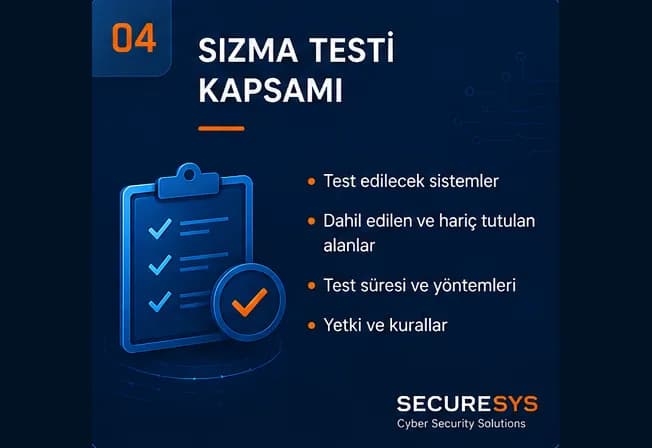
How Is the Scope of a Penetration Test Determined?
Which systems are included, and which are excluded? The direct impact of the scope decision on the budget, timeline, and quality of findings.
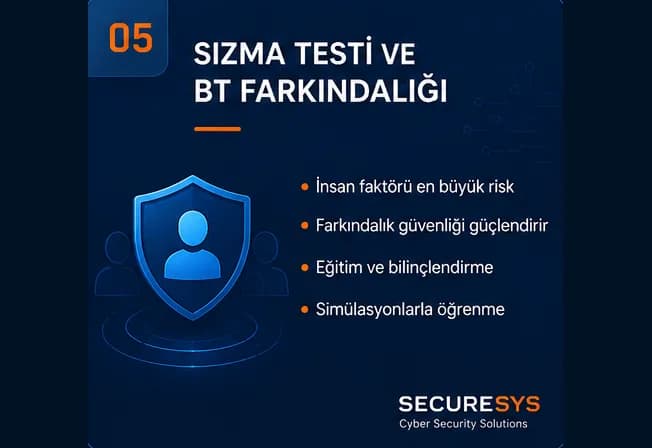
Social Engineering: A Chain of Attacks That Starts with a Single Click
A real-life attack chain that began with a single email, the role of the human factor, and the measurable impact of awareness campaigns.

What Are Black-Box, Gray-Box, and White-Box Penetration Tests?
The advantages of the zero-knowledge, partial-knowledge, and full-knowledge approaches, differences in processing time, and selecting the appropriate method based on the organization.

Skills and Certifications Required for a Penetration Testing Specialist
The significance of OSCP, CEH, and other certifications; why a certification alone is not enough; and questions to ask when purchasing services.
Looking for professional support on this topic?
Our expert team will reach out for a free consultation as soon as possible.