Penetration Testing
What penetration testing is, its types, scope, methodology, reporting and regulatory context — a comprehensive guide series prepared by our expert team.
One Monday Morning…
Picture an organization that has invested in digital transformation for years: an ERP system, a customer portal, a mobile app used by thousands. It manages its users through Active Directory and protects its infrastructure with strong firewalls, EDR solutions and a 24/7 SOC service. Everything looks fine.
Until one Monday morning. The first call comes in: “We can’t access our files.” Support calls start piling up, the web application stops responding, critical systems slow to a crawl. By the end of the day the organization faces not only downtime, but the loss of customer trust, damage to its reputation and the risk of sensitive data exposure.
More often than not, the problem is not a missing security product. The problem is that the systems were never properly tested from a real attacker’s point of view.
This is exactly where penetration testing comes in: it shows whether your security controls actually work — before an attacker does.
Penetration Testing Guides
Explore every aspect of penetration testing — from what it is and which types exist, to scoping, methodology, reporting and how it maps to regulations such as ISO 27001, KVKK, PCI DSS, DORA and NIS2 — through guides prepared by our expert team.

Why Is a Penetration Test Necessary?
Why is the attack surface growing in digitalizing organizations, and why aren’t security products enough on their own? The rationale for verification from the perspective of a real attacker.
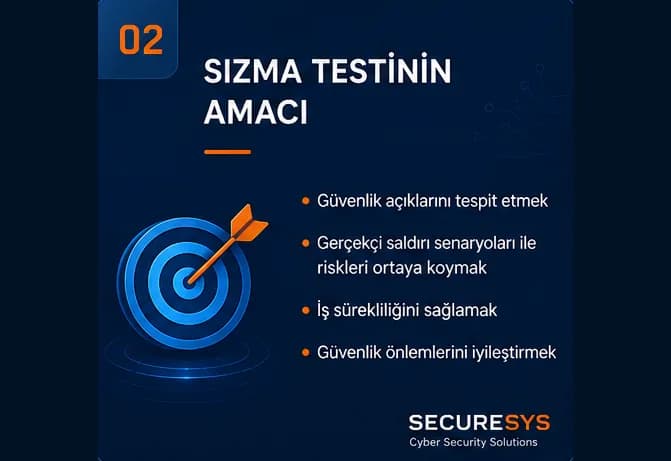
What Is a Penetration Test?
Its definition, purpose, and how it differs from a vulnerability scan. What benefits it provides to the organization, and what it means for decision-makers and technical teams.
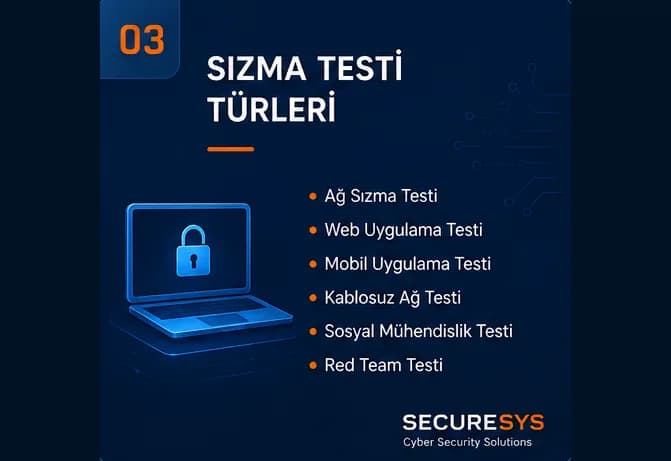
What Are the Types of Penetration Tests?
The scope of the topics "Network," "Web," "Mobile," "API," "Wireless," "Social Engineering," and "Red Team"; which one yields the correct result in which scenario.
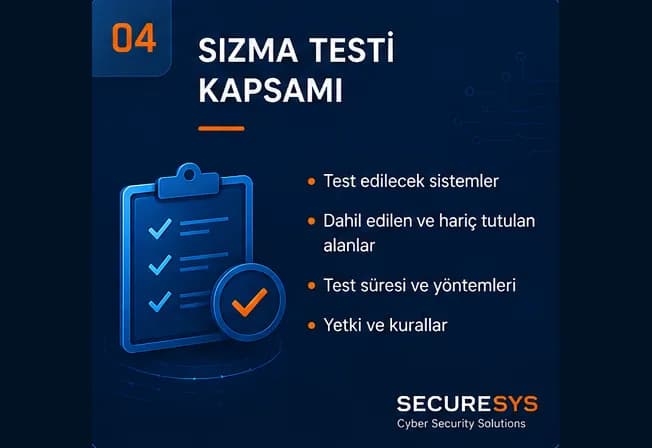
How Is the Scope of a Penetration Test Determined?
Which systems are included, and which are excluded? The direct impact of the scope decision on the budget, timeline, and quality of findings.
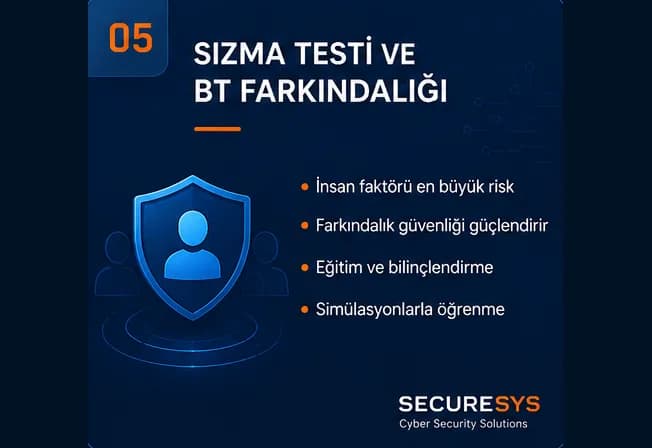
Social Engineering: A Chain of Attacks That Starts with a Single Click
A real-life attack chain that began with a single email, the role of the human factor, and the measurable impact of awareness campaigns.
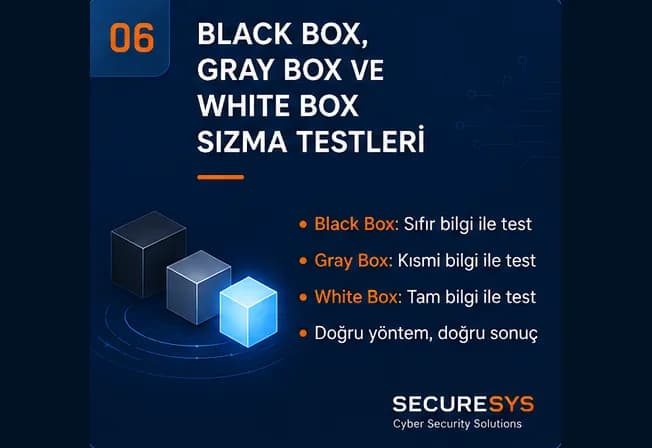
What Are Black-Box, Gray-Box, and White-Box Penetration Tests?
The advantages of the zero-knowledge, partial-knowledge, and full-knowledge approaches, differences in processing time, and selecting the appropriate method based on the organization.

Skills and Certifications Required for a Penetration Testing Specialist
The significance of OSCP, CEH, and other certifications; why a certification alone is not enough; and questions to ask when purchasing services.
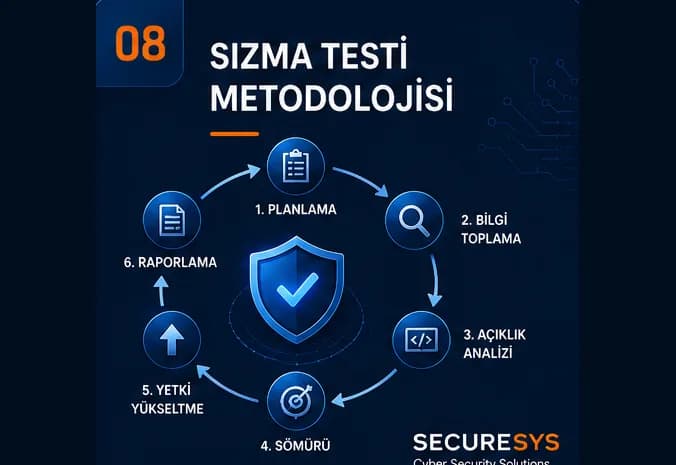
Penetration Testing Process: A Step-by-Step Methodology
Six stages from planning to reporting: information gathering, vulnerability analysis, exploitation, privilege escalation, and verification of findings.
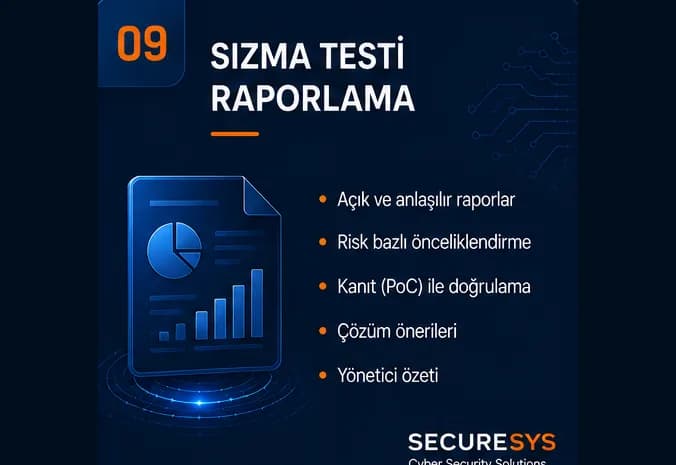
What Does a Penetration Testing Report Include?
Executive summary, technical findings, proof-of-concept (PoC) evidence, and risk prioritization — the section-by-section content of the delivered document.

How Often Should a Penetration Test Be Conducted?
Is an annual interval sufficient? Recommended intervals based on system type and reasons for retesting after major infrastructure changes.
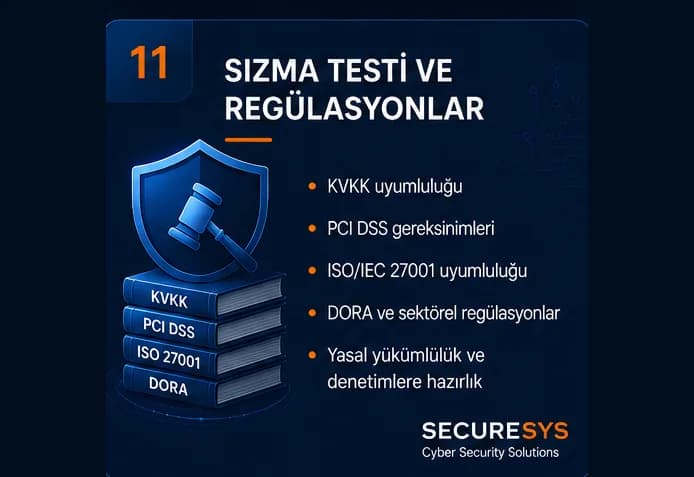
Penetration Testing and Regulations: ISO 27001, KVKK, PCI DSS
Compliance with the testing requirements of the ISO 27001, KVKK, PCI DSS, DORA, NIS2, NIST CSF, and SP 800-115 frameworks.

How to Choose the Right Penetration Testing Partner?
Methodology, reporting quality, team competence, and the support process—criteria that should be evaluated in addition to price.
Looking for professional support on these topics?
Our expert team will reach out for a security assessment tailored to your organization.