Social Engineering: A Chain of Attacks That Starts with a Single Click
A real-life attack chain that began with a single email, the role of the human factor, and the measurable impact of awareness campaigns.
A manufacturing company had been relying on the web-based ERP system it had been using for years.
It was using a next-generation firewall.
An EDR solution was in place.
Employees connected to the system via VPN.
Regular backups were being taken.
At first glance, everything seemed secure.
One Monday morning, an employee in the purchasing department received an email that appeared to be from a supplier.
The email contained only a single line.
"Could you please review the updated price list?"
The employee clicked on the link.
Nothing happened.
Or so they thought.
At that moment, the attacker had already stolen the user’s login credentials.
He logged into the VPN.
Gained access to the internal network.
He discovered the file servers.
He elevated his privileges by using a misconfigured service account in Active Directory.
He moved undetected within the network for approximately six hours.
In the evening, critical servers began to be encrypted.
The next day, production came to a halt.
Orders could not be processed.
Customer deliveries were delayed.
The organization lost not only a few of its servers but also its time, reputation, and customer trust.
A forensic investigation revealed that there were no critical flaws in the security products used.
The problem was that the security vulnerabilities exploited by the attacker had not been previously tested against real-world attack scenarios.
Following this incident, the organization launched a comprehensive security program that includes regular penetration testing, privileged account management, network segmentation, and security awareness training.
Social Engineering Example Scenario:
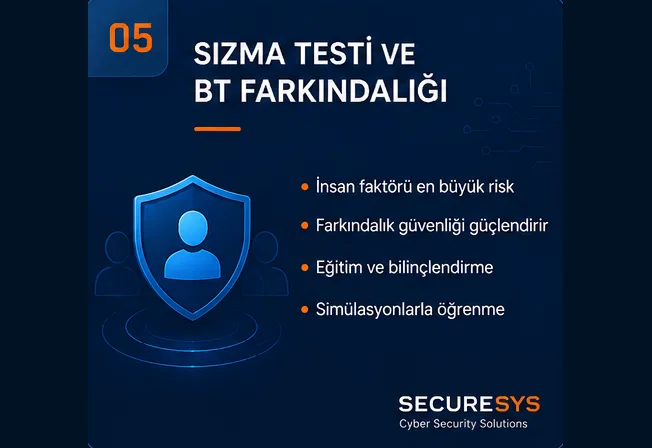
There were only 15 minutes left until the end of the workday.
Ayşe, who works in the finance department, answered her phone.
“Good afternoon, Ms. Ayşe, this is Ahmet from IT. A synchronization issue occurred with your account during the Microsoft 365 migration. We need to verify your account.”
The person on the other end of the line was extremely calm.
He knew Ms. Ayşe’s name.
He knew the email system the company used.
He even mentioned the name of the IT manager.
Trust had been established.
"You don’t need to give me your password. You’ll receive a verification code—just share that."
A few seconds later, a verification code actually arrived on her phone.
Ms. Ayşe read the code.
The call ended.
Everything seemed normal.
About half an hour later, the attacker logged into her Microsoft 365 account.
He went through her inbox.
He read the executive correspondence.
He obtained supplier invoices.
The next day, fake payment instructions began to be sent on behalf of the company.
Social engineering techniques used in this scenario
- Building trust
- Pretending to be an insider (pretexting)
- Creating a sense of urgency
- Stealing the MFA verification code
- Phishing over the phone (Vishing)
Precautions to Take
- IT teams should never request an MFA code over the phone.
- Employees should receive regular social engineering awareness training.
- Suspicious requests should be verified through a second communication channel.
- Awareness of MFA fatigue and verification code scams should be raised.
Cyberattacks often occur not through a single security vulnerability, but through attack chains where multiple small vulnerabilities are exploited in sequence.
The purpose of a professional penetration test is not merely to identify individual security vulnerabilities, but to reveal the organization’s true risk level by demonstrating how an attacker could combine these vulnerabilities.
Why Is This Scenario Important?
At first glance, the cause of the attack may seem like nothing more than a minor mistake made by an employee. However, successful cyberattacks are often carried out not through a single security vulnerability, but through attack chains that combine technical weaknesses with the human factor.
Social engineering attacks leverage human psychology rather than directly targeting technical security measures. They aim to gain employees’ trust through methods such as building rapport, creating a sense of urgency, impersonating authority figures, and arousing curiosity.
The compromise of a user’s credentials is often the starting point of an attack. The real risk, however, begins afterward. If access controls within the organization are weak, network segmentation is not properly configured, or privileged accounts are not adequately protected, an attacker can gain access to critical systems in a very short time.
This is why penetration tests today are planned to cover not only technical systems but also social engineering scenarios and employee awareness. After all, a strong security culture can only be built by protecting both technology and the human factor.
SecureSys Expert Commentary
Although it is not possible to completely prevent social engineering attacks, the success rate of these attacks can be significantly reduced through regular awareness training, controlled phishing simulations (PhishingSimulation), multi-factor authentication (MFA), privileged access management (PAM), and regular penetration tests can significantly reduce the success rate of these attacks.
Successful organizations do not merely invest in security products; they also aim to make their employees the strongest link in the security chain.
Related Articles
Penetration Testing
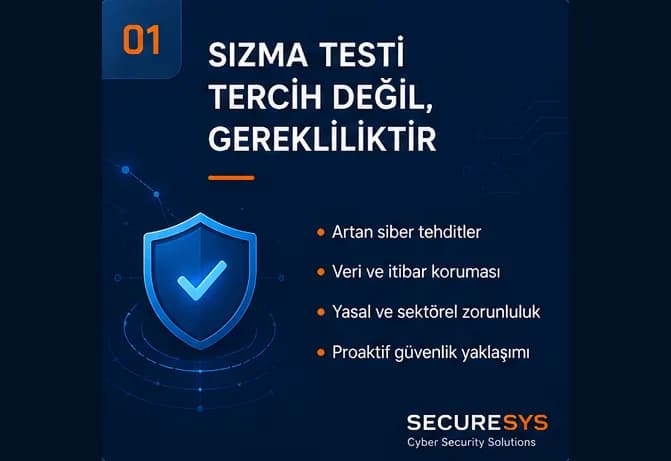
Why Is a Penetration Test Necessary?
Why is the attack surface growing in digitalizing organizations, and why aren’t security products enough on their own? The rationale for verification from the perspective of a real attacker.
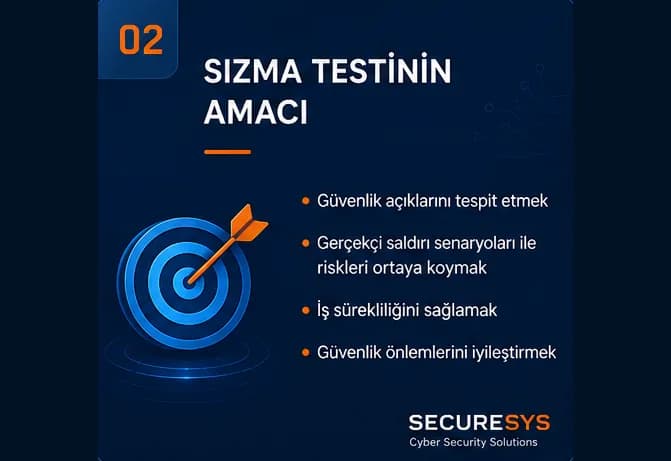
What Is a Penetration Test?
Its definition, purpose, and how it differs from a vulnerability scan. What benefits it provides to the organization, and what it means for decision-makers and technical teams.
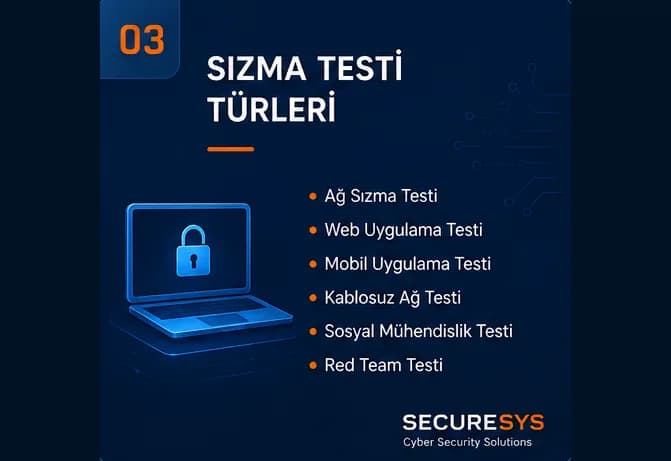
What Are the Types of Penetration Tests?
The scope of the topics "Network," "Web," "Mobile," "API," "Wireless," "Social Engineering," and "Red Team"; which one yields the correct result in which scenario.
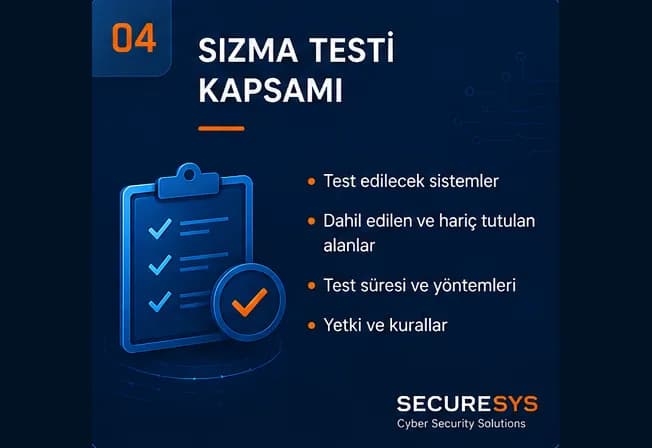
How Is the Scope of a Penetration Test Determined?
Which systems are included, and which are excluded? The direct impact of the scope decision on the budget, timeline, and quality of findings.
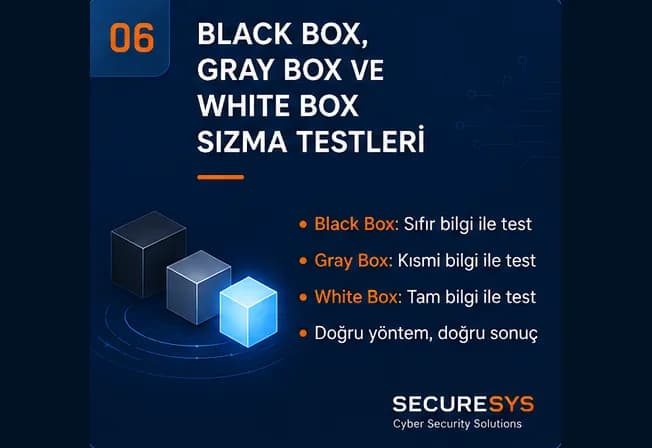
What Are Black-Box, Gray-Box, and White-Box Penetration Tests?
The advantages of the zero-knowledge, partial-knowledge, and full-knowledge approaches, differences in processing time, and selecting the appropriate method based on the organization.
Skills and Certifications Required for a Penetration Testing Specialist
The significance of OSCP, CEH, and other certifications; why a certification alone is not enough; and questions to ask when purchasing services.
Looking for professional support on this topic?
Our expert team will reach out for a free consultation as soon as possible.