What Is an API? REST API, GraphQL, Microservices and Enterprise Software Integrations
What is an API and how does it work? A guide to REST API, SOAP, GraphQL, webhooks, microservices, CRM–ERP integration, inventory management and API security.
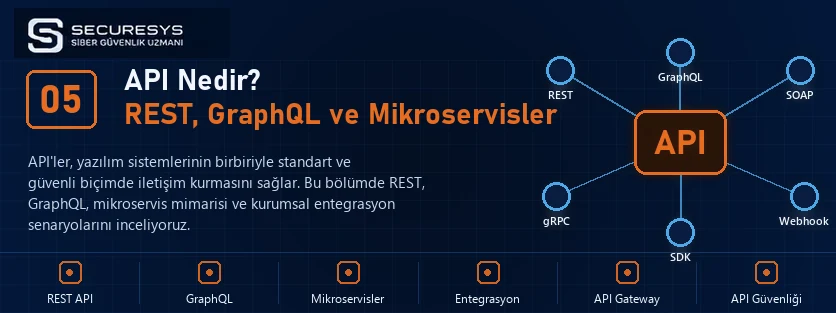
What Is an API?
An API (Application Programming Interface) is an interface that allows different software applications, services or system components to communicate with each other through defined rules.
Thanks to an API, one piece of software can access specific data or functions offered by another piece of software.
Today, API technologies are used in many fields, such as banking, e-commerce, finance, logistics, manufacturing, customer management, inventory tracking, warehouse management and mobile applications.
For example, in a business, CRM software may manage customer and sales processes while ERP software manages financial and operational processes.
Through API integration, a quotation approved in the CRM can be transferred to the ERP system as an order.
Similarly, an inventory tracking software can be integrated with an e-commerce platform so that product quantities are updated across systems.
A warehouse tracking software, in turn, can communicate with the systems of cargo companies to support shipping and delivery processes.
Short answer: An API is an interface that enables software to communicate with other software. There are different API technologies such as REST, SOAP and GraphQL. API integrations help CRM, ERP, warehouse, inventory, accounting, e-commerce and mobile applications work together.
1. What Is an API Used For?
APIs enable controlled sharing of data and functions between software systems.
Main areas of use
- Data transfer between software systems
- CRM and ERP integration
- Connecting inventory tracking systems
- Warehouse management system integration
- E-commerce order management
- Accounting and invoicing integration
- Mobile application–backend communication
- Payment systems
- Cargo and logistics integration
- Authentication services
- Reporting systems
- Workflow automation
Example
A customer has placed an order on an e-commerce site.
The order information is transferred to the ERP system through an API.
The ERP checks the stock status.
The warehouse management system starts the order preparation process.
The shipment information can be sent to the cargo system.
In this process, different software systems work together through API integrations.
2. How Does an API Work?
APIs generally work on the principle that a client makes a specific request and the relevant service responds to it.
Simplified API flow
- The client creates an API request.
- The request is forwarded to the relevant server.
- Authentication and authorisation checks are performed.
- The request data is validated.
- The necessary business rules are applied.
- The operation is carried out with the database or other services.
- The result is returned to the client.
Example: Stock query
A mobile warehouse application wants to find out the stock quantity of a particular product.
The application sends a query to the stock API.
The backend checks the product and warehouse information.
The relevant stock information is returned to the authorised user.
3. What Is the Difference Between an API and a Web Service?
An API is a broader concept.
It defines the functions or access points that one piece of software offers to another.
Web services, on the other hand, refer to services that communicate over a network.
Example
The interface an operating system offers for file operations is an API.
A REST service that queries customer information over the internet is an example of a web API.
Important: Not every API is a web service. However, web services can provide APIs.
4. What Are the Types of APIs?
APIs can be classified in different ways according to their access models and technical approaches.
By access model
Public API.
Private API.
Partner API.
By technical approach
REST API.
SOAP services.
GraphQL API.
gRPC.
WebSocket-based communication.
Key point
These classifications describe different characteristics.
For example, a REST API can be open to both private and partner access.
5. What Is a REST API?
REST (Representational State Transfer) is an architectural approach defined for distributed systems.
REST APIs are web service interfaces that make use of REST principles.
In REST-based APIs, HTTP methods and resource-oriented addressing are widely used.
REST API use cases
CRM integration.
ERP integration.
Stock queries.
Warehouse movements.
Mobile applications.
E-commerce.
Example
Customer records in a CRM system can be queried through a REST API.
6. What Are HTTP Methods?
HTTP methods play an important role in REST API development.
| HTTP method | Common use |
|---|---|
| GET | Viewing data |
| POST | Creating a new resource or starting an operation |
| PUT | Updating/replacing the representation of a resource |
| PATCH | Partial update |
| DELETE | Deleting a resource |
Example
GET /api/products
Returns the list of products.
GET /api/products/125
Queries a specific product.
POST /api/products
Can create a new product.
PATCH /api/products/125
Can partially update the product information.
Key point
The actual behaviour of API endpoints is determined by the system design. Using an HTTP method does not provide security on its own.
7. What Is an API Endpoint?
An endpoint is the access point through which an API provides access to a specific function or resource.
Example endpoints
/api/customers
/api/orders
/api/products
/api/inventory
/api/warehouses
Example
In a warehouse tracking software, the /api/warehouses address can provide warehouse information.
However, which operations these addresses support must be defined in the API documentation.
8. What Is JSON?
JSON (JavaScript Object Notation) is a text-based data format used to represent and transfer structured data.
JSON is widely used in REST APIs.
Example JSON
{
"productId": 125,
"productName": "Network Switch",
"warehouseId": 3,
"quantity": 45
}
This example shows the product ID, name, warehouse ID and stock quantity.
Areas of use
CRM records.
Orders.
Stock information.
Warehouse movements.
Mobile application data.
9. What Is XML?
XML is a markup language used to represent structured data.
Areas of use
Enterprise integrations.
SOAP services.
Certain financial data formats.
Document exchange.
How it differs from JSON
JSON and XML are different ways of representing data.
The choice should be made according to the integration requirements and the formats supported by the systems in use.
10. What Is a SOAP API?
SOAP (Simple Object Access Protocol) is a protocol defined for structured message exchange.
XML-based messages are used in SOAP services.
Areas of use
Enterprise systems.
Existing financial applications.
Some public-sector integrations.
Certain ERP systems.
SOAP features
Defined message structure.
Service contract definition with WSDL.
Additional capabilities through WS-* standards.
Example
An enterprise ERP system can share order information through an existing SOAP service.
11. The Difference Between REST API and SOAP
| Criterion | REST | SOAP |
|---|---|---|
| Structure | Architectural approach | Messaging protocol |
| Data format | JSON, XML and others | XML in SOAP messages |
| Common use | Web and mobile services | Certain enterprise integrations |
| Contract | Definitions such as OpenAPI can be used | WSDL is common |
| Security | HTTPS, OAuth and other controls | Options such as HTTPS and WS-Security |
Which should be preferred?
The technical requirements of the existing systems are decisive.
REST may be suitable for a new mobile application.
If an existing ERP system offers SOAP, the integration can be carried out over SOAP.
12. What Is GraphQL?
GraphQL is a query language and runtime approach for APIs.
Clients can define the data fields they need.
GraphQL use cases
Complex web interfaces.
Mobile applications.
Multiple data sources.
Queries for related data.
Example
A CRM management panel can request specific fields of the customer name, related quotations and open tasks in a single query.
Key point
Using GraphQL requires careful design of controls for query complexity, authorisation and resource consumption.
13. The Difference Between REST API and GraphQL
| Criterion | REST | GraphQL |
|---|---|---|
| Data access | Resource-oriented endpoints | Queries defined by the client |
| Data selection | Depends on the API design | Field-based querying |
| Caching | Can make use of HTTP mechanisms | Additional strategies may be needed |
| Complexity | Depends on the API design | Requires schema and query management |
| Use | Wide range of applications | Need for flexible data querying |
Key point
GraphQL is not a more advanced alternative to REST in every case.
Both approaches can be used in suitable scenarios.
14. What Is gRPC?
gRPC is an open-source framework that supports remote procedure calls between services.
Features
Widely used with Protocol Buffers.
HTTP/2-based communication.
Service contracts.
Streaming support.
Areas of use
Microservices.
Backend services.
Communication between services.
Example
In an enterprise platform, gRPC can be used between the stock and order services.
15. What Is a Webhook?
A webhook is an integration method that sends an automatic HTTP notification to another system when a specific event occurs.
Areas of use
Quotation approval.
Order creation.
Payment notification.
Cargo status update.
Project creation.
Example
A quotation is approved in the CRM software.
The webhook is triggered.
The project management system can create a project linked to the relevant order.
16. The Difference Between an API and a Webhook
APIs and webhooks are complementary technologies.
API request
One system requests data or an operation from another system.
Webhook
When an event occurs, a notification is sent to the relevant system.
Example
The CRM queries the stock status from the ERP through an API.
The ERP can send a webhook to the CRM when the order status changes.
17. What Is API Integration?
API integration is the sharing of data, or the joint execution of business processes, by two or more software systems through APIs.
Integration examples
CRM–ERP.
ERP–WMS.
Inventory tracking–e-commerce.
Warehouse–cargo.
Accounting–invoicing.
Mobile application–backend.
Example
A business uses a CRM, an ERP and a warehouse management system.
Through API integration, order data can be transferred between the systems in a controlled manner.
18. How Is CRM and ERP Integration Done?
CRM and ERP integration links sales processes with operational and financial processes.
Example process
- A customer is created in the CRM.
- A sales opportunity is recorded.
- A quotation is prepared.
- The quotation is approved.
- The order is transferred to the ERP system.
- The ERP carries out the relevant business processes.
- The order status can be viewed in the CRM.
Points to watch
Matching customer identifiers.
Duplicate records.
Authorisation.
Error handling.
Data consistency.
19. What Is Inventory Tracking Software Integration?
Inventory tracking software integration allows inventory information to be shared with different systems.
Integration examples
ERP–inventory tracking.
E-commerce–inventory tracking.
Warehouse–inventory tracking.
Sales–inventory tracking.
Example
A product has been sold on the e-commerce site.
The order is transferred to the central system.
Stock reservation or deduction is carried out according to the relevant business rules.
Key point
In stock operations, concurrency and data integrity controls are critically important.
20. Warehouse Management System (WMS) Integration
WMS integration links warehouse operations with other enterprise systems.
Integration areas
ERP.
Inventory management.
Order management.
Cargo.
Production.
Example
An order is created in the ERP.
The WMS takes the order into the preparation process.
The products are picked.
Packing is completed.
The shipment information can be sent to the ERP.
21. E-Commerce API Integration
E-commerce API integration enables sales platforms to share data with other systems.
Use cases
Product information.
Prices.
Stock quantity.
Orders.
Cargo.
Invoices.
Example
A business sells through several e-commerce channels.
A central inventory tracking software can synchronise order and stock data through an API.
Key point
The API limits and data models of different platforms can affect the integration design.
22. Accounting and E-Invoice Integration
Accounting integrations link financial records with different systems.
Examples
CRM–accounting.
ERP–accounting.
Order–invoice.
Collection–finance.
Example
The invoicing details of an order approved in the CRM can be transferred to the accounting system.
Key point
In e-document processes, the relevant legislation, technical standards and authorised integrator requirements must be assessed separately.
23. Cargo and Logistics API Integration
Cargo APIs can support the digitalisation of shipping operations.
Use cases
Creating a shipment.
Cargo label.
Tracking number.
Delivery status.
Returns.
Example
The warehouse management system creates a shipment record.
A shipment request is sent through the cargo API.
The tracking number can be added to the order record.
24. Mobile Application API Integration
Mobile applications can communicate with backend systems through APIs.
Example
A mobile CRM application queries the customer list.
The API checks the user's permissions.
It returns the relevant customer records.
Use cases
Mobile CRM.
Mobile warehouse.
Stock counting.
Field service.
Mobile ERP.
25. What Is Microservices Architecture?
Microservices architecture is a software architecture approach that organises an application's functions as services that can be developed and deployed independently.
Example services
Customer service.
Order service.
Stock service.
Warehouse service.
Invoicing service.
Advantages
Independent deployment options.
Scaling at the service level.
Teams being able to focus on specific areas.
Challenges
Distributed system complexity.
Communication between services.
Data consistency.
Monitoring.
Security.
26. The Difference Between Monolithic Architecture and Microservices
| Criterion | Monolithic | Microservices |
|---|---|---|
| Application structure | Unified application | Separate services |
| Deployment | Usually together | Per service |
| Initial complexity | May be lower | May be higher |
| Scaling | At application level | At service level |
| Operations | May be simpler | Requires distributed management |
Key point
Microservices architecture is not necessary for every project.
For small and medium-sized enterprise applications, a well-designed modular monolith may be suitable.
27. What Is an API Gateway?
An API Gateway is a component that routes API requests from clients to the relevant services and applies certain common controls.
Use cases
Request routing.
Authentication integration.
Traffic management.
Rate limiting.
Logging.
Example
A mobile CRM application can access different backend services through an API Gateway.
Key point
An API Gateway does not replace the services' own authorisation controls.
28. What Is API Management?
API Management covers the publishing, management and monitoring of APIs and the enforcement of usage policies.
Core functions
API catalogue.
Access policies.
Usage analytics.
Version management.
Documentation.
Developer portal.
Example
A business can manage the APIs it offers to business partners through a central platform.
29. What Is API Documentation?
API documentation contains the technical information that explains how services are to be used.
Core contents
Endpoints.
HTTP methods.
Parameters.
Data models.
Authentication.
Error codes.
Example requests and responses.
Tools and standards used
OpenAPI.
Swagger tools.
Postman.
Key point
Up-to-date documentation helps reduce integration cost and the risk of errors.
30. What Are OpenAPI and Swagger?
OpenAPI is a standard description format used to define HTTP APIs.
Swagger refers to the ecosystem of tools associated with OpenAPI.
Use cases
API documentation.
Client code generation.
Testing.
Integration.
Example
The product, warehouse and stock movement endpoints of an inventory tracking API can be documented with an OpenAPI definition.
31. What Is API Versioning?
API versioning is the management of the behaviours and contracts of an API as they change over time.
Example
/api/v1/orders
/api/v2/orders
Why is versioning important?
Protecting existing integrations.
Introducing new features.
Compatibility management.
Key point
URL-based versioning is one of several methods; it is not the only one.
32. What Is API Rate Limiting?
Rate limiting is the restriction of the number of API requests that can be made within a given period.
Purposes
Managing resource consumption.
Reducing excessive request load.
Supporting service continuity.
Example
The number of requests an integration client can make per minute can be limited.
Key point
Rate limiting alone is not DDoS protection or an authorisation mechanism.
33. What Is API Authentication?
Authentication is the verification of the identity of the client or user using the API.
Common methods
API key.
OAuth 2.0-based authorisation flows.
Authentication with OpenID Connect.
mTLS.
Key point
Authentication and authorisation are different concepts.
The fact that a user's identity has been verified does not mean they can access all data.
34. What Is OAuth 2.0?
OAuth 2.0 is an authorisation framework that allows clients to be granted limited access to specific resources.
Use cases
Mobile applications.
Web applications.
Enterprise integrations.
Third-party services.
Example
An application can obtain permission to access specific API resources on behalf of a user through an appropriate OAuth flow.
Key point
OAuth 2.0 is not, on its own, a user authentication protocol.
Additional standards such as OpenID Connect can be used for authentication.
35. What Is JWT?
JWT (JSON Web Token) is a standard for representing specific information in a JSON-based token format.
Use cases
Carrying identity and authorisation information.
Certain trust relationships between services.
Points to watch
Signature verification.
Token lifetime.
Key management.
Audience validation.
Secure storage.
Key point
Using JWT does not, on its own, mean that secure session management has been achieved.
36. Why Is API Security Important?
APIs can provide access to customer, financial, inventory and operational data.
For this reason, API security is an important part of enterprise software security.
Core risks
Unauthorised data access.
Authentication errors.
Excessive data exposure.
Injection.
Resource consumption.
Insecure configuration.
Example
In a CRM API, a user must not be able to view records belonging to other customers simply by changing the record number.
37. What Is the OWASP API Security Top 10?
The OWASP API Security Top 10 is an awareness resource that describes the key risk categories in API security.
Risk examples
Object-level authorisation flaws.
Authentication problems.
Object property-level authorisation flaws.
Resource consumption.
Function-level authorisation flaws.
Insecure configuration.
Key point
The OWASP API Security Top 10 is not a complete list of all API security controls.
38. What Is BOLA?
BOLA (Broken Object Level Authorization) is the absence or incorrect implementation of object-level authorisation checks in APIs.
Example
A CRM user can access their own customer record.
However, by changing the customer ID in the API request, they can also view the records of other customers.
This situation can create an object-level authorisation vulnerability.
Countermeasure
On every request, the user's access permission for the relevant object must be checked.
39. What Is API Security Testing?
API security testing is the assessment of the security risks of APIs within an authorised scope.
Test areas
Authentication.
Authorisation.
Data validation.
Business logic.
Error handling.
Resource consumption.
Configuration.
Example
In an inventory tracking API, an unauthorised user must be prevented from changing product quantities.
40. Data Security in API Integrations
In API integrations, the transfer and processing of data must be designed securely.
Controls
TLS.
Authentication.
Authorisation.
Data minimisation.
Secrets management.
Logging.
Error handling.
Example
When customer information is transferred between a CRM and an ERP, only the necessary data fields should be shared.
41. Data Consistency in API Integrations
Consistency problems can arise during data transfer between different systems.
Example risks
Duplicate orders.
Missing stock updates.
Double invoice records.
Delayed data transfer.
Countermeasures
Idempotency.
Transaction identifiers.
Retry policies.
Message queues.
Reconciliation processes.
Example
When the same order notification is sent twice, the system must not mistakenly create two orders.
42. Error Handling in API Integrations
Integrations can be affected by network outages and service errors.
Error types
Connection error.
Timeout.
Authentication error.
Authorisation error.
Data validation error.
Service error.
Key point
When designing retry mechanisms, it must be assessed whether the operation can be safely repeated.
43. API Monitoring and Logging
Monitoring and logging mechanisms are important for APIs to run healthily.
Monitoring areas
Response time.
Error rate.
Request volume.
Service availability.
Security events.
Example
In a CRM–ERP integration, failed order transfers can be monitored and notifications can be sent to the relevant teams.
Security note
Passwords, access tokens and unnecessary personal data must not be kept in logs.
44. How Does the API Development Process Work?
A professional API development process consists of different stages.
1. Requirements analysis
The data the systems will share is determined.
2. Data model
The data structures of the source and target systems are examined.
3. API design
Endpoints and service contracts are prepared.
4. Security design
Authentication and authorisation are determined.
5. Development
The API services are built.
6. Testing
Functional, integration, performance and security tests are carried out.
7. Go-live
The services are put into use in a controlled manner.
8. Monitoring and maintenance
Performance, errors and security events are tracked.
45. What Determines the Cost of API Integration?
The cost of API integration varies according to technical and operational requirements.
Key factors
Number of systems.
API documentation.
Data model.
Authentication.
Business rules.
Error handling.
Data transformation.
Testing.
Maintenance.
Example
A simple customer list transfer and a two-way stock, order, warehouse and accounting integration do not require the same development effort.
46. Common Mistakes in Enterprise API Integrations
Not analysing the data model
Field mismatches can arise between systems.
Neglecting authorisation
There may be a risk of unauthorised data access.
Not designing error handling
Missing or duplicated operations can occur.
Not preparing documentation
Maintenance and integration processes can become difficult.
Not managing API versions
Existing clients can be affected.
Not monitoring
Failed operations may be noticed late.
Neglecting security testing
Critical vulnerabilities can remain in the live environment.
47. SECURESYS API Development and Enterprise Integration Solutions
SECURESYS provides analysis, development, testing and consulting services aimed at helping organisations integrate their different software systems securely and sustainably.
Custom API Development
REST APIs and other suitable service interfaces can be developed for enterprise needs.
CRM–ERP Integration
Data flow can be established between customer, quotation, order and operational processes.
Warehouse Tracking and WMS Integration
Warehouse operations, stock movements and shipping processes can be linked with enterprise systems.
Inventory Tracking Software Integration
Product and inventory information can be integrated with different platforms.
E-Commerce Integration
Data exchange can be provided between product, order, stock and cargo processes.
Accounting Integration
Linking order, invoice and financial processes between software systems can be supported.
Mobile Application API Development
Backend services can be built for mobile CRM, warehouse tracking and field service applications.
API Security Testing
The authentication, authorisation, data processing and business logic security of APIs can be assessed.
DevOps and DevSecOps
Automation of API development, testing, deployment and security processes can be supported.
In the SECURESYS approach, API integration is not merely data transfer between two pieces of software; it is an enterprise architecture component that ensures business processes work together securely, traceably and sustainably.
Frequently Asked Questions (FAQ)
1. What is an API?
It is an interface that allows different software components to communicate through defined rules.
2. What is an API used for?
It supports data sharing, the performance of operations and system integrations.
3. What is a REST API?
It is a web service interface that makes use of REST principles.
4. What is a SOAP API?
It is a service interface that uses the XML-based SOAP messaging protocol.
5. What is GraphQL?
It is a query language and runtime approach for APIs.
6. What is a webhook?
It is a method that sends an automatic notification to another system when an event occurs.
7. What is API integration?
It is different software systems working together through APIs.
8. What is CRM–ERP integration?
It is linking customer and sales processes with operational and financial systems.
9. Can inventory tracking software be integrated through an API?
Yes. It can be integrated with ERP, e-commerce and warehouse systems through suitable APIs.
10. What is WMS integration?
It is a warehouse management system working together with ERP, inventory, order or cargo systems.
11. What is an API Gateway?
It is a component that routes API requests and applies certain common controls.
12. What is a microservice?
It is an architectural approach in which application functions are organised as independent services.
13. What is API authentication?
It is the verification of the identity of the client or user using the API.
14. What is OAuth 2.0?
It is an authorisation framework that allows limited access to specific resources to be granted.
15. What is JWT?
It is a standard for representing specific information in token form.
16. Why is API security important?
Because APIs can provide access to sensitive data and functions, they require security controls.
17. What is API security testing?
It is the assessment of an API's security risks within an authorised scope.
18. How long does API integration take?
It varies according to the technical characteristics of the systems, the data model, and the security and testing requirements.
19. What does the cost of API integration depend on?
It depends on the number of systems, business rules, data transformation, security, testing and maintenance requirements.
20. What should be considered when choosing a company to develop APIs?
Integration experience, security approach, documentation, testing, maintenance and support capabilities should be assessed.
Conclusion: Why Are API Integrations Important for Businesses?
API technologies are among the fundamental components that enable modern software systems to work together.
Customer and order information can be shared between CRM software and an ERP system.
Product quantities can be synchronised between inventory tracking software and an e-commerce platform.
A warehouse management system can link order and shipping processes with other systems.
Mobile applications can access backend services through APIs.
Different technologies such as REST, SOAP, GraphQL and gRPC can be used in suitable scenarios.
Microservices architecture, API Gateway and API Management approaches can support the management of more complex systems.
API security, data integrity, error handling and monitoring processes are, in turn, critically important for the reliability of integrations.
The core purpose of a successful API integration is not merely to connect software systems to one another; it is to unify the organisation's business processes in a secure, consistent, traceable and sustainable way.
Sources and References
HTTP Semantics – RFC 9110: https://www.rfc-editor.org/rfc/rfc9110
REST – Roy Fielding's Architectural Work: https://ics.uci.edu/~fielding/pubs/dissertation/rest_arch_style.htm
GraphQL: https://graphql.org
OpenAPI Specification: https://spec.openapis.org/oas/latest.html
gRPC: https://grpc.io
OAuth 2.0 – RFC 6749: https://www.rfc-editor.org/rfc/rfc6749
JWT – RFC 7519: https://www.rfc-editor.org/rfc/rfc7519
OWASP API Security: https://owasp.org/API-Security/
OWASP API Security Top 10: https://owasp.org/API-Security/editions/2023/en/0x11-t10/
NIST Secure Software Development Framework: https://csrc.nist.gov/projects/ssdf
Next Chapter
Chapter 6: What Is CRM Software? Customer Tracking, Sales Management and Project Tracking Systems
In the next article, we will cover CRM software, customer tracking programmes, sales management, quotation preparation, order tracking, contract management, project tracking software, task management and service management in detail.
We will also examine, with examples, the differences between CRM and ERP, the options of off-the-shelf and custom CRM development, CRM integrations, and enterprise workflows that run from customer record to invoicing.
Chapter 5 is complete. Our next article: What Is CRM Software? Customer Tracking, Sales Management and Project Tracking Systems.
Related Articles
Software Development, Enterprise Applications & DevSecOps
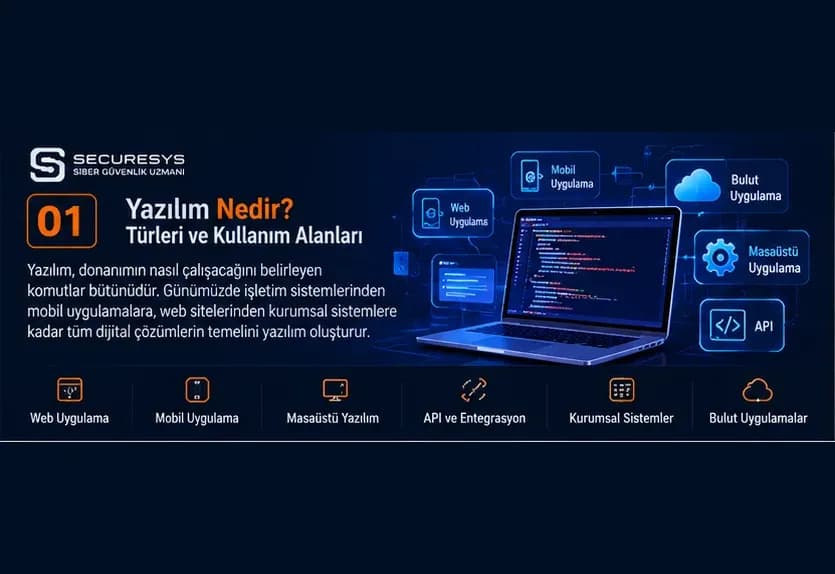
What Is Software? Types, Uses and the Most Widely Used Software Worldwide
What is software and what are its types? A complete guide to CRM, ERP, warehouse tracking, inventory management, web and mobile apps, and custom software.
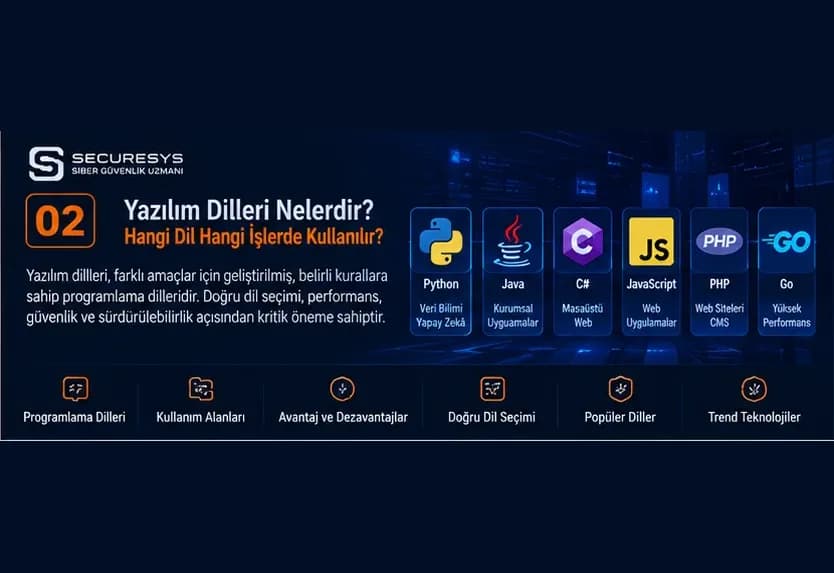
Programming Languages Explained: What Is Each One Used For?
What are programming languages? Learn what Python, Java, C#, PHP, JavaScript and others are used for, with CRM, ERP and inventory software examples.
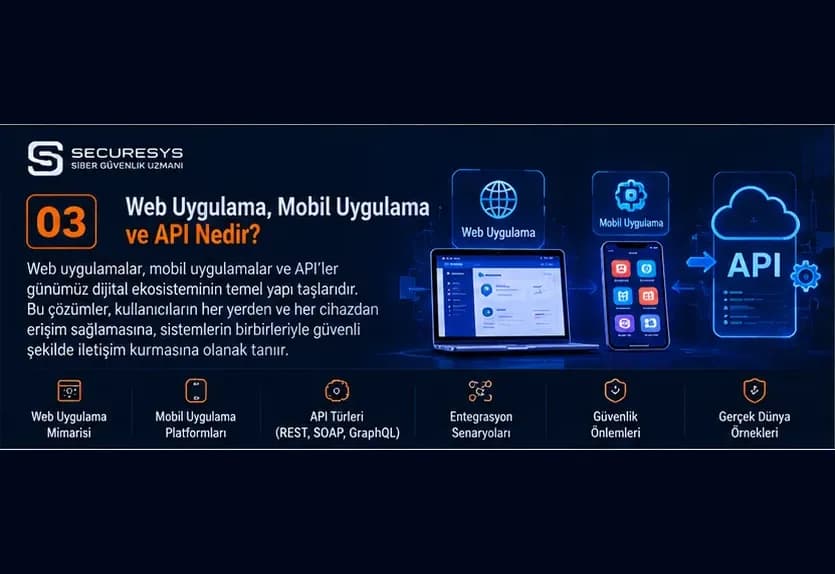
What Is a Web Application? A Guide to Web-Based Software, Frontend and Backend Development
What is a web application? Explore frontend, backend, APIs, databases, cloud architecture and how CRM, ERP, warehouse and inventory software is developed.
What Is a Mobile App? A Guide to Android, iOS and Cross-Platform Mobile Software Development
What is a mobile app and how is it developed? Explore Android, iOS, Flutter, React Native, mobile CRM, warehouse tracking and inventory software.
What Is CRM Software? A Guide to Customer Tracking, Sales Management, Quotation and Project Tracking Systems
What is CRM software? Explore customer tracking, sales, quotations, orders, contracts, project management, ERP integration and custom CRM development.
What Is Warehouse Tracking and Inventory Management Software? A Guide to WMS, ERP, Barcodes and Inventory Control
What is warehouse tracking software? Explore WMS, barcode, RFID, ERP integration, multi-warehouse and inventory management in our complete guide.
Looking for professional support on this topic?
Our expert team will reach out for a free consultation as soon as possible.