What Is CRM Software? A Guide to Customer Tracking, Sales Management, Quotation and Project Tracking Systems
What is CRM software? Explore customer tracking, sales, quotations, orders, contracts, project management, ERP integration and custom CRM development.
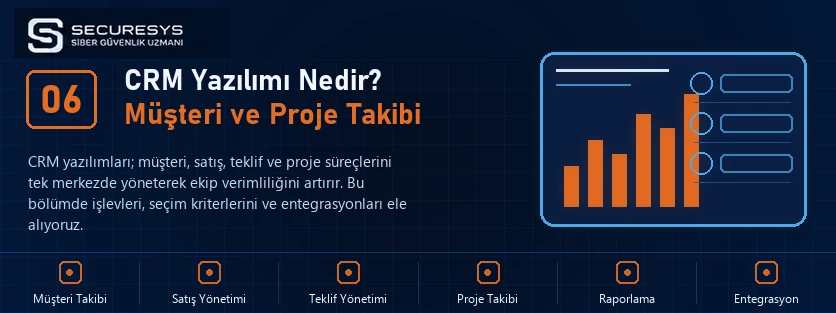
What Is CRM Software?
CRM (Customer Relationship Management) refers to the management of customer relationships. CRM software, in turn, is software that allows businesses to manage, in one central place, their relationships with existing and potential customers, their sales opportunities, quotations, communication history and related business processes.
CRM is not just a customer directory.
Modern CRM systems can support a range of different processes, such as sales management, quotation preparation, order tracking, contract management, customer service, project management and reporting.
For example, a business records a new prospect in its CRM system.
The sales representative meets the customer.
A sales opportunity is created.
A quotation is prepared.
When the customer approves the quotation, an order record is created.
The project or service process is started.
The relevant deliverables are completed.
Invoicing and collection processes are tracked.
All of these processes can be managed within a properly designed CRM and project tracking software.
Short answer: CRM software is a system that allows businesses to manage their customer information, sales opportunities, quotations, orders and customer relationships. Advanced or custom-developed CRM solutions can also cover project management, contract tracking, invoicing integration and operational processes.
1. What Does CRM Mean?
CRM is the abbreviation of the English term Customer Relationship Management.
Its Turkish equivalent is müşteri ilişkileri yönetimi, that is, customer relationship management.
The CRM concept covers not only the software but also the processes aimed at planning, developing and measuring customer relationships.
Core objectives of the CRM approach
- Central management of customer information
- Tracking of sales opportunities
- Preserving customer communication history
- Managing quotation processes
- Increasing customer satisfaction
- Measuring sales performance
- Building institutional memory
Example
When a sales employee leaves the company, having the customer communication history exist only in a personal email account can create a corporate risk.
CRM software helps ensure that the information needed for customer relationships is managed by authorised users within the corporate system.
2. What Is CRM Software Used For?
CRM software aims to organise sales and customer relationship processes.
Core functions
Customer records.
Prospect management.
Sales opportunities.
Meeting records.
Quotation preparation.
Order tracking.
Task management.
Reminders.
Reporting.
Advanced functions
Contract management.
Project tracking.
Product and service catalogue.
Invoice integration.
Collection tracking.
Service management.
Inventory and warehouse integration.
Key point
Not every CRM product offers all of these modules as standard.
The scope depends on the software selected or on the custom development project.
3. Who Needs CRM Software?
CRM software can be used by businesses of different sizes.
Areas of use
IT companies.
Software firms.
Cyber security companies.
Consulting firms.
Manufacturing businesses.
Logistics companies.
Wholesale businesses.
Technical service firms.
E-commerce companies.
Service providers.
Example
A software firm may deliver project, maintenance and licensing services to different customers at the same time.
With a CRM system, customer, quotation, order, contract and project records can be linked to one another.
4. What Are the Types of CRM Software?
CRM systems can be classified according to their purpose of use.
Operational CRM
Focuses on sales, marketing and customer service processes.
Analytical CRM
Supports the analysis and reporting of customer data.
Collaborative CRM
Makes it easier for different teams to work together on customer processes.
Custom CRM
A CRM solution developed or customised according to the needs of the organisation.
Key point
These categories are not mutually exclusive. A CRM system may include features from more than one approach.
5. What Is Web-Based CRM Software?
Web-based CRM is customer relationship management software accessed through a browser.
Advantages
Central access.
Multi-user support.
Role-based authorisation.
Remote working.
Integration options.
Example
A company whose sales team is in Istanbul and whose project team is in Ankara can work on the same CRM system.
6. What Is Cloud CRM?
Cloud CRM is a CRM system hosted on cloud infrastructure.
Features
Access over the internet.
Central infrastructure.
Scaling options.
Benefiting from managed services.
Points to consider
Data security.
Access control.
Backup.
Service continuity.
Data processing terms.
7. What Is On-Premise CRM?
On-premise CRM is a CRM system hosted on infrastructure managed by the organisation itself.
Reasons for use
Control over the infrastructure.
Custom integration requirements.
Corporate security policies.
Data hosting preferences.
Key point
An on-premise installation does not by itself provide higher security. Security depends on the correct implementation of architectural and operational controls.
8. What Is the Difference Between CRM and ERP?
CRM and ERP are complementary enterprise software systems.
| Criterion | CRM | ERP |
|---|---|---|
| Core focus | Customer and sales relationships | Enterprise resource and process management |
| Customer management | Core function | Depends on the module |
| Sales opportunities | Common | Depends on the module |
| Finance | Integration or additional module | Common |
| Inventory management | Integration or additional module | Common |
| Production | Generally outside the core scope | In the relevant ERP modules |
| Project management | Depends on the product | Depends on the product |
Example
Sales opportunities are managed in the CRM.
When a quotation is approved, the order is transferred to the ERP system.
The ERP can manage inventory, procurement and finance processes.
9. What Are the Core Modules of CRM Software?
Enterprise CRM software may include different modules.
Common modules
Customer management.
Contact management.
Prospects.
Sales opportunities.
Quotation management.
Order management.
Contract management.
Task management.
Reporting.
Additional modules
Project management.
Service management.
Product and service catalogue.
Document management.
Invoice integration.
Collection tracking.
10. What Is a Customer Tracking Programme?
A customer tracking programme is software that records customer information, meetings, requests and related activities.
Basic information
Customer name.
Contact details.
Authorised persons.
Field of activity.
Meeting history.
Open opportunities.
Active projects.
Example
Imagine a business that provides software development, maintenance and consulting services to the same customer at different times.
The CRM system can link past and ongoing work to the customer record.
11. What Is Prospect Management?
A prospect is a person or organisation that may show interest in a business's products or services.
In CRM systems, these records are often called leads.
Process
Prospect record.
Initial contact.
Needs assessment.
Qualification.
Conversion into a sales opportunity.
Example
A customer requests custom CRM software through the website.
The request is recorded in the CRM system.
The sales team carries out a needs analysis.
12. What Is Sales Opportunity Management?
A sales opportunity is a record that allows a potential commercial deal to be tracked in the CRM.
Key fields
Customer.
Opportunity name.
Estimated amount.
Sales stage.
Responsible person.
Expected closing date.
Example
A customer's need for warehouse tracking software can be opened as a sales opportunity in the CRM.
13. What Is a Sales Pipeline?
A sales pipeline is an approach that allows sales opportunities to be tracked through defined stages.
Example stages
New opportunity.
Needs analysis.
Quotation preparation.
Quotation sent.
Negotiation.
Won.
Lost.
Advantages
Making the sales process visible.
Tracking opportunities.
Analysing forecast sales.
Key point
Pipeline stages should be designed around the business's actual sales process.
14. What Is a Quotation Preparation Programme?
A quotation preparation programme is software that allows product or service quotations to be created systematically for customers.
Core features
Quotation number.
Customer details.
Product or service items.
Quantity.
Unit price.
Discount.
Tax.
Validity date.
Quotation status.
Example
A software firm creates a quotation for a customer's custom CRM development service.
The quotation is linked to the CRM record.
When the customer approves it, the order process is started.
15. What Is Quotation Version Management?
Quotations may change according to customer requests.
Example
Quotation V1.
Quotation V2.
Quotation V3.
Why does it matter?
Preserving past quotations.
Tracking price changes.
Identifying the approved version.
Key point
When an order is created, it should be clearly recorded which quotation version was approved.
16. What Is Order Tracking Software?
Order tracking software is used to manage the operational processes of approved sales.
Basic information
Order number.
Customer.
Approved quotation.
Order date.
Product or service items.
Delivery status.
Invoicing status.
Example
The customer approves the annual maintenance service quotation.
An order is created in the CRM.
The related service or project record is opened.
17. How Is the Quotation-to-Order Process Managed?
The quotation-to-order process turns sales activities into an operational record.
Example workflow
- The customer's need is recorded.
- A sales opportunity is opened.
- A quotation is prepared.
- The quotation is sent to the customer.
- Revisions are managed.
- The approved quotation is identified.
- An order is created.
- The project or procurement process is started.
Key point
Quotation approval, contract and order records should be linked to one another.
18. What Is a Contract Tracking Programme?
A contract tracking programme manages the lifecycle of customer and supplier contracts.
Key fields
Contract number.
Parties.
Start date.
End date.
Renewal date.
Contract value.
Related project.
Example
The system can generate a renewal reminder before a customer's annual SOC service contract expires.
19. NDA and Corporate Document Management
In CRM and project management systems, documents other than contracts can also be tracked.
Document examples
Non-disclosure agreement (NDA).
Service contract.
Approved quotation.
Order form.
Scope form.
Project plan.
Delivery record.
Certificate.
Document management options
Uploading the file directly to the system.
Providing a link to a corporate document platform.
Recording the file identifier and location.
Key point
When external document links are used, access permissions, file relocation and link continuity must be managed separately.
20. How Can CRM and Project Management Be Combined?
CRM systems can be developed to support project management in addition to sales processes.
Example
The quotation was approved.
The order was created.
The project record was opened.
The project manager was assigned.
The start date was set.
Tasks were created.
Deliverables were tracked.
The invoicing process was started.
Advantage
The loss of information between sales and operations processes can be reduced.
21. What Is Project Tracking Software?
Project tracking software is a system that enables projects to be planned, tasks to be assigned, progress to be monitored and deliverables to be managed.
Core features
Project number.
Customer.
Project name.
Start date.
End date.
Responsible person.
Project status.
Tasks.
Documents.
Deliverables.
Example
In a software development project, the analysis, design, development, testing and go-live activities can be tracked in project tracking software.
22. What Are a Project Number and a Project Card?
A project card is the record in which the core information of a project is kept centrally.
Example project card
Project No: PRJ-2026-00125
Customer: ABC Teknoloji
Project Name: Custom CRM Software Development
Start Date: 02.11.2026
Project Status: In Progress
Related Quotation: TKL-2026-0087
Related Order: SIP-2026-0041
Key point
Linking the project number with the quotation and order numbers increases traceability.
23. What Is Project Document Control?
Project document control makes it possible to monitor the completion status of the required documents.
Example checklist
Approved quotation.
Order form.
NDA.
Service contract.
Scope form.
Project plan.
Delivery documents.
Key point
The same documents may not be required for every project.
Checklists should be adapted to the project type.
24. What Is Product Procurement Management?
Product procurement management tracks the purchasing and delivery processes of the products required within customer projects.
Key fields
Product.
Supplier.
Order date.
Expected delivery date.
Procurement status.
Delivery details.
Example
If a security device is to be procured in a customer project, the order and delivery processes can be linked to the project card.
25. What Is Service Procurement Management?
Service procurement management is the tracking of services purchased externally within a project.
Example services
Software development.
Testing.
Consulting.
Technical support.
Training.
Example
If specialist consulting is needed for a project, the procurement process can be tracked through the project management system.
26. What Is Freelance Procurement Management?
Freelance procurement management allows services obtained from independent specialists to be tracked on a project basis.
Key fields
Specialist.
Task scope.
Duration.
Fee.
Deliverable.
Approval.
Points to consider
Confidentiality.
Intellectual property.
Access permissions.
Contract.
Acceptance of delivery.
27. What Is a Task Tracking Programme?
A task tracking programme allows work to be assigned to responsible people and its status to be monitored.
Basic information
Task name.
Responsible person.
Priority.
Start.
End.
Status.
Description.
Example
In a CRM development project, the customer registration screen, the quotation module and reporting can be tracked as separate tasks.
28. Task Management with Kanban
Kanban is a method that supports visualising the workflow and managing work in progress.
Example columns
To Do.
In Progress.
Review.
Done.
Example
On a project management screen, tasks can be displayed on a Kanban board according to their status.
29. What Is a Gantt Chart?
A Gantt chart is a planning tool that shows project activities on a timeline.
Areas of use
Project calendar.
Task durations.
Dependencies.
Milestones.
Example
The analysis, design, development, testing and go-live stages of a software project can be shown on a Gantt chart.
30. Service Management with CRM
CRM systems can be integrated with customer service processes.
Core functions
Service request.
Work order.
Technician assignment.
Intervention tracking.
Service report.
Customer approval.
Example
A customer's maintenance request is recorded in the CRM.
A service task is created.
It is assigned to the relevant technical team.
The completed work is linked to the customer record.
31. What Is SLA Tracking?
An SLA (Service Level Agreement) defines the commitments and metrics relating to the service level.
Fields that can be tracked in CRM and service systems
Request opening time.
Priority.
Notification time.
First response.
Intervention.
Resolution.
Key point
Notification, first response, intervention and resolution times are different metrics.
The contract should state clearly which time is being committed to.
32. Invoicing Integration with CRM
An order approved in the CRM, or a completed project, can be linked to invoicing systems.
Example
The project was delivered.
Delivery approval was obtained.
An invoicing record was created.
The relevant information can be transferred to the accounting system.
Key point
In accounting and e-document processes, the relevant legislation and system requirements must be taken into account.
33. Collection Tracking with CRM
Collection tracking supports the monitoring of customer receivables and payment status.
Basic information
Invoice.
Due date.
Amount.
Amount paid.
Remaining balance.
Collection status.
Example
The payment due date of an invoice issued for a project can be displayed in the CRM or in an integrated finance system.
34. Integration of CRM with Inventory Tracking Software
CRM systems can be integrated with inventory tracking software.
Areas of use
Product catalogue.
Stock enquiry.
Order reservation.
Product delivery.
Example
While preparing a quotation in the CRM, a sales representative can check the stock status of the relevant product.
Key point
How up to date the stock quantity shown in the CRM is depends on the integration design.
35. Integration of CRM with Warehouse Tracking Software
Warehouse tracking software integration allows sales and shipment processes to be linked.
Example process
An order is created in the CRM.
The order is transferred to the ERP or WMS system.
The warehouse prepares the products.
Shipment is carried out.
The delivery status can be viewed in the CRM.
36. CRM API Integrations
CRM systems can communicate with different software through APIs.
Integration examples
ERP.
Accounting.
E-commerce.
Warehouse management.
Inventory tracking.
Email.
Calendar.
Service management.
Key point
In API integrations, data accuracy, authentication, authorisation and error handling are important.
37. CRM Reporting and Dashboards
CRM reports allow sales and operational processes to be evaluated.
Report examples
Open sales opportunities.
Number of quotations.
Won opportunities.
Lost opportunities.
Sales amount.
Active projects.
Overdue tasks.
Contract renewals.
Collection status.
Example
A manager can view monthly sales opportunities and ongoing projects on the same management dashboard.
38. What Are CRM KPIs?
A KPI (Key Performance Indicator) is a performance indicator that allows specific business goals to be measured.
CRM KPI examples
Sales conversion rate.
Average sales cycle.
Quotation win rate.
Customer acquisition cost.
Customer retention rate.
Key point
For KPIs to be calculated correctly, data definitions and measurement methods must be consistent.
39. What Is CRM Automation?
CRM automation allows repetitive business processes to be executed automatically according to defined rules.
Examples
Creating tasks.
Sending reminders.
Quotation approval notification.
Contract renewal alert.
Starting a project.
Example
When the quotation status changes to "Approved", a notification can be sent to the project manager.
40. What Is AI-Powered CRM?
AI-powered CRM is a system that makes use of artificial intelligence methods in customer and sales processes.
Areas of use
Sales forecasting.
Customer classification.
Request analysis.
Text summarisation.
Task suggestions.
Points to consider
Data privacy.
Model accuracy.
Authorisation.
Human oversight.
Key point
AI outputs should not be accepted as correct automatically; appropriate verification processes should be put in place, especially for commercial decisions.
41. How Is CRM Software Security Ensured?
Because CRM systems contain customer and commercial data, security is critically important.
Core controls
MFA.
Role-based access.
Object-level authorisation.
Encrypted communication.
Backup.
Logging.
Security testing.
Example
A sales employee can view only the customer records assigned to them or to their team.
However, this rule must also be enforced at the backend and API level.
42. KVKK (Turkish Personal Data Protection Law) in CRM Software
CRM systems can process personal data.
For this reason, personal data processing activities should be assessed within the framework of the relevant legislation.
Points to consider
Purposes of processing.
Legal grounds.
Obligation to inform.
Access permissions.
Retention and destruction.
Data security.
Third-party service providers.
Key point
Using a CRM does not by itself ensure KVKK compliance.
43. Backup and Business Continuity in CRM Software
CRM systems contain a business's operational data.
Core requirements
Regular backups.
Restore tests.
Continuity of access.
Incident response plan.
Example
Verified backup processes are required so that the system can be restored after a technical failure in the CRM database.
44. Off-the-Shelf CRM or Custom CRM Software?
| Criterion | Off-the-shelf CRM | Custom CRM |
|---|---|---|
| Initial use | Generally quick | Requires development |
| Customisation | Depends on the product | According to business needs |
| Integration | Depends on the existing APIs | Custom integrations can be developed |
| Licensing | Subscription or licence | Project and maintenance model |
| Maintenance | Depends on the vendor and the contract | Depends on the development team and the contract |
| Data portability | Depends on the product's export capabilities | Depends on the design |
Key point
The decision between off-the-shelf CRM and custom development should be assessed together with the total cost of ownership.
45. How Is Custom CRM Software Developed?
The custom CRM development process begins with a needs analysis.
Stage 1: Business analysis
Customer and sales processes are identified.
Stage 2: Module design
Customer, quotation, order, project and reporting modules are planned.
Stage 3: UI/UX design
User screens are prepared.
Stage 4: Technical architecture
The frontend, backend, database and API structure are designed.
Stage 5: Development
The application modules are built.
Stage 6: Testing
Functional, integration and security tests are carried out.
Stage 7: Go-live
Data migration and user training are completed.
Stage 8: Maintenance
Defects are fixed and new needs are assessed.
46. What Determines the Cost of CRM Software Development?
The cost of CRM development varies with the scope of the project.
Cost factors
Number of modules.
Number of users.
Data volume.
Integrations.
Authorisation.
Reporting.
Automation.
Mobile access.
Security.
Maintenance.
Example
The development cost of an application that only keeps customer records differs from that of an enterprise CRM platform that manages quotation, order, project, procurement, contract, invoicing and collection processes.
47. What Should Be Considered When Choosing CRM Software?
Business needs
Existing processes should be analysed.
User experience
It is important that the screens can be used easily by employees.
Integration
Compatibility with the existing ERP, accounting and other systems should be assessed.
Security
Access control and data security should be examined.
Scalability
Growth in users and data should be taken into account.
Maintenance
Technical support and update terms should be assessed.
48. Common Mistakes in CRM Projects
Choosing software without analysing processes
Existing business needs may not be met.
Developing unnecessary modules
Cost and usage complexity may increase.
Neglecting data quality
Reports may be unreliable.
Not designing authorisation correctly
Customer data may be put at risk.
Planning integrations late
The project timeline may be affected.
Neglecting user training
The CRM usage rate may drop.
Not creating a maintenance plan
Sustainability problems may arise.
49. SECURESYS CRM and Enterprise Software Development Solutions
SECURESYS provides software development, integration and security services for organisations' customer relationship, sales and operational processes.
Custom CRM Software Development
Customer management systems suited to the needs of businesses can be developed.
Sales and Quotation Management
Sales opportunities, quotations, approvals and order processes can be digitised.
Project Tracking Software
Project cards, tasks, responsible persons, documents and deliverables can be managed.
Contract and Document Management
Tracking of contracts, NDAs, scope forms, project plans and other documents can be supported.
Product and Service Procurement Management
The procurement processes for the products, services and specialists required within a project can be tracked.
ERP and Accounting Integration
CRM data can be transferred to other enterprise systems through suitable API integrations.
Warehouse and Inventory Tracking Integration
Sales orders can be linked to inventory and warehouse management systems.
CRM Security Testing
The web, API and mobile security controls of CRM applications can be assessed.
DevOps and DevSecOps
CRM development, testing, deployment and security processes can be supported.
In the SECURESYS approach, CRM software is treated not merely as a system in which customer records are kept, but as an integrated software platform in which enterprise processes can be managed traceably, from sales to project and from delivery to invoicing.
Frequently Asked Questions (FAQ)
1. What is CRM software?
It is software used to manage customer relationships, sales opportunities and related business processes.
2. What does CRM mean?
It stands for Customer Relationship Management, that is, the management of customer relationships.
3. What is a CRM programme used for?
It supports the management of customer records, sales opportunities, meetings, quotations and tasks.
4. What is a customer tracking programme?
It is software that records customer information and related activities.
5. What is the difference between CRM and ERP?
CRM focuses on customer and sales processes, whereas ERP focuses on enterprise resource and operations management.
6. What is web-based CRM?
It is CRM software accessed through a browser.
7. What is cloud CRM?
It is a CRM system hosted on cloud infrastructure.
8. What is custom CRM software?
It is a CRM solution developed, or extensively customised, according to the requirements of the business.
9. What is a quotation preparation programme?
It is software that allows customer quotations to be created and tracked.
10. What is order tracking software?
It is a system that allows the operational processes of approved orders to be monitored.
11. Can project management be done with CRM?
Yes. With the right modules, CRM systems can also support project management.
12. What is project tracking software?
It is a system in which the tasks, schedule, responsible persons, progress and deliverables of projects are managed.
13. Can CRM track contracts?
Yes. This can be done through a contract management module or an integration.
14. Can CRM be integrated with inventory tracking programmes?
Yes. It can be integrated with inventory and warehouse systems through suitable APIs.
15. Can CRM be integrated with accounting programmes?
Yes. Data sharing can be achieved through supported integration methods.
16. Is KVKK important in CRM software?
Yes. Because CRM systems can process personal data, the relevant obligations must be assessed.
17. How is CRM software security ensured?
It is supported by authentication, authorisation, encryption, logging, backup and security testing.
18. How long does CRM development take?
It varies according to the number of modules, the integrations and the scope of the project.
19. What does the cost of CRM development depend on?
It depends on the functions, number of users, integrations, security, testing and maintenance requirements.
20. What should be considered when choosing a company to develop CRM software?
Technical competence, business analysis, integration, security, project management and maintenance experience should be assessed.
Conclusion: What Does CRM Software Offer Businesses?
CRM software allows customer relationships and sales processes to be managed centrally.
A customer tracking programme helps keep customer information organised.
Sales management modules support the tracking of opportunities and quotations.
Order tracking software can make it easier to transfer approved work into operational processes.
Project tracking software allows tasks, responsible persons, schedules and deliverables to be managed.
A contract tracking system can support the monitoring of renewals and obligations.
ERP, accounting, inventory and warehouse integrations help different systems work together.
CRM automation and reporting features can increase the visibility of processes.
The core purpose of a successful CRM project is not merely to store customer information digitally, but to manage business processes in a controlled, secure and sustainable way, from sales to order, from project to delivery and invoicing.
Sources and References
Salesforce – CRM: https://www.salesforce.com/crm/
Microsoft Dynamics 365: https://www.microsoft.com/dynamics-365
HubSpot CRM: https://www.hubspot.com/products/crm
Odoo: https://www.odoo.com
Atlassian – Project Management: https://www.atlassian.com/project-management
OWASP: https://owasp.org
NIST Secure Software Development Framework: https://csrc.nist.gov/projects/ssdf
Personal Data Protection Authority (Kişisel Verileri Koruma Kurumu): https://www.kvkk.gov.tr
Related Articles
Software Development, Enterprise Applications & DevSecOps
What Is Software? Types, Uses and the Most Widely Used Software Worldwide
What is software and what are its types? A complete guide to CRM, ERP, warehouse tracking, inventory management, web and mobile apps, and custom software.
Programming Languages Explained: What Is Each One Used For?
What are programming languages? Learn what Python, Java, C#, PHP, JavaScript and others are used for, with CRM, ERP and inventory software examples.
What Is a Web Application? A Guide to Web-Based Software, Frontend and Backend Development
What is a web application? Explore frontend, backend, APIs, databases, cloud architecture and how CRM, ERP, warehouse and inventory software is developed.
What Is a Mobile App? A Guide to Android, iOS and Cross-Platform Mobile Software Development
What is a mobile app and how is it developed? Explore Android, iOS, Flutter, React Native, mobile CRM, warehouse tracking and inventory software.
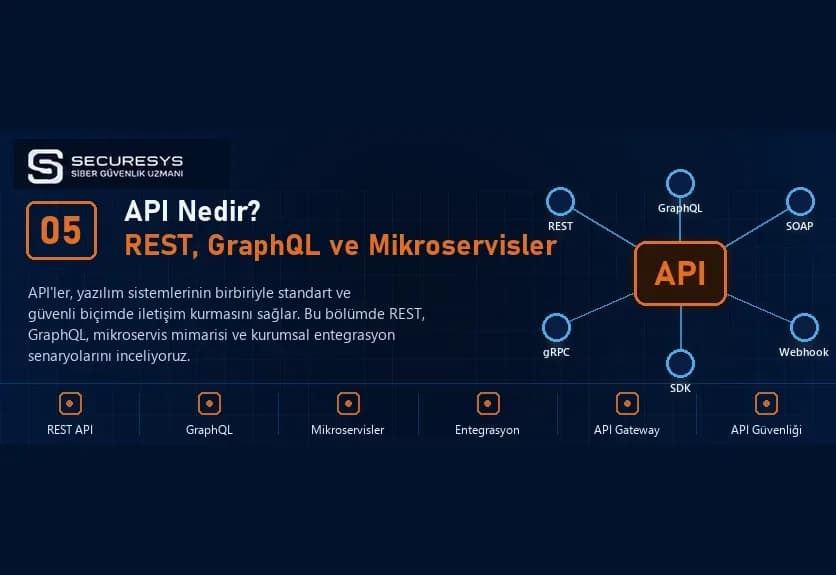
What Is an API? REST API, GraphQL, Microservices and Enterprise Software Integrations
What is an API and how does it work? A guide to REST API, SOAP, GraphQL, webhooks, microservices, CRM–ERP integration, inventory management and API security.
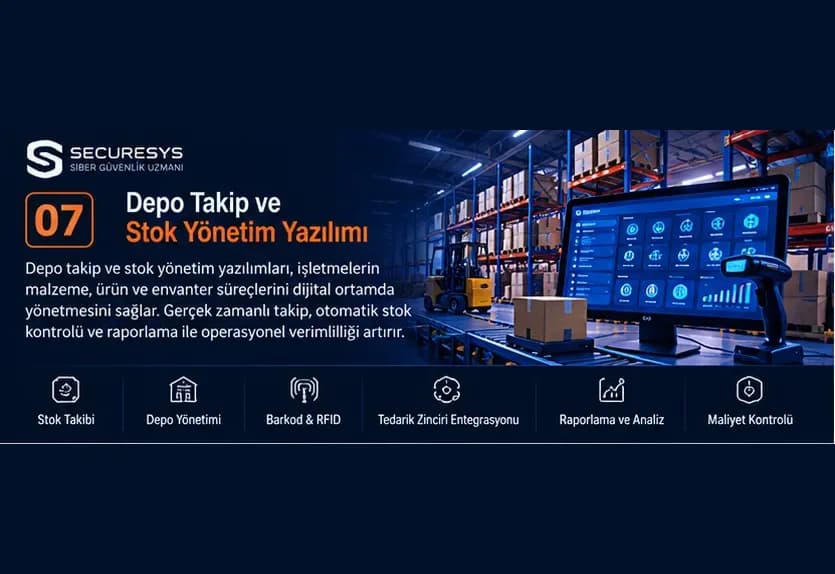
What Is Warehouse Tracking and Inventory Management Software? A Guide to WMS, ERP, Barcodes and Inventory Control
What is warehouse tracking software? Explore WMS, barcode, RFID, ERP integration, multi-warehouse and inventory management in our complete guide.
Looking for professional support on this topic?
Our expert team will reach out for a free consultation as soon as possible.