What Is Custom Software Development? Off-the-Shelf vs Custom Software
What is custom software development? Off-the-shelf vs custom software, CRM, ERP, web and mobile apps, cost, security and a guide to choosing a vendor.
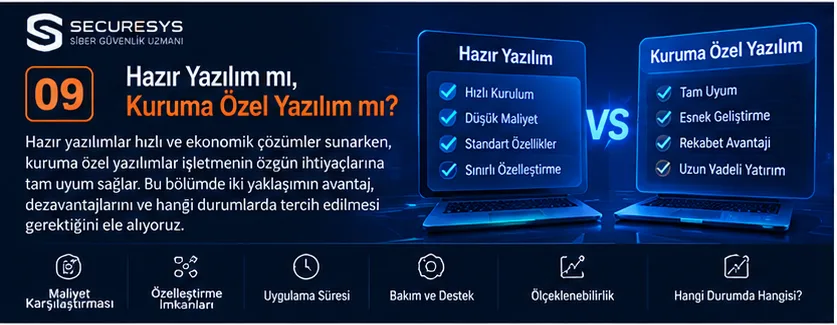
What Is Custom Software Development?
Custom software development is the process of designing, developing, testing and deploying software to meet the specific needs, business processes and technical requirements of an organisation or business.
Off-the-shelf software is generally built to meet the common needs of many different businesses, whereas custom software can be designed around the processes of one particular organisation.
For example, imagine a business that wants to manage customer management, quotation preparation, order tracking, project management, contract control, product procurement, service procurement and invoicing on a single platform.
Off-the-shelf CRM software on the market may meet some of these needs.
However, if the business has specific workflows, approval mechanisms or integration requirements, organisation-specific software development may be worth considering.
Custom software does not only mean building a brand-new application from scratch. Extending existing software, adding a custom module or integrating different systems can also be considered within this scope.
Short answer: Custom software development means building software around a business's needs. It can be applied in many areas such as CRM, ERP, warehouse tracking, inventory management, project management, web applications and mobile applications. Its main difference from off-the-shelf software is that the solution can be designed around specific business requirements.
1. What Is Custom Software Used For?
Custom software aims to digitalise the processes of a business that standard products cannot cover, or that the business wants to manage more efficiently.
Main areas of use
- Customer management
- Quotation and order tracking
- Project management
- Inventory and warehouse management
- Product and service procurement
- Contract management
- Staff and task tracking
- Financial reporting
- Workflow automation
- API and system integrations
Example
A cyber security company wants to track the work it receives from its customers by project number.
For each project, the approved quotation, contract, scope form, expert assignment, service delivery and invoicing information must be managed.
A custom project management application can be developed to meet these requirements.
2. What Is Off-the-Shelf Software?
Off-the-shelf software is a software product that is made available to many different customers instead of being developed from scratch for a particular user or organisation.
Examples of off-the-shelf software
CRM platforms.
ERP systems.
Accounting programs.
Project management tools.
Document management systems.
Advantages
Faster start of use.
Benefiting from existing features.
Updates provided by the vendor.
Ready-made integration options.
Limitations
Limits on customisation.
Licence and subscription terms.
Dependence on the vendor.
Cost of adapting to specific processes.
3. The Difference Between Off-the-Shelf and Custom Software
| Criterion | Off-the-Shelf Software | Custom Software |
|---|---|---|
| Purpose of development | Common user needs | Organisation-specific needs |
| Initial use | Generally faster | Requires a development process |
| Customisation | Bound by product limits | Can be designed according to requirements |
| Integration | Bound by existing APIs and modules | Custom integrations can be developed |
| Initial cost | May generally be lower | May be higher |
| Long-term cost | Licences and subscriptions | Maintenance and development |
| Source code access | Generally limited | Depends on the contract |
| Updates | Can be managed by the vendor | Can be managed by the development team |
Key point
Custom software is not always better or more economical.
The right choice depends on business needs, total cost of ownership and technical requirements.
4. When Should Custom Software Be Preferred?
Custom software can be considered in the following situations.
Organisation-specific business processes
If standard software does not adequately cover existing processes.
Complex integrations
If custom data flows are needed between multiple systems.
Special security requirements
If there are specific conditions for authorisation, data processing or deployment architecture.
Competitive advantage
If the organisation wants to turn its own distinctive operational methods into software.
Long-term product strategy
If the business plans to develop and grow the software.
5. When Should Off-the-Shelf Software Be Preferred?
Off-the-shelf software may be suitable under the following conditions.
Standard business processes
If the needs can be met with common product features.
Need for rapid use
If it is necessary to go live in a short time.
Limited development budget
If an investment in custom development is not economical.
Vendor support
If the organisation wants to benefit from regular product updates.
Example
A standard CRM may be sufficient for simple customer records and sales opportunities.
6. What Is a Hybrid Software Approach?
A hybrid approach means using off-the-shelf software products together with custom-developed components.
Example
Off-the-shelf CRM.
Custom project management module.
Accounting integration.
Enterprise document management.
Advantage
Standard needs are met by off-the-shelf software, while specific processes can be managed with separate modules.
Key point
In a hybrid architecture, integration and maintenance responsibilities must be clearly defined.
7. What Is Organisation-Specific Web Software?
Organisation-specific web software is an application that runs in a browser and is developed around a business's needs.
Areas of use
CRM.
ERP modules.
Project management.
Inventory tracking.
Warehouse management.
Human resources.
Reporting.
Example
A business can develop a custom platform that lets its employees access customer, project and contract records through a web browser.
8. Custom Mobile Application Development
Custom mobile application development means preparing applications for Android and iOS devices according to specific requirements.
Areas of use
Mobile CRM.
Warehouse tracking.
Stock counting.
Field service.
Sales representative application.
Manager approval screens.
Technologies
Kotlin.
Swift.
Flutter.
React Native.
Key point
The choice of platform should be made according to device integrations, user needs and maintenance costs.
9. What Is Custom CRM Software?
Custom CRM software is an application developed around a business's customer relationships and sales processes.
Modules
Customer.
Sales opportunity.
Quotation.
Order.
Contract.
Project.
Task.
Reporting.
Example
A business may want a project record to be created automatically when a quotation is approved.
This workflow can be developed in a custom CRM solution.
10. What Is Custom ERP Software?
Custom ERP software is a system developed around a business's resource and operations management needs.
Areas of use
Financial processes.
Purchasing.
Inventory.
Orders.
Production.
Projects.
Key point
Comprehensive ERP development projects can create high demands for analysis, integration and maintenance.
For some businesses, customising an existing ERP platform may be more suitable.
11. Custom Warehouse Tracking Software
Custom warehouse tracking software is designed around a business's warehouse operations.
Core features
Goods receipt.
Shelf management.
Stock movements.
Barcode.
Order picking.
Shipment.
Returns.
Example
If a business has multiple warehouses and custom product transfer processes, suitable software can be developed for it.
12. Custom Inventory Tracking Program
Custom inventory tracking software allows product and inventory management to be carried out with business-specific rules.
Example features
Multiple warehouses.
Lot tracking.
Serial number.
Stock reservation.
Minimum stock.
ERP integration.
Example
A technology company can track devices by serial number and link them to customer deliveries.
13. Custom Project Management Software
Custom project management software is developed to support an organisation's project lifecycle.
Core modules
Project card.
Customer.
Quotation.
Order.
Tasks.
Resource planning.
Document control.
Delivery.
Invoicing.
Example
A consulting company can track every stage, from project start to customer acceptance, in the same system.
14. Custom Workflow Software
Workflow software enables the digitalisation of corporate approval and processing procedures.
Examples
Purchase approval.
Quotation approval.
Contract approval.
Project opening.
Service delivery.
Example
Purchase requests above a certain amount can be sent to senior management for approval.
15. Requirements Analysis in Custom Software
Requirements analysis is one of the fundamental stages of a software project.
Topics examined
Existing processes.
User roles.
Business rules.
Data sources.
Integrations.
Security requirements.
Reporting.
Key point
Insufficient requirements analysis can lead to scope changes and cost increases.
16. What Is a Software Requirements Document?
A software requirements document defines the functional and non-functional requirements that the system to be developed is expected to meet.
Functional requirements
Creating a customer.
Preparing a quotation.
Recording an order.
Generating a report.
Non-functional requirements
Performance.
Security.
Accessibility.
Scalability.
Maintainability.
Key point
Requirements should be written in a measurable and testable way wherever possible.
17. What Is an MVP?
An MVP (Minimum Viable Product) is the minimal version of a product that meets a specific user need and makes it possible to obtain real feedback.
Example
The first version of a custom CRM project may contain only the following modules:
Customer.
Sales opportunity.
Quotation.
Order.
Later stages
Project management.
Contract.
Invoicing integration.
Reporting.
Key point
An MVP does not mean giving up security and basic quality controls.
18. What Is a PoC?
A PoC (Proof of Concept) is an exercise carried out to verify the feasibility of a specific technical approach.
Example
In a warehouse tracking project, the integration of a particular barcode reader with the application can be tested within a PoC.
Difference from an MVP
A PoC focuses on verifying technical feasibility.
An MVP aims to test real user value.
19. What Is UI/UX Design?
UI refers to the user interface.
UX refers to the user experience.
UI components
Screens.
Buttons.
Forms.
Menus.
Tables.
UX topics
Usability.
Transaction flow.
Accessibility.
Reducing user errors.
Example
On a screen where a warehouse employee performs transactions by scanning barcodes, avoiding unnecessary fields can improve ease of use.
20. What Is Frontend Development?
The frontend is the interface layer through which the application interacts with the user.
Common technologies
HTML.
CSS.
JavaScript.
TypeScript.
React.
Angular.
Vue.
Example
A CRM application's customer list and quotation screens can be built with frontend components.
21. What Is Backend Development?
The backend is the layer that runs the application's business rules and server-side operations.
Common technologies
Java.
C# / .NET.
Python.
Node.js.
PHP.
Go.
Example
The business rules that create an order when a quotation is approved in a CRM can be implemented in the backend.
22. Why Is Database Design Important?
The database enables an application's data to be stored and managed.
Example technologies
PostgreSQL.
Microsoft SQL Server.
MySQL.
Oracle Database.
MongoDB.
Key topics
Data integrity.
Relationships.
Indexing.
Backup.
Authorisation.
Example
In a CRM system, relationships can be established between customer, quotation, order and project records.
23. API Development and System Integration
Custom software can be integrated with existing enterprise systems.
Integration examples
CRM–ERP.
Inventory–warehouse.
Project–accounting.
E-commerce–orders.
Mobile application–backend.
Technologies
REST API.
SOAP.
GraphQL.
Webhook.
Message queues.
Key point
Data consistency, error handling and security controls should be considered when designing integrations.
24. What Is Monolithic Architecture?
Monolithic architecture is an architectural approach in which the core components of an application are developed and deployed together.
Advantages
Simpler deployment at the start.
Less distributed-system complexity.
Limitations
As the application grows, maintenance and deployment processes can become harder.
Key point
A well-designed modular monolith can be suitable for many enterprise applications.
25. What Is Microservices Architecture?
Microservices architecture allows an application to be developed as services separated along specific business domains.
Example services
Customer.
Order.
Inventory.
Project.
Invoicing.
Advantages
Scaling on a per-service basis.
Independent deployment.
Challenges
Service communication.
Data consistency.
Monitoring.
Operational complexity.
26. What Is SaaS Software?
SaaS (Software as a Service) is a cloud computing model in which software is delivered as a service.
Examples
Cloud CRM.
Project management.
Document management.
Accounting services.
Advantages
Centralised service management.
Subscription models.
Remote access.
Points to consider
Data processing terms.
Service continuity.
Licensing.
Data portability.
27. What Is On-Premise Software?
On-premise software is software hosted on infrastructure managed by the organisation itself.
Reasons for use
Infrastructure control.
Custom network integrations.
Data hosting requirements.
Key point
Hosting in-house does not by itself guarantee security.
28. Cloud, On-Premise and Hybrid Architecture
| Criterion | Cloud | On-Premise | Hybrid |
|---|---|---|---|
| Infrastructure | Cloud | Environment managed by the organisation | Multiple environments |
| Management | Depends on the service model | The organisation's responsibility | Shared |
| Scaling | Flexible options | Depends on the capacity plan | Depends on the architecture |
| Integration | Requires network and APIs | May offer local integration advantages | May be complex |
| Security | Depends on configuration | Depends on configuration | Controls are needed in both environments |
Key point
The choice of hosting model should be made according to business continuity, security, cost and integration requirements.
29. Low-Code and No-Code Custom Software
Low-code and no-code platforms support the development of certain applications using visual tools.
Areas of use
Forms.
Approval processes.
Internal applications.
Simple data management.
Limitations
Limits on customisation.
Platform dependence.
Integration conditions.
Key point
Not every business process may be suitable for low-code or no-code platforms.
30. Using Open-Source Software
Open-source software can be used in custom development projects.
Examples
PostgreSQL.
Linux.
Django.
Spring.
React.
Advantages
A broad ecosystem.
Customisation options.
Community and commercial support alternatives.
Points to consider
Licence terms.
Dependency security.
Updates.
Maintenance.
31. What Is Source Code Ownership?
Source code ownership relates to the intellectual property and usage rights of the software.
Points to clarify in the contract
Delivery of source code.
Intellectual property rights.
Third-party components.
Open-source licences.
Usage rights.
Modification rights.
Key point
Purchasing a custom software development service does not mean that all source code rights automatically pass to the customer.
The rights should be assessed in accordance with the relevant legislation and the provisions of the contract.
32. What Is Vendor Lock-in?
Vendor lock-in is when an organisation becomes highly dependent on a particular software provider or technology.
Risks
Difficulty moving data.
High switching cost.
Limited integration.
Dependence on the vendor.
Measures
Open data formats.
API documentation.
Data export.
Clarifying source code and licence rights.
Exit plan.
33. How Is Software Development Cost Calculated?
The cost of custom software development is determined by the technical and functional scope of the project.
Key factors
Requirements analysis.
Number of screens.
Number of modules.
Number of users.
Integrations.
Database design.
Security.
Testing.
Deployment.
Maintenance.
Key point
It is not possible to make a sound cost estimate by looking only at the number of screens.
Business rules and integration complexity can significantly affect cost.
34. What Is a Person-Day?
A person-day is a unit of labour used to express project effort.
Example
If one developer works five working days on a specific task, this can be expressed as five person-days of effort.
Points to consider
The total of person-days is not directly equal to calendar time.
Team capacity, task dependencies and testing processes should be assessed separately.
35. What Is a Fixed-Price Software Project?
In the fixed-price model, a fee agreed in the contract applies to a defined scope.
Suitable scenarios
Projects with clear requirements.
Limited scope.
Defined deliverables.
Risks
Unclear scope.
Frequent changes.
Additional development requests.
Key point
Change management should be clearly defined in the contract.
36. What Is the Time and Material Model?
In the Time and Material model, charges are based on the labour spent and other resources defined in the contract.
Areas of use
Projects with a variable scope.
Long-term development.
Continuous improvement.
Advantage
It can adapt to changing needs.
Points to consider
Effort reporting and budget control are important.
37. Maintenance Cost in a Software Project
Maintenance requirements continue after the software goes live.
Maintenance activities
Bug fixing.
Security updates.
Performance improvement.
Compatibility.
New features.
Key point
The initial development cost is only one part of the total cost of ownership.
38. What Is Total Cost of Ownership (TCO)?
TCO (Total Cost of Ownership) is the assessment of the total cost incurred over the lifetime of a piece of software.
Cost items
Licence.
Development.
Infrastructure.
Integration.
Training.
Maintenance.
Support.
Security.
Data migration.
Example
The annual subscription cost of off-the-shelf CRM software can be compared with the development and maintenance costs of a custom CRM over a multi-year period.
39. What Is ROI?
ROI (Return on Investment) is a measure used to compare the financial return generated by an investment with its cost.
Benefits that can be assessed
Labour savings.
Reduction in errors.
Processing time.
Operational efficiency.
Revenue growth.
Key point
If the expected benefits are based on assumptions, they should not be presented as realised results.
40. How Does the Software Development Process Work?
Stage 1: Discovery
Business objectives and stakeholders are identified.
Stage 2: Analysis
Requirements are prepared.
Stage 3: Design
The UI/UX and technical architecture are created.
Stage 4: Development
The software components are developed.
Stage 5: Testing
Functional and security tests are carried out.
Stage 6: User acceptance
Business requirements are verified.
Stage 7: Go-live
The system is put into use.
Stage 8: Maintenance
The system is monitored and improved.
41. Custom Software Development with Agile and Scrum
Agile is an approach that emphasises principles such as adapting to changing requirements and continuous feedback.
Scrum is a framework that can be used in complex product development work.
Scrum components
Product Owner.
Scrum Master.
Developers.
Product Backlog.
Sprint.
Key point
Using Scrum does not, on its own, guarantee the successful delivery of a project.
42. What Are Software Tests?
Different types of tests can be applied in custom software projects.
Test types
Unit test.
Integration test.
System test.
User acceptance test.
Performance test.
Security test.
Example
The creation of an order when a quotation is approved in a CRM can be verified with both functional and integration tests.
43. What Is UAT?
UAT (User Acceptance Testing) is the user acceptance test.
Business users assess whether the developed software meets the defined requirements.
Example
The sales team opens a customer record in the CRM.
They create a quotation.
They approve the quotation.
They check the order record.
Key point
UAT acceptance criteria should be defined at the start of the project.
44. What Is Secure Software Development?
Secure software development means including security requirements in the software lifecycle.
Core controls
Security requirements.
Threat modelling.
Secure coding.
Code analysis.
Dependency analysis.
Security tests.
Example
In a CRM application, the authorisation controls that prevent users from accessing data belonging to other customers should be planned at the design stage.
45. What Is DevSecOps?
DevSecOps is an approach that aims to integrate security controls with software development and operations processes.
Example practices
SAST.
DAST.
SCA.
Secret scanning.
Container scanning.
CI/CD security controls.
Key point
Automated security tools do not fully replace manual assessments.
46. The Difference Between SAST and DAST
SAST
Static Application Security Testing is the analysis of an application's source code or related software components using static methods.
DAST
Dynamic Application Security Testing is the assessment of a running application from a security perspective using dynamic methods.
Key point
SAST and DAST are complementary approaches.
47. Why Is Software Source Code Analysis Important?
Source code analysis helps identify security and quality issues during the software development process.
Topics that can be examined
Insecure data handling.
Injection risks.
Hard-coded secrets.
Insecure use of cryptography.
Dependency risks.
Key point
Source code analysis results should be handled through expert assessment and appropriate validation processes.
48. What Is Software Penetration Testing?
Software penetration testing is the assessment of an application's security risks within an authorised scope.
Test areas
Web application.
Mobile application.
API.
Authentication.
Authorisation.
Business logic.
Example
If a user in project management software can gain unauthorised access to project documents belonging to other customers, this can pose a critical risk.
49. KVKK (Turkish Personal Data Protection Law) and Data Security in Software
Custom software may process personal data.
Points to assess
Purpose of processing.
Legal basis.
Data minimisation.
Authorisation.
Retention period.
Data transfer.
Destruction.
Key point
The fact that software is custom-developed does not automatically ensure KVKK compliance.
50. Backup and Business Continuity in Software
Business continuity planning is needed so that enterprise software can operate without interruption or at the targeted service level.
Core topics
Backup.
Restore tests.
RPO.
RTO.
Disaster recovery.
What is RPO?
It is the target for the acceptable duration of data loss.
What is RTO?
It is the target time set for restoring the service.
51. What Is Scalable Software?
Scalable software is software that can respond to increasing workloads through appropriate resource and architecture changes.
Scaling methods
Vertical scaling.
Horizontal scaling.
Caching.
Database optimisation.
Example
As the number of users grows, the infrastructure of a CRM application can be expanded to meet new capacity requirements.
52. Software Performance Testing
Performance tests aim to assess how an application behaves under specific workloads.
Test types
Load test.
Stress test.
Endurance test.
Capacity test.
Example
It can be tested how the system copes when a large number of users run inventory queries at the same time.
53. Monitoring and Logging in Software
Application monitoring enables the performance and error status of the system to be assessed.
Monitoring areas
Response time.
Error rate.
Resource consumption.
Service availability.
Security events.
Key point
Logs should not hold unnecessary personal data or confidential information.
54. Documentation in a Software Project
Documentation is important for the sustainability of the software.
Document examples
Requirements document.
Architecture document.
API documentation.
Database model.
User guide.
Installation guide.
Test report.
Key point
Documentation should be kept up to date throughout the project.
55. SLA and Technical Support in a Software Project
An SLA defines the criteria and commitments relating to the service level.
Topics that can be assessed
Support hours.
Notification time.
First response time.
Intervention time.
Resolution target.
Key point
Notification, intervention and resolution times are separate concepts and should be clearly defined in the contract.
56. What to Watch For in a Software Development Contract
Core contract topics
Project scope.
Deliverables.
Acceptance criteria.
Payment plan.
Change management.
Source code rights.
Confidentiality.
Security.
Maintenance and support.
Termination and handover terms.
Key point
Contract provisions should be reviewed by legal experts according to the type of project.
57. What to Watch For When Choosing a Software Company
Technical competence
Experience with development technologies and architecture.
Business analysis
Ability to understand corporate processes.
Project management
Planning, tracking and reporting.
Security
Secure development and testing approach.
Integration
Experience with APIs and existing systems.
Maintenance
Long-term support capacity.
References
Experience with similar projects.
58. Questions to Ask a Software Development Company
- How will the requirements analysis be carried out?
- Which technologies will be used?
- How will source code rights be regulated?
- How will the project timeline be managed?
- How will change requests be priced?
- Will security tests be performed?
- Will API documentation be prepared?
- How will data migration be carried out?
- How will user acceptance tests be conducted?
- What will the maintenance and support terms be?
59. Common Mistakes in Custom Software Projects
Not clarifying requirements
Can lead to scope changes.
Choosing the wrong technology
Can increase maintenance and integration costs.
Leaving security to the end
Can make it harder to remediate risks.
Neglecting user experience
Can reduce adoption of the software.
Not preparing documentation
Can make maintenance processes harder.
Testing inadequately
Can cause errors in the live environment.
Leaving source code rights unclear
Can create legal and operational problems.
60. How Is Success Measured in Custom Software Projects?
Example performance indicators
Adherence to the project schedule.
Budget variance.
User acceptance success.
Error rate.
System availability.
Processing time.
User satisfaction.
Example
With new project management software, the aim may be to reduce the time it takes to open a project.
Whether this target has been achieved can be assessed through measurements taken before and after implementation.
61. Artificial Intelligence in Custom Software Development
Artificial intelligence tools can be used in a supporting role in software development processes.
Areas of use
Code suggestions.
Preparing test scenarios.
Documentation.
Error analysis.
Code review support.
Risks
Faulty code suggestions.
Insecure output.
Sharing of confidential data.
Licence and intellectual property issues.
Key point
Code generated by artificial intelligence should go through appropriate human review and testing.
62. SECURESYS Custom Software Development and Secure Software Solutions
SECURESYS provides software development, integration, security testing and consultancy services tailored to organisations' business processes.
Custom Enterprise Software Development
Web-based applications can be developed for businesses' operational needs.
CRM Software Development
Customer, sales opportunity, quotation, order and project processes can be digitalised.
ERP Modules and Integrations
Custom modules that work in integration with enterprise systems can be prepared.
Warehouse and Inventory Tracking Software
Solutions can be developed for product, warehouse, inventory and shipment processes.
Project Management Software
Project card, task, document control, procurement, delivery and invoicing processes can be supported.
Mobile Application Development
Enterprise applications for Android and iOS platforms can be prepared.
API Development
Secure integrations can be created between different software systems.
Source Code Analysis
The security and quality risks of developed software can be assessed.
Penetration Tests
Security tests of web, mobile and API applications can be carried out.
DevOps and DevSecOps
The automation of development, testing, deployment and security processes can be supported.
In the SECURESYS approach, custom software development is not just about writing code; it is about analysing an organisation's business processes to create software solutions that are secure, integrated, sustainable and suited to its needs.
Frequently Asked Questions (FAQ)
1. What is custom software development?
It is the design and development of software around an organisation's needs.
2. What is off-the-shelf software?
It is software developed in advance for the common needs of different users.
3. Which is better, off-the-shelf or custom software?
It depends on business needs, budget, integrations and maintenance requirements.
4. What are the advantages of custom software?
It can offer fit with organisation-specific processes, customisation and custom integration options.
5. What are the disadvantages of custom software?
Development time, initial cost and maintenance responsibility may be higher.
6. What is custom CRM software?
It is a CRM solution developed around a business's customer and sales processes.
7. What is custom ERP software?
It is a system developed around an organisation's resource and operations management needs.
8. What is custom warehouse tracking software?
It is software designed around a business's warehouse processes.
9. What is a custom inventory tracking program?
It is an application that manages product and inventory movements with organisation-specific rules.
10. What is custom web software?
It is an application that runs in a browser and is developed according to specific requirements.
11. What is a custom mobile application?
It is software developed for mobile devices to meet specific business needs.
12. What is the difference between SaaS and custom software?
SaaS is a service delivery model, whereas custom software refers to a development approach. Custom software can also be delivered under the SaaS model.
13. What is an MVP?
It is the minimal version of a product that makes it possible to obtain real user feedback.
14. What is a PoC?
It is an exercise that verifies the feasibility of a specific technical approach.
15. How long does custom software development take?
It varies according to scope, integrations, team capacity and testing requirements.
16. What does the cost of custom software development depend on?
It depends on modules, business rules, integrations, security, testing and maintenance requirements.
17. Does the source code of custom software belong to the customer?
Source code and intellectual property rights depend on the relevant legislation and the provisions of the contract.
18. How is custom software security ensured?
It is supported by secure design, code analysis, authorisation, security tests and regular maintenance.
19. Can custom software be integrated with an existing ERP or CRM?
Yes. It can be connected through suitable APIs and other integration methods.
20. What should be considered when choosing a custom software development company?
Business analysis, technical competence, security, integration, project management, documentation and maintenance experience should be assessed.
Conclusion: Off-the-Shelf Software or Organisation-Specific Software?
Off-the-shelf software can offer fast and economical options for meeting standard business needs.
Custom software, on the other hand, can make it possible to develop solutions that fit a business's own distinctive processes.
Both approaches can be considered in different areas such as CRM, ERP, inventory tracking, warehouse management, project management and mobile applications.
In some organisations, a hybrid approach in which off-the-shelf products are supported by custom modules may be suitable.
When choosing software, not only the initial investment cost but also integration, maintenance, security, data portability and total cost of ownership should be taken into account.
Secure software development, source code analysis, application testing and DevSecOps processes are important for the sustainability of the software.
The core purpose of a successful custom software project is not merely to move existing processes into a computer environment; it is to create a digital solution that meets the organisation's needs and is secure, measurable, integrated and manageable in the long term.
Sources and References
NIST Secure Software Development Framework (SSDF): https://csrc.nist.gov/projects/ssdf
OWASP Application Security Verification Standard: https://owasp.org/www-project-application-security-verification-standard/
OWASP Software Assurance Maturity Model: https://owaspsamm.org
The Scrum Guide: https://scrumguides.org
Agile Manifesto: https://agilemanifesto.org
Microsoft Azure Architecture Center: https://learn.microsoft.com/azure/architecture/
AWS Well-Architected: https://aws.amazon.com/architecture/well-architected/
ISO/IEC 25010 – Systems and Software Quality Models: https://www.iso.org
Personal Data Protection Authority (KVKK): https://www.kvkk.gov.tr
Related Articles
Software Development, Enterprise Applications & DevSecOps
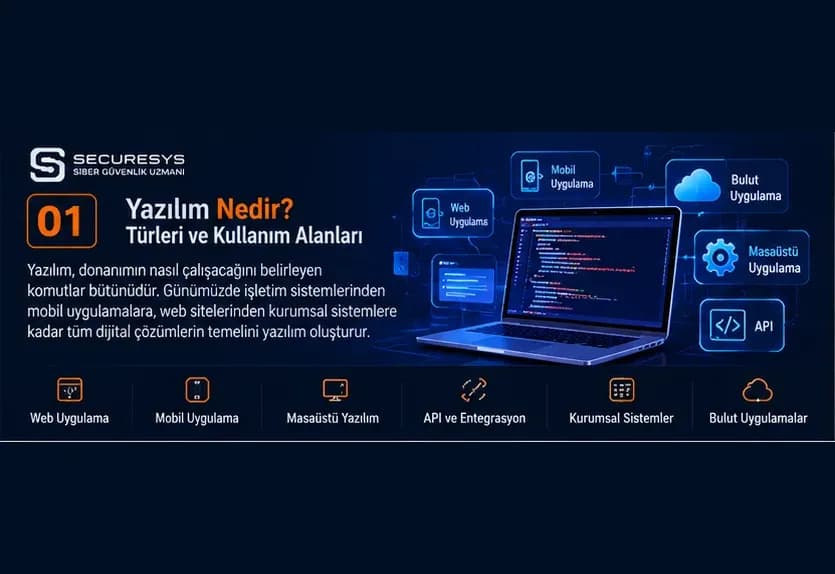
What Is Software? Types, Uses and the Most Widely Used Software Worldwide
What is software and what are its types? A complete guide to CRM, ERP, warehouse tracking, inventory management, web and mobile apps, and custom software.
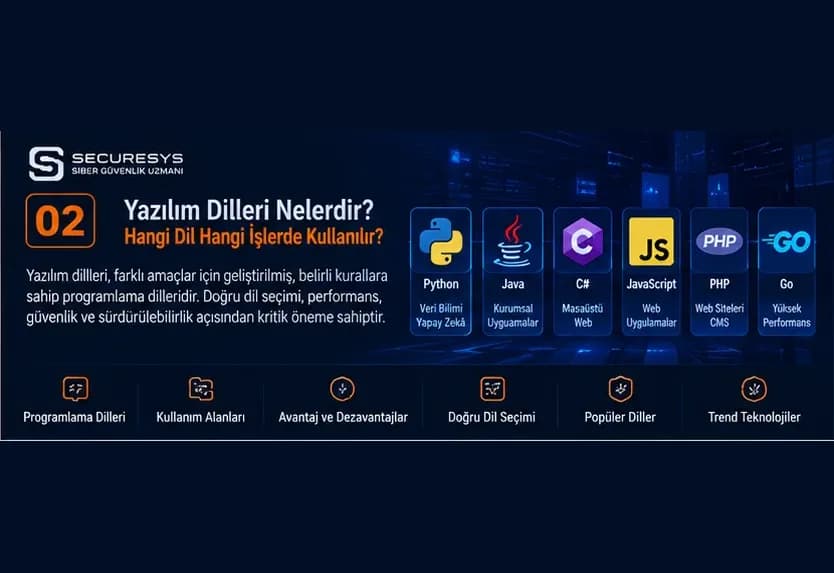
Programming Languages Explained: What Is Each One Used For?
What are programming languages? Learn what Python, Java, C#, PHP, JavaScript and others are used for, with CRM, ERP and inventory software examples.
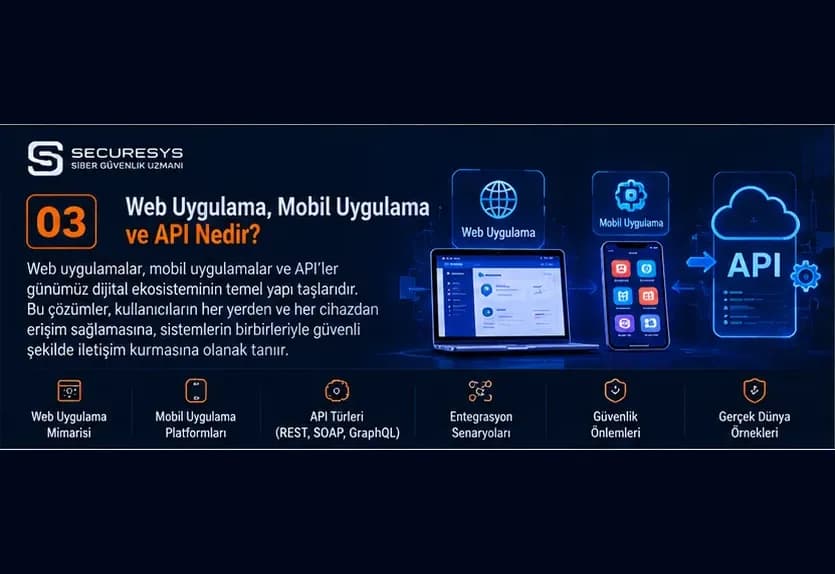
What Is a Web Application? A Guide to Web-Based Software, Frontend and Backend Development
What is a web application? Explore frontend, backend, APIs, databases, cloud architecture and how CRM, ERP, warehouse and inventory software is developed.
What Is a Mobile App? A Guide to Android, iOS and Cross-Platform Mobile Software Development
What is a mobile app and how is it developed? Explore Android, iOS, Flutter, React Native, mobile CRM, warehouse tracking and inventory software.
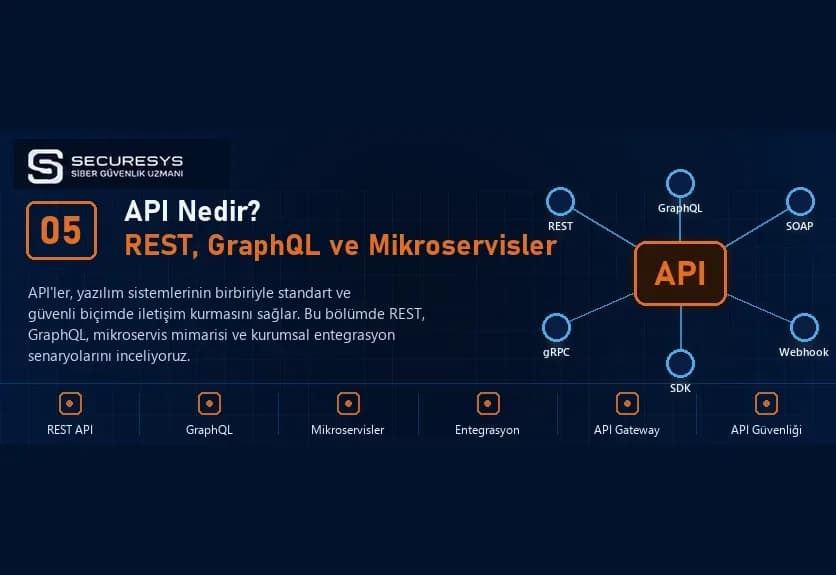
What Is an API? REST API, GraphQL, Microservices and Enterprise Software Integrations
What is an API and how does it work? A guide to REST API, SOAP, GraphQL, webhooks, microservices, CRM–ERP integration, inventory management and API security.
What Is CRM Software? A Guide to Customer Tracking, Sales Management, Quotation and Project Tracking Systems
What is CRM software? Explore customer tracking, sales, quotations, orders, contracts, project management, ERP integration and custom CRM development.
Looking for professional support on this topic?
Our expert team will reach out for a free consultation as soon as possible.