What Is Software Project Management? A Guide to Agile, Scrum, Kanban, Waterfall and SDLC Processes
What is software project management? Explore SDLC, Agile, Scrum, Kanban, Waterfall, sprints, planning, testing, budget, risk and software delivery processes.
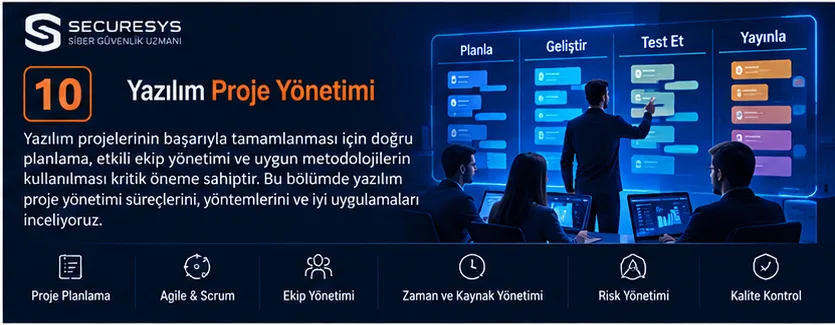
What Is Software Project Management?
Software project management is the process of managing the planning, development, testing and delivery of software, together with the related project activities, in terms of scope, time, budget, quality, resources and risks.
Software projects do not consist solely of coding activities.
An enterprise software project may include different stages such as needs analysis, technical design, database development, user interface, API integration, testing, security, data migration, user acceptance and go-live.
Coordinating these stages is one of the core purposes of project management.
For example, imagine that a company wants to develop a CRM and project management application.
The system must manage customer records, quotations, orders, project plans, contracts and invoicing information.
Communicating these requirements to the software team, setting development priorities, tracking deliverables and carrying out user acceptance all fall within the scope of project management.
Short answer: Software project management is the planned, controlled and measurable execution of software development work. Agile, Scrum, Kanban and Waterfall offer different working approaches, while SDLC defines the life cycle of the software.
1. Why Is Software Project Management Important?
Software projects can involve technical and organisational uncertainties.
Core objectives
- Defining the project scope
- Planning the schedule
- Managing the budget
- Coordinating teams
- Tracking requirements
- Assessing risks
- Controlling quality
- Managing deliverables
Example
In a CRM project, it may not be possible to test some functions of the quotation module before customer management is complete.
Project management helps to plan these dependencies.
2. The Difference Between a Software Project and a Software Product
A software project is a piece of work with defined goals and boundaries.
A software product, on the other hand, is a solution that meets users' needs and can continue to be developed over time.
Example
Developing the first version of a CRM system can be managed as a project.
Subsequent versions of the CRM product can be developed with a continuous product management approach.
Key point
Not every software development activity has to be an independent project.
3. What Is SDLC?
SDLC (Software Development Life Cycle) stands for the software development life cycle.
SDLC refers to the life cycle of software, from requirements through development, testing, deployment and maintenance.
Common SDLC stages
- Planning
- Requirements analysis
- Design
- Development
- Testing
- Deployment
- Maintenance
Key point
These stages do not necessarily have to proceed in exactly the same order in every project.
In agile approaches, many activities can be carried out in repeating cycles.
4. The Difference Between SDLC and Project Management
SDLC focuses on the development life cycle of the software.
Project management, on the other hand, also covers management dimensions such as scope, time, cost, resources, communication and risk.
Example
Under SDLC, testing the application is planned.
Under project management, the team, time and budget required for testing are coordinated.
5. The Planning Stage in a Software Project
Planning covers the assessment of the project's objectives and feasibility.
Core topics
Business objectives.
Stakeholders.
Scope.
Budget.
Schedule.
Resources.
Risks.
Example
In an inventory tracking project, how many warehouses, how many users and which integrations will be involved is assessed at the planning stage.
6. What Is Software Requirements Analysis?
Requirements analysis is the process of identifying what users and the business expect from the software.
Functional requirements
Creating customers.
Preparing quotations.
Recording orders.
Reporting.
Non-functional requirements
Performance.
Security.
Accessibility.
Scalability.
Maintainability.
Key point
Requirements should be testable and defined as clearly as possible.
7. What Is an SRS?
An SRS (Software Requirements Specification) is the document that defines the software requirements.
Contents
Project purpose.
Scope.
User roles.
Functional requirements.
Non-functional requirements.
Integrations.
Constraints.
Example
“The sales manager must be able to view approved quotations.”
This statement could be a functional requirement.
8. The Software Design Stage
In the design stage, the technical and user-focused structure of the software is created.
Design areas
System architecture.
Database.
API.
UI/UX.
Authorisation.
Integration.
Example
The relationships between the customer, quotation, order and project modules of the CRM application are designed.
9. The Software Development Stage
In the development stage, software components are built in line with the defined requirements.
Activities
Frontend development.
Backend development.
Database operations.
API development.
Integration.
Unit tests.
Key point
Secure coding and code review practices should be considered during code development.
10. The Software Testing Stage
The testing stage makes it possible to assess whether the software behaves in accordance with the requirements.
Test types
Unit testing.
Integration testing.
System testing.
Regression testing.
Performance testing.
Security testing.
User acceptance testing.
Key point
Tests can be applied throughout development, not only at the end of the project.
11. The Software Deployment Stage
Deployment is the transfer of the developed software to the target environment.
Environment examples
Development.
Test.
Staging.
Production.
Key point
Before deployment, configuration, data migration, the rollback plan and security checks should be assessed.
12. The Software Maintenance Stage
After the software goes live, maintenance and improvement requirements continue.
Types of maintenance
Corrective maintenance.
Adaptive maintenance.
Perfective maintenance.
Preventive maintenance.
Example
A compatibility update may be required in the application because of a new operating system or browser version.
13. What Is Waterfall?
Waterfall is a life cycle model in which software development activities are carried out mainly in sequential stages.
Typical stages
Analysis.
Design.
Development.
Testing.
Delivery.
Advantages
Stage-based planning.
Documentation.
Defined deliverables.
Limitations
Managing late changes can become difficult.
Key point
Waterfall does not mean a method in which no changes can be made in any project; the management cost and process of changes may simply differ.
14. What Is Agile?
Agile is an approach to software development that emphasises responding to change, customer collaboration, working software and interaction between individuals.
Core focuses of the Agile principles
Value creation.
Feedback.
Collaboration.
Adapting to change.
Continuous improvement.
Key point
Agile is not a single project management methodology or a software tool.
15. The Difference Between Agile and Waterfall
| Criterion | Agile approaches | Waterfall |
|---|---|---|
| Working structure | Can be iterative and incremental | Mainly sequential |
| Feedback | Regular | Can be stage-based |
| Change | Adaptation comes first | Formal change management is common |
| Delivery | Incremental deliveries | Delivery at the end of a stage or project |
| Planning | Can be updated continuously | Weighted towards the initial plan |
Key point
The right approach should be determined according to project uncertainty, the contract, the team structure and regulatory requirements.
16. What Is Scrum?
Scrum is a lightweight framework that supports value creation in complex problems.
Scrum is based on working within short, fixed-length Sprints.
Scrum components
Scrum Team.
Product Owner.
Scrum Master.
Developers.
Product Backlog.
Sprint Backlog.
Increment.
Key point
Scrum does not simply mean holding a daily meeting or moving tasks across a board.
17. What Is a Scrum Team?
A Scrum Team is the team that works towards the product goal.
Scrum accountabilities
Product Owner.
Scrum Master.
Developers.
Key point
According to the Scrum Guide, these are accountabilities within the Scrum Team; they should not be treated as mandatory corporate job titles.
18. What Is a Product Owner?
The Product Owner is accountable for maximising the value of the product and for the effective management of the Product Backlog.
Responsibilities
Developing and clearly communicating the Product Goal.
Defining Backlog items.
Prioritisation.
Ensuring the Backlog is transparent and understandable.
Key point
The Product Owner is one person, not a committee.
19. What Is a Scrum Master?
The Scrum Master is accountable for Scrum being understood and applied correctly.
Activities
Guiding Scrum practices.
Supporting team effectiveness.
Helping to remove impediments.
Supporting continuous improvement.
Key point
Within the Scrum framework, the Scrum Master is not a manager who assigns tasks to the team in the traditional sense.
20. Who Are the Developers?
In Scrum, Developers are the team members who contribute to creating a usable Increment in every Sprint.
Examples of competencies
Software development.
Testing.
Design.
Database.
Integration.
Key point
The term Developers is not limited to staff who write code.
21. What Is a Sprint?
A Sprint is a fixed-length work cycle in Scrum of one month or less.
Within a Sprint
Sprint Planning.
Daily Scrum.
Development activities.
Sprint Review.
Sprint Retrospective.
Example
In a CRM project, certain features of the customer registration module can be developed during a two-week Sprint.
22. What Is Sprint Planning?
Sprint Planning is the Scrum event in which the work to be done during the Sprint is planned.
Topics addressed
Why is this Sprint valuable?
What can be done in this Sprint?
How will the chosen work be accomplished?
Output
The Sprint Goal and the Sprint Backlog.
23. What Is the Daily Scrum?
The Daily Scrum is a 15-minute Scrum event held for the Developers.
Purpose
To assess progress towards the Sprint Goal and to plan any necessary adaptations.
Key point
The Daily Scrum is not necessarily a meeting in which three standard questions are answered.
24. What Is the Sprint Review?
The Sprint Review makes it possible to assess the outcome of the Sprint and to discuss future adaptations.
Participants
The Scrum Team and relevant stakeholders.
Example
The quotation module developed for the CRM application is reviewed with stakeholders.
The feedback is assessed.
25. What Is the Sprint Retrospective?
The Sprint Retrospective is the event in which the team plans improvements that will increase its quality and effectiveness.
Topics assessed
Collaboration.
Processes.
Tools.
Quality.
Improvement opportunities.
Key point
A Retrospective should be an event that produces concrete improvement decisions, not merely one in which problems are discussed.
26. What Is the Product Backlog?
The Product Backlog is the ordered and evolving list of the work needed to develop the product.
Example items
Customer registration screen.
Quotation creation.
Order management.
Reporting.
API integration.
Key point
The Product Backlog is not a fixed list of requirements; it can change as new information emerges.
27. What Is the Sprint Backlog?
The Sprint Backlog contains the Sprint Goal, the Product Backlog items selected for the Sprint, and the plan for delivering them.
Example
Sprint Goal: Making the quotation creation process usable.
Selected work:
Quotation form.
Product selection.
Quotation calculation.
Saving the quotation.
28. What Is a User Story?
A User Story is a technique used to express a user's need in a short and understandable way.
Example
“As a sales representative, I want to view the quotations belonging to a customer so that I can track past quotations.”
Key point
The User Story is not a document format mandated by Scrum.
29. What Are Acceptance Criteria?
Acceptance Criteria are the conditions that a piece of work must meet in order to be considered acceptable.
Example
It must be possible to create a quotation record.
Selecting a customer must be mandatory.
The quotation number must be unique.
An unauthorised user must not be able to change a quotation record.
Key point
Acceptance criteria should be testable as far as possible.
30. What Is the Definition of Done?
The Definition of Done (DoD) is the formal description of the state of an Increment when it meets the required quality measures.
Example quality conditions
Code review completed.
Relevant tests passed.
Security checks applied.
Documentation updated.
Key point
The DoD does not simply mean that a development task has been coded.
31. What Is Kanban?
Kanban is a method that supports visualising and managing workflow.
Core concepts
Workflow.
Work items.
WIP limits.
Flow metrics.
Continuous improvement.
Example board
To Do.
In Progress.
Testing.
Done.
Key point
Using Kanban does not require the use of Sprints.
32. What Is a WIP Limit?
WIP (Work in Progress) is the amount of work in progress.
A WIP limit can be used to control the number of work items that may be in progress at the same time at a given stage.
Example
The aim may be to have at most four items in the testing stage.
Purpose
To support a focus on finishing work and to make bottlenecks visible.
33. The Difference Between Scrum and Kanban
| Criterion | Scrum | Kanban |
|---|---|---|
| Work rhythm | Sprint | Continuous flow can be applied |
| Roles | Defined accountabilities | No mandatory Scrum roles |
| Planning | Sprint Planning | According to the flow |
| Work limits | Sprint goal and plan | WIP limits |
| Metrics | Sprint Goal, progress and quality | Lead time, cycle time, throughput |
Key point
Scrum and Kanban practices can be used together under certain conditions.
34. What Is Scrumban?
Scrumban is the term used for a hybrid way of working that draws on both Scrum and Kanban practices.
Example
A team can keep the Sprint rhythm while using a Kanban board and WIP limits.
Key point
There is no single implementation of Scrumban that is valid for all organisations.
35. What Is the V-Model?
The V-Model is a life cycle model that emphasises the relationship between development stages and their corresponding verification and validation activities.
Example relationships
Requirements and acceptance tests.
System design and system tests.
Component design and component tests.
Areas of use
Projects with high documentation and traceability requirements.
36. What Is the Spiral Model?
The Spiral model is an approach in software development that emphasises iterative planning and risk assessment.
Core activities
Setting objectives.
Risk analysis.
Development and verification.
Planning the next cycle.
Key point
It can be considered particularly in projects where uncertainty and risk management are important.
37. A Hybrid Approach in Software Project Management
In some projects, different methods can be used together.
Example
Contract and scope management are carried out in stages.
Software development is carried out with Scrum.
Support requests are managed with Kanban.
Key point
For a hybrid approach to succeed, decision-making mechanisms and responsibilities must be clear.
38. How Is a Software Project Plan Prepared?
Core components
Project objective.
Scope.
Deliverables.
Work breakdown.
Resources.
Schedule.
Dependencies.
Risks.
Acceptance criteria.
Example
A CRM project can be divided into the work packages of analysis, design, customer management, quotation management, integration, testing and go-live.
39. What Is a WBS?
A WBS (Work Breakdown Structure) is a breakdown of the work.
It makes it possible to divide the project scope into smaller, manageable components.
Example
CRM Project.
Customer Management.
Quotation Management.
Order Management.
Reporting.
Integration.
Key point
A WBS focuses on structuring the project scope; it is not a schedule on its own.
40. What Is a Gantt Chart?
A Gantt chart makes it possible to display project activities on a timeline.
Areas of use
Start and end dates.
Activity dependencies.
Milestones.
Progress.
Example
A project schedule in which design starts after analysis is complete can be shown on a Gantt chart.
41. What Is a Milestone?
A milestone refers to an important checkpoint or delivery point within the project.
Examples
Analysis approval.
Design approval.
First release.
UAT completion.
Go-live.
Key point
A milestone represents a specific point of achievement rather than the duration of an activity.
42. Calculating Man-Days in a Software Project
A man-day is a unit used to express the labour effort of a project.
Example effort plan
| Activity | Estimated man-days |
|---|---|
| Analysis | 8 |
| UI/UX design | 10 |
| Backend | 25 |
| Frontend | 20 |
| Integration | 12 |
| Testing | 15 |
| Go-live | 5 |
| Total | 95 |
This table is an illustrative estimate; it is not an actual project quotation or a standard effort figure.
Key point
95 man-days does not mean that the project will be completed in 95 calendar days.
43. What Is a Story Point?
A Story Point is a unit that agile teams can use to estimate the relative size of work items.
Factors that can be considered
Complexity.
Uncertainty.
Effort.
Risk.
Key point
A Story Point does not have to correspond directly to hours or man-days.
Story Point values from different teams should not be compared directly.
44. What Is Planning Poker?
Planning Poker is an estimation technique that allows team members to assess the relative size of work items together.
Purpose
To bring different perspectives to light.
To discuss uncertainties.
To develop a shared understanding.
Key point
Planning Poker is not a mandatory Scrum practice.
45. What Is Velocity?
Velocity is a measure that can be used to assess the amount of work a team has completed in given Sprints.
Purpose of use
To help with future capacity planning.
Key point
Velocity is not, on its own, a reliable measure for comparing teams' performance with one another.
46. What Is a Burndown Chart?
A Burndown Chart is a chart that visualises how the amount of remaining work changes over time.
Areas of use
Sprint progress.
Tracking remaining work.
Planning.
Key point
Using a Burndown Chart is not mandatory for Scrum.
47. What Are Lead Time and Cycle Time?
Lead Time
It is the time that elapses from the moment a piece of work is requested until it is completed.
Cycle Time
It is the time that elapses from the moment work actively begins on an item until it is completed.
Key point
The start and end points of these measures should be clearly defined by the team.
48. Risk Management in a Software Project
Risk management makes it possible to assess uncertainties that could affect project objectives.
Risk examples
Scope change.
Lack of resources.
Integration delay.
Technical debt.
Security vulnerabilities.
Supplier dependency.
Risk register fields
Risk description.
Probability.
Impact.
Owner.
Mitigation.
Status.
49. What Is Scope Creep?
Scope creep is the expansion of the project scope without adequate control.
Example
Extensive accounting and warehouse modules being added later to a CRM project that originally planned only customer and quotation management.
Countermeasures
Scope definition.
Change request.
Impact analysis.
Approval mechanism.
50. What Is a Change Request?
A Change Request is a formal request to make a change to the project scope or requirements.
Assessment topics
Business justification.
Technical impact.
Cost.
Schedule.
Risk.
Example
Adding a new ERP integration to the CRM application can be treated as a change request.
51. Quality Assurance in a Software Project
QA (Quality Assurance) is a quality assurance approach.
Quality assurance supports managing processes and practices so that they meet quality objectives.
Example activities
Process definition.
Standards.
Reviews.
Test strategy.
Improvement.
Key point
QA is not limited to software testing.
52. What Is QC?
QC (Quality Control) is quality control.
It focuses on assessing whether products or deliverables conform to the defined quality requirements.
Example
Testing the developed quotation module against the acceptance criteria.
How it differs from QA
QA focuses on processes and on activities that assure quality.
QC focuses on checking the output.
53. What Is a Software Test Plan?
A test plan defines how testing activities will be carried out.
Contents
Test scope.
Test environment.
Test types.
Responsible persons.
Test data.
Acceptance conditions.
Risks.
Example
Separate test scenarios can be prepared for the customer, quotation and order modules of the CRM system.
54. What Is UAT?
UAT (User Acceptance Testing) is user acceptance testing.
Business users assess whether the software meets the defined requirements.
Example
Creating a customer.
Preparing a quotation.
Approving a quotation.
Creating an order.
Reporting.
Key point
UAT acceptance criteria should be defined in advance.
55. Software Defect Management
Software defects can be recorded and tracked.
Defect record fields
Defect number.
Description.
Steps to reproduce.
Expected result.
Actual result.
Priority.
Status.
Example
The total amount being calculated incorrectly when a quotation is saved can be logged as a defect record.
56. The Difference Between Severity and Priority
Severity
It refers to how serious the technical or functional impact of the defect is.
Priority
It refers to the order in which the defect will be addressed.
Example
A defect that occurs rarely but causes data loss can have high severity.
57. Version Control in Software
Version control makes it possible to track software changes.
Common technology
Git.
Areas of use
Code history.
Branch management.
Merging.
Rollback.
Key point
Version control is not, on its own, a substitute for a backup and disaster recovery plan.
58. Git Branching Strategies
Software teams can use different branch management approaches.
Examples
Trunk-based development.
Feature branches.
Gitflow.
Key point
The branching strategy should be chosen according to the team structure, test automation and deployment frequency.
59. What Is CI/CD?
CI (Continuous Integration) is an approach in which code changes are merged regularly and verified with automated checks.
CD can mean Continuous Delivery or Continuous Deployment, depending on the context.
Areas of use
Build.
Automated testing.
Code analysis.
Packaging.
Deployment.
Key point
Continuous Delivery and Continuous Deployment are not the same concept.
60. Project Management with DevOps and DevSecOps
DevOps supports collaboration and automation between development and operations processes.
DevSecOps, in turn, aims to integrate security controls into these processes.
Example controls
Code analysis.
Dependency scanning.
Secrets scanning.
Container security.
API security testing.
Key point
DevSecOps is not merely installing a security tool; it is the integration of processes and responsibilities.
61. Security Requirements in a Software Project
Security requirements should be assessed at the start of the project.
Examples
Authentication.
Role-based access.
Object-level authorisation.
Encrypted communication.
Logging.
Data protection.
Example
It should be ensured that CRM users can view only the customer records they are authorised to access.
62. Threat Modelling in a Software Project
Threat modelling makes it possible to assess a system's potential threats and security risks at the design stage.
Topics assessed
Assets.
Data flows.
Trust boundaries.
Potential threats.
Security controls.
Example
The authentication and authorisation risks at the point where the CRM application communicates with the ERP API can be examined.
63. Documentation in a Software Project
Documentation preserves project knowledge.
Document examples
Project scope.
Requirements.
Architectural design.
API documentation.
Test reports.
User guide.
Go-live plan.
Key point
Keeping documentation up to date makes maintenance and handover processes easier.
64. Communication Management in a Software Project
Project communication ensures that stakeholders are informed accurately and on time.
Communication examples
Project status meeting.
Risk report.
Sprint Review.
Decision records.
Change notification.
Key point
What matters is the clarity and follow-up of decisions rather than the number of meetings.
65. Stakeholder Management in a Software Project
Stakeholders are the people and organisations that are affected by the project or that can affect it.
Example stakeholders
Customer.
Sponsor.
Project manager.
Software team.
IT operations.
Security team.
End users.
Key point
Stakeholders' expectations and decision-making authority should be identified at the outset.
66. The RACI Matrix in a Software Project
RACI is a method used to clarify responsibilities for tasks and decisions.
RACI components
Responsible.
Accountable.
Consulted.
Informed.
Example
In a go-live activity, while the implementation team carries out the work, a particular manager may be accountable for final approval.
67. Resource Management in a Software Project
Resource management covers planning the human and technical capacity required to carry out project activities.
Resource examples
Business analyst.
UI/UX designer.
Frontend developer.
Backend developer.
Test specialist.
DevOps engineer.
Security specialist.
Key point
Resources working on more than one project at the same time can affect capacity planning.
68. Budget Management in a Software Project
Budget management makes it possible to plan and track project costs.
Cost items
Labour.
Infrastructure.
Licences.
Integration.
Testing.
Security.
Maintenance.
Key point
Risk and change management mechanisms should be put in place for unexpected technical needs.
69. What Is a KPI in a Software Project?
A KPI is an indicator used to assess project performance.
Example KPIs
Adherence to delivery dates.
Budget variance.
Defect rate.
Acceptance criteria success.
Resolution time.
User satisfaction.
Key point
A single KPI does not fully explain the success of a software project.
70. What Are DORA Metrics?
DORA metrics are measures intended to assess software delivery and operational performance.
Common metrics
Deployment Frequency.
Lead Time for Changes.
Change Failure Rate.
Time to Restore Service.
Key point
These measures should be interpreted in context; a high deployment frequency is not, on its own, an indicator of quality.
71. Software Project Management Tools
Different teams can use a variety of tools for project management.
Example platforms
Jira: Software work and task tracking.
Azure DevOps: Work tracking, code and delivery processes.
GitLab: Source code and DevOps workflows.
GitHub: Source code, issues and automation.
Microsoft Project: Project planning.
Asana: Team and task management.
Trello: Kanban-based work tracking.
ClickUp: Task and project management.
Key point
The choice of tool should be based on the methodology, team size, security and integration requirements.
72. Common Mistakes in Software Project Management
Unclear scope
It can lead to expectations being understood differently.
Unrealistic schedule
It can increase quality and delivery risks.
Insufficient testing
It can cause problems in the live environment.
Leaving security until the end
It can increase the cost of remediation.
Neglecting user feedback
It can lead to the wrong product being developed.
Lack of documentation
It can make maintenance and handover processes harder.
No change control
It can lead to scope and budget deviations.
73. How Is the Success of a Software Project Assessed?
Project success should not be measured solely by on-time completion.
Assessment dimensions
Achieving business objectives.
Scope conformity.
Budget.
Quality.
Security.
User satisfaction.
Sustainability.
Example
Software that is delivered on time but does not meet users' needs may fail to create the expected business value.
74. SECURESYS Software Project Management and Secure Development Approach
In enterprise software development projects, SECURESYS handles analysis, design, development, integration, testing and security activities in an integrated way.
Needs Analysis
The organisation's business processes and software requirements are assessed.
Project Planning
The scope, deliverables, work packages and responsibilities are defined.
UI/UX Design
Screens and workflows suited to user needs are designed.
Software Development
Web, mobile and enterprise application components are developed.
API and Integration
Integrations that enable data exchange with existing systems are built.
Software Testing
Functional, integration and, where appropriate, security tests are carried out.
Source Code Analysis
Code security and related risks are assessed.
DevOps and DevSecOps
Automation of development, testing, deployment and security processes is supported.
Go-Live and Support
Deployment, documentation and maintenance requirements are planned according to the project scope.
In the SECURESYS approach, software project management is not merely about tracking tasks and schedules; it is about ensuring the controlled development of secure, high-quality and sustainable software solutions that meet organisational needs.
Frequently Asked Questions (FAQ)
1. What is software project management?
It is the management of software development activities in terms of scope, time, budget, quality and resources.
2. What is SDLC?
It is the software development life cycle.
3. What is Agile?
It is an agile approach that emphasises adapting to change, collaboration and continuous value creation.
4. What is Scrum?
It is a lightweight framework that supports value creation in complex problems.
5. What is Kanban?
It is a method for visualising and managing workflow.
6. What is Waterfall?
It is a model in which development activities are carried out mainly in sequential stages.
7. What is a Sprint?
It is a fixed-length work cycle in Scrum of one month or less.
8. Who is the Product Owner?
It is the person accountable for maximising product value and for managing the Product Backlog.
9. Who is the Scrum Master?
It is the person accountable for Scrum being understood and applied effectively.
10. What is the Product Backlog?
It is the ordered list of the work needed to develop the product.
11. What is the Sprint Backlog?
It is the Sprint Goal, the selected work and the plan for delivering it.
12. What is a User Story?
It is a requirements technique that describes a user's need in brief.
13. What is a Story Point?
It is a unit that can be used to estimate the relative size of work items.
14. What is a man-day?
It is a unit used to express the labour effort of a project.
15. What is UAT?
It is user acceptance testing.
16. What is the difference between QA and QC?
QA focuses on quality assurance, while QC focuses on the quality control of products or deliverables.
17. What is CI/CD?
It is a set of practices for the integration, verification and delivery/deployment of software changes.
18. What is DevSecOps?
It is an approach that aims to integrate security controls into software development and operations processes.
19. Should Agile or Waterfall be preferred?
The decision should be made according to project uncertainty, requirements, the contract and the team structure.
20. What should be considered when choosing a software project management tool?
Workflow, number of users, integration, reporting, security and cost should be assessed.
Conclusion: How Is Successful Software Project Management Achieved?
Software project management supports the planned and controlled execution of software development activities.
SDLC defines the life cycle of the software.
Agile emphasises adapting to change and collaboration.
Scrum structures work around specific accountabilities, events and artifacts.
Kanban focuses on managing workflow.
Waterfall is based on sequential stage planning.
Requirements analysis, scope management, risk assessment, testing, quality assurance and user acceptance are important for project success.
DevOps and DevSecOps approaches support development, deployment and security processes.
The core aim of a successful software project is not merely to deliver software on a set date; it is to produce a solution that meets business needs and delivers secure, high-quality, sustainable and measurable value.
Sources and References
The Scrum Guide: https://scrumguides.org
Agile Manifesto: https://agilemanifesto.org
The Kanban Guide: https://kanbanguides.org
Project Management Institute: https://www.pmi.org
NIST Secure Software Development Framework: https://csrc.nist.gov/projects/ssdf
OWASP Software Assurance Maturity Model: https://owaspsamm.org
OWASP Application Security Verification Standard: https://owasp.org/www-project-application-security-verification-standard/
DORA – DevOps Research and Assessment: https://dora.dev
ISO/IEC/IEEE 12207 – Software Life Cycle Processes: https://www.iso.org
Microsoft Azure DevOps: https://azure.microsoft.com/products/devops
Related Articles
Software Development, Enterprise Applications & DevSecOps
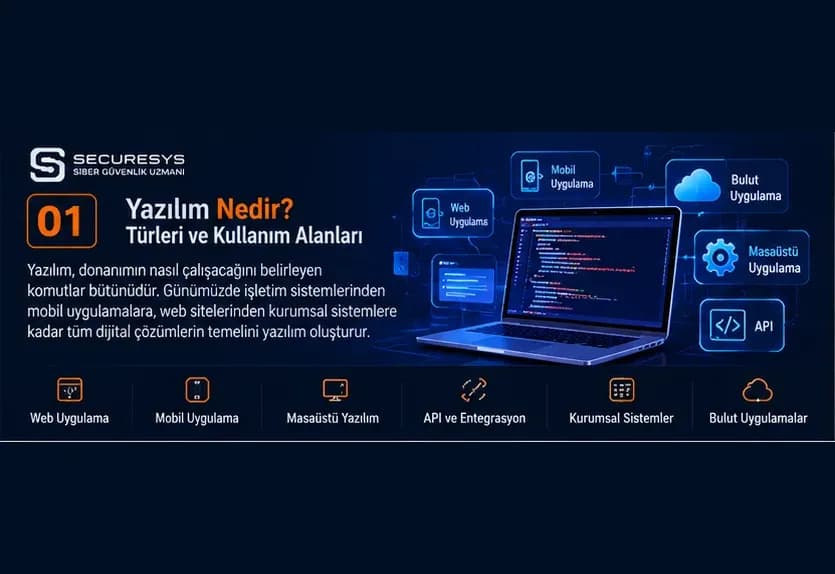
What Is Software? Types, Uses and the Most Widely Used Software Worldwide
What is software and what are its types? A complete guide to CRM, ERP, warehouse tracking, inventory management, web and mobile apps, and custom software.
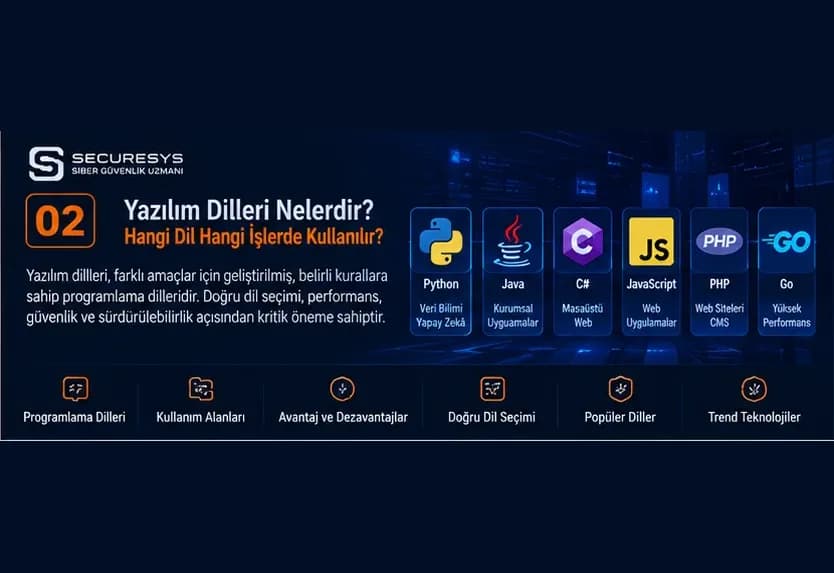
Programming Languages Explained: What Is Each One Used For?
What are programming languages? Learn what Python, Java, C#, PHP, JavaScript and others are used for, with CRM, ERP and inventory software examples.
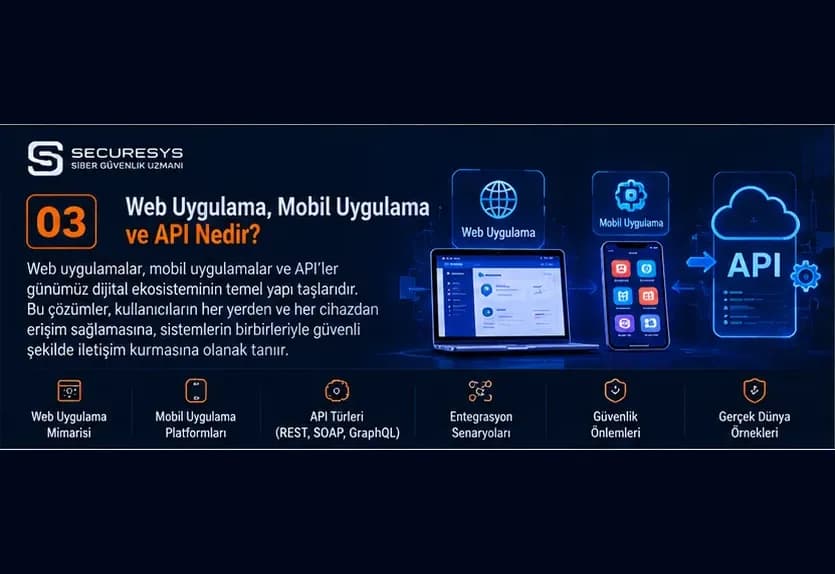
What Is a Web Application? A Guide to Web-Based Software, Frontend and Backend Development
What is a web application? Explore frontend, backend, APIs, databases, cloud architecture and how CRM, ERP, warehouse and inventory software is developed.
What Is a Mobile App? A Guide to Android, iOS and Cross-Platform Mobile Software Development
What is a mobile app and how is it developed? Explore Android, iOS, Flutter, React Native, mobile CRM, warehouse tracking and inventory software.
What Is an API? REST API, GraphQL, Microservices and Enterprise Software Integrations
What is an API and how does it work? A guide to REST API, SOAP, GraphQL, webhooks, microservices, CRM–ERP integration, inventory management and API security.
What Is CRM Software? A Guide to Customer Tracking, Sales Management, Quotation and Project Tracking Systems
What is CRM software? Explore customer tracking, sales, quotations, orders, contracts, project management, ERP integration and custom CRM development.
Looking for professional support on this topic?
Our expert team will reach out for a free consultation as soon as possible.